Most of Oliver's Lodge Has Already Been Sold, One Board at a Time
In the late 1960s, a high school kid from Florence named Kin McKinzie spent his summers bussing tables at Oliver's Lodge. The line of diners wrapped around the building. He and the other busboys stood with trays ready and watched for an open table. "Clear and set a table in 30 seconds," he said. "People would laugh and photograph us and time us."
He told that story this April, standing in front of the building with about 100 people from Belin Memorial United Methodist Church and the wider community, at a farewell for a place most of them had driven past for years. He also remembered Roosevelt "Rooster" Pickett, a longtime resident and Oliver's Lodge employee he worked beside: "It's just incredible to me how one man with so little material possessions, you know, nothing to his name, impacted so many lives."
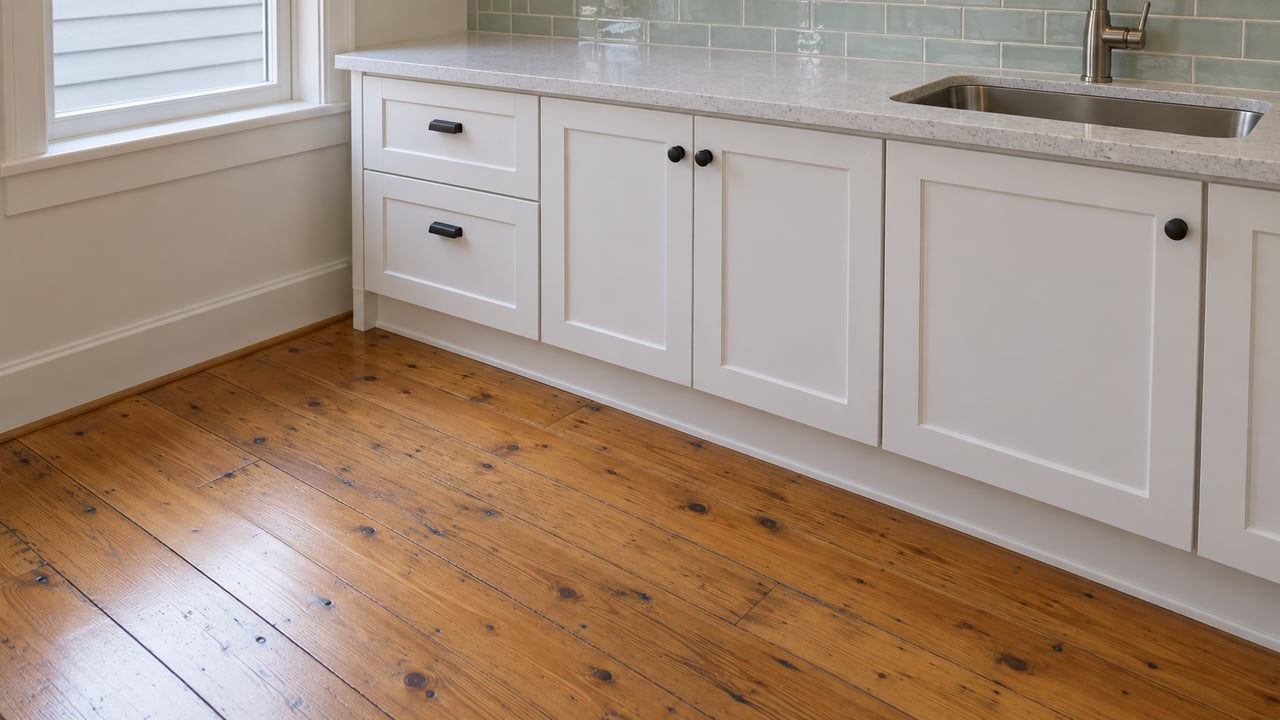
By late September, the building was gone from the creek. Most of it didn't go to a landfill, though. According to the man who took it apart, 70 to 75 percent of the material has already been sold. Its floorboards and beams are headed into other people's homes and furniture. Some of its brick may end up on the ocean floor off the Grand Strand.
Belin Memorial bought the 0.6-acre parcel from Parsonage Creek LLC for $2 million in February 2026. Church administrator Paul Gardner said Belin had been working to get it for nearly five years. It was the last piece of land touching the church campus, and Belin already owns the next lot over, which runs from the creek to Business 17.
By then the building was in rough shape. When the Coastal Observer walked through in April, the plywood ceiling panels had jagged holes and the floors were soft from leaks. Gardner asked the church trustees, a structural engineer, a builder, and a company that moves historic buildings for advice. The mover said Oliver's Lodge wouldn't survive a long trip. Repairs would have cost more than $135,000. The building would also have had to be raised to meet flood code, and its plumbing and electrical brought up to code.
Oliver's Lodge isn't on the National Register and isn't a contributing property in the Murrells Inlet Historic District. The state Historic Preservation Office surveyed it in May 1982.
Then Alan Todd called. Todd teaches at Coastal Carolina University and runs the Conway Architectural Salvage and Heritage Project, a nonprofit he started in 2023. He had heard the building might be torn down. Gardner remembered the call: "He called and said, 'there's another way to think about this.'" The church hired the nonprofit to take Oliver's Lodge apart piece by piece. "Alan and his team will do their best to keep it out of a landfill," said the Rev. Will Malambri, Belin's senior pastor.
Taking a building apart slowly shows you how it was built. Under the restaurant, Todd's team found the original frame of an 1800s Oliver family home. The family added upper floors and the wraparound restaurant area in the early 1900s. Some of the wood was signed. "What's so cool is we have the maker's mark of William L. Oliver on these borders, so we can see the timing of it," Todd told The Sun News.
Accounts differ on where the lumber came from. The Coastal Observer reported that the lodge was built with lumber from Richmond Hill Plantation, which is now part of Wachesaw Plantation. Todd told The Sun News some of the material may have come from Laurel Hill Plantation. Either way, the boards came from a nearby plantation property and stayed on this one stretch of creek for well over a century.
Here's the timeline, pieced together from local reporting:
Conway Salvage sells or donates leftover material, and the sales help pay for its work. Todd estimated that 70 to 75 percent of Oliver's Lodge sold this way.
| Part of the building | Where it's going | Status as of late September 2026 |
|---|---|---|
| Floorboards | Furniture building and new flooring | Already picked up |
| Structural beams | Furniture building and new flooring | Already picked up |
| Foundation material | Reuse, including artificial reefs | Already picked up |
| Brick porch supports | Possible offshore artificial reef structure | Planned, no site or date announced |
The buyers haven't been named. That means floors and tables made from 1800s Murrells Inlet timber could already be in homes around the Grand Strand, and nobody has publicly said whose.
Todd's argument for the slow approach goes beyond this one building. "This kind of blind eye demolition of historic buildings that took years to build by hand... to just have it become normal, just smashing those to smithereens and sending them to the landfill is mind-boggling to me," he told The Sun News. He said his nonprofit has handled about 20 deconstruction projects around the state, and Oliver's Lodge is one of the four largest.
The porch is the part with the oddest possible future. Todd's crew broke the brick porch supports into smaller pieces. The plan is to use them as hard surfaces where offshore reefs can grow. South Carolina has no traditional coral reefs, but soft corals and sponges need something solid to attach to, and fish come for shelter and spawning.
Todd is working with Paul Gayes, executive director of Coastal Carolina's center for marine and wetland studies. Gayes said the work with Todd has "kind of an interesting element to it because it starts adding historical material" to the reefs. It has been done before. Todd's first full-house project, in November 2023, sent cinder block walls to the bottom as reef structure.
The South Carolina Department of Natural Resources maintains more than 40 artificial reefs off the coast, many of them built from cinder block, brick or retired machinery. SCDNR's reef guide lists three sites measured from the Murrells Inlet south jetty:
No one has said which reef, if any, will get the Oliver's Lodge brick, or when. So far it's a possible destination, not a scheduled drop. Anglers and divers who use these sites will have to wait for an announcement to know whether the old porch is down there.
Some of the pieces people remember best haven't turned up in any reporting. The roadside sign with a finger pointing toward the creek is one. Bill and Carol McEllen moved to Murrells Inlet six years ago, had always driven past that sign, and came to the farewell to learn the building's story. No public report says who has the sign now or whether it's being kept.
The joggling board is another. Malambri mentioned it in his closing prayer at the farewell: "Countless people sat on the joggling board, enjoyed corn fritters and fried flounder, had their first dates, anniversaries and birthdays, made this place central to their annual family gatherings." Nothing published says where it went.
The land itself is also undecided. In April, Malambri said Belin had not decided how to use the property. The church's nomination committee picked 12 people to start a strategic review of the whole campus. "It gives us time to dream," he said. The September coverage of the finished deconstruction didn't mention any update, so April's statement is still the last public word on what goes there next.
Sandra Bundy, who once worked at the restaurant, put the worry plainly at the farewell: "We are fast removing all our remnants of history around Murrells Inlet, for such a historical place." The salvage doesn't settle her concern. It does change the answer to where this particular piece of history went.
The lumber went to the old McIver-Shaw Lumber Company yard on 14th Avenue in Conway. The yard ran from 1946 to 2006 and is now Todd's base, where Conway Salvage stores and sells reclaimed material. The Post and Courier reports that buyers contact the nonprofit directly about materials. Its website doesn't list public hours, so get in touch before you drive over. With most of the lodge already sold, ask specifically what's left.
Next door, Conway Salvage plans to use the former Horry Ice Company building as a place to teach trades like carpentry, metalwork, glasswork, masonry and pottery. If you haven't been to downtown Conway lately, our look at how the Riverwalk now meets Main Street covers what's around it.
Food is what people remembered at the farewell: corn fritters and fried flounder, and Inlet Affairs serving popcorn shrimp, hush puppies and chicken tenders as a taste of the old menu. The next large gatherings on this stretch of Business 17 are just up the road:
For more on the inlet beyond the waterfront, see our Murrells Inlet neighborhood guide and our earlier piece on the changes half a mile inland from the MarshWalk.
Many older inlet houses, like Oliver's Lodge, hold more history than shows from the road. If yours is one of them and you're curious what it's worth today, Jan and Dan at Coastal Beach Homes are happy to walk through it with you, or you can start with a free home valuation.

When you hire Jan and Dan, you get a team of professional real estate agent diligently working together on your behalf. They are knowledgeable and experienced professionals you can trust to best represent your interests in our unique market.
JAN AND DAN SITTER | COASTAL BEACH HOMES
ADDRESS
9628 N KINGS HWY
MYRTLE BEACH SC 29572