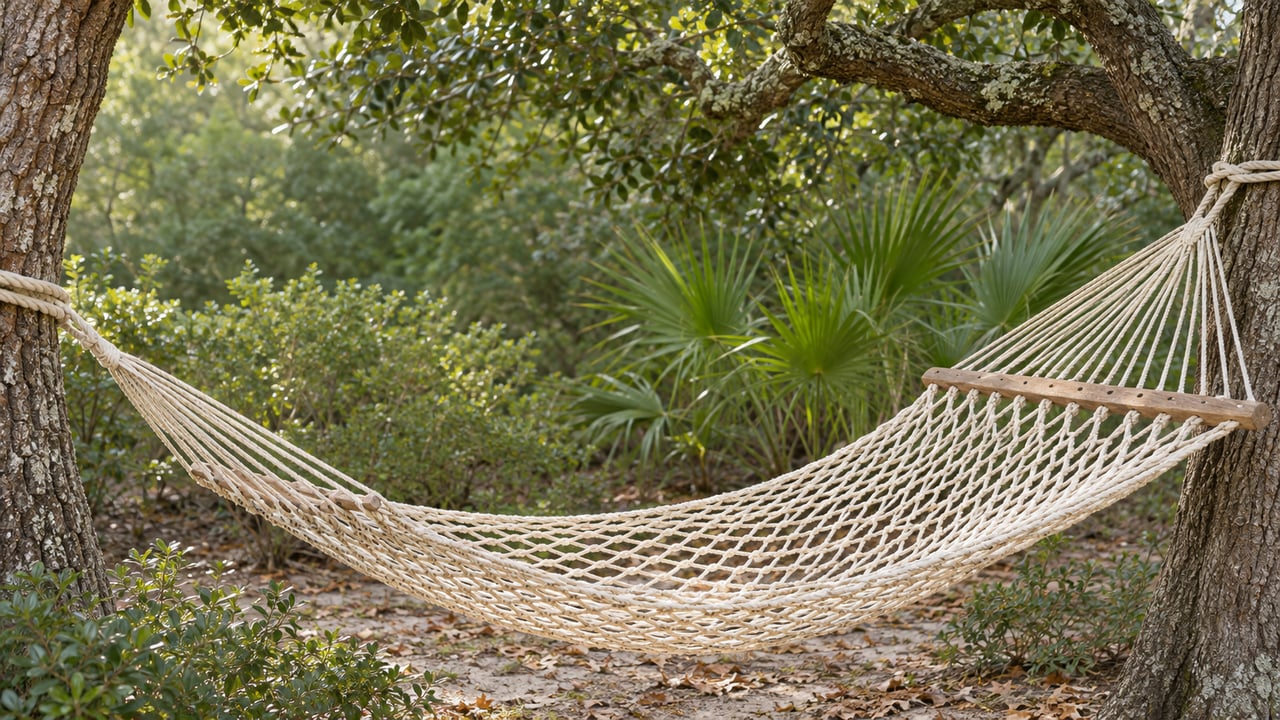
Where Pawleys Island's Rope Hammock Is Still Woven by Hand
Harry Woodbury did not set out to weave hammocks. He worked in his family's florist shop in Georgetown and then at an auto parts store. After that he took a job on the loading docks of the hammock factory that used to operate in Pawleys Island. When that factory closed and moved to Greenville, North Carolina, someone asked whether he wanted to try making hammocks instead of shipping them. In July 2025 he told the Post and Courier that it took him about four weeks to "literally learn the ropes."
That job change is the short version of what happened to the town's most famous product. Most Pawleys Island hammocks now come out of a North Carolina operation. The original design is still woven by hand in a small shed at the Hammock Shops Village, and anyone who lives here can stop in on a weekday and watch a hammock get made.
The Original Pawleys Island brand belongs to The Hammock Source, a company based in Greenville, in eastern North Carolina. The Hammock Source calls itself the world's largest manufacturer and seller of hammocks. Walter R. Perkins started it in 1971 under the Hatteras Hammocks name. The Post and Courier reported that the same company owns the Original Hammock Shop at the Hammock Shops Village, along with Hatteras Hammocks and Nags Head Hammocks in North Carolina, where weavers also make hammocks by hand.
At the Village, the hand weaving happens in one building. It was named the Woodbury-Grant Weaver Shed after its two longtime weavers, and the Village map lists it as the Hammock Weavers Shed. Marvin Grant retired in 2024 after more than 30 years of hammock making. As of the Post and Courier's July 2025 visit, Woodbury was the only weaver left at the Village, with 26 years at the rack. He told the paper there may be a few other hammock makers around Pawleys Island, but not many, and none who make the kind of hammock he does.
If your porch hammock came home in a box with a Pawleys Island tag, it was most likely woven in North Carolina. The Village shed is where Woodbury has kept the 1889 pattern going by hand in the town that gave the hammock its name.
The design dates to a riverboat. In 1889, Capt. Joshua John Ward was hauling rice and goods between Waverly Mills and Georgetown, and the heat kept him awake on a straw mattress. He made himself a rope hammock with no knots in the bed and a wooden spreader at each end. The Post and Courier described the hammocks coming out of the weaver's shed in 2025 as essentially the same design.
The brand's history page names his two improvements. The first is a double-latch weave, a wide, knotless sleeping surface made from heavy cotton rope in a lattice pattern. The second is a spreader bar, first cut from oak barrel staves, which holds the bed open and keeps the knots away from where you lie. Ward's family opened the Original Hammock Shop in 1935.
"Knotless" means the bed. Each end still has knots. The company's workshop page says every hammock hangs from its O-ring by a hand-woven triangle of rope, a macramé version of the old mariner's clew knot. Bowline knots tie the rope ends to the body of the hammock after they pass through holes in the white oak spreader bar. Those two knots are worth a close look when you check a hammock in the shop.
The rope itself now comes in three kinds: cotton, soft-spun white polyester, and a synthetic the brand sells as DuraCord, which it describes as soft like cotton and better suited to staying outdoors. When the Post and Courier photographed Woodbury in July 2025, he was weaving cotton, the material Ward started with.
The weaving takes less time than most people would guess. The Post and Courier described Woodbury's process this way. One hand pulls the outermost cotton cord toward him to open a hole in the ropes stretched across the rack. The other hand pushes a wooden needle, also called a shuttle, down through the loop. He sidesteps and repeats the motion all the way to the end of the rack, then threads the shuttle up from below and works back the other way.
He told the paper he can finish a hammock in an hour and a half, or an hour if he pushes, though he would rather not. He called the work relaxing and said he weaves to music from the '60s, '70s and '80s. People tell him he could do it with his eyes closed. "I probably could, but I'd rather not," he said, because he cares too much about getting it right.
You can go inside. In the same 2025 story, Woodbury invited anyone who wanders into the shed to watch and ask questions, and said he sometimes lets guests thread the shuttle through the rope themselves. The Hammock Shops Village events page lists hammock-weaving demonstrations at the Original Hammock Shop on weekdays, with no set times. Out-of-town guests usually see the Village on Saturdays, so a weekday visit is the one to plan.
The shop's busiest local day is still in summer. Hammock Day 2026 filled the Village on Saturday, July 25, from 10 a.m. to 5 p.m., with live music and shopping, according to WBTW.
This holiday weekend puts the shed in the middle of the Village's busiest stretch of the year. Here is the schedule from the Hammock Shops Village events page:
Black Friday falls on a weekday, so it is the one day this weekend when the Village's listed weaving demonstrations and the holiday shopping overlap. A hammock bought at the shop where the design started makes a good gift, and you can see the knots before you pay. LOCAL also runs a Blues & Soul Brunch every Sunday from noon to 3 p.m., the same hours as the Santa visits, so one trip can cover both.
The weaver and the holidays have a longer connection. In the July 2025 Post and Courier profile, Woodbury said he had dressed as Santa at tree lightings and parades in Pawleys Island for 15 years, and that his own white beard means he no longer needs the wigs. Denny Miller, who has worked at the Original Hammock Shop longer than anyone except Woodbury, told the Post and Courier that he sometimes puts on a red Santa hat and steps into the shop window behind children posing for photos outside. "He keeps us laughing," she said.
If you enjoy spending your weekends on the mainland strip, our Pawleys Island fall calendar post covers more of that strip. The Pawleys Island neighborhood page has the wider picture of the area.
At Coastal Beach Homes, we're Jan and Dan Sitter, and we love the parts of the Grand Strand that are still made by hand, the way the Pawleys hammock has been since 1889. If you're thinking about a Pawleys Island porch with room for one of these hammocks, we're happy to talk it through. Start Your Coastal Home Search with us whenever you're ready.

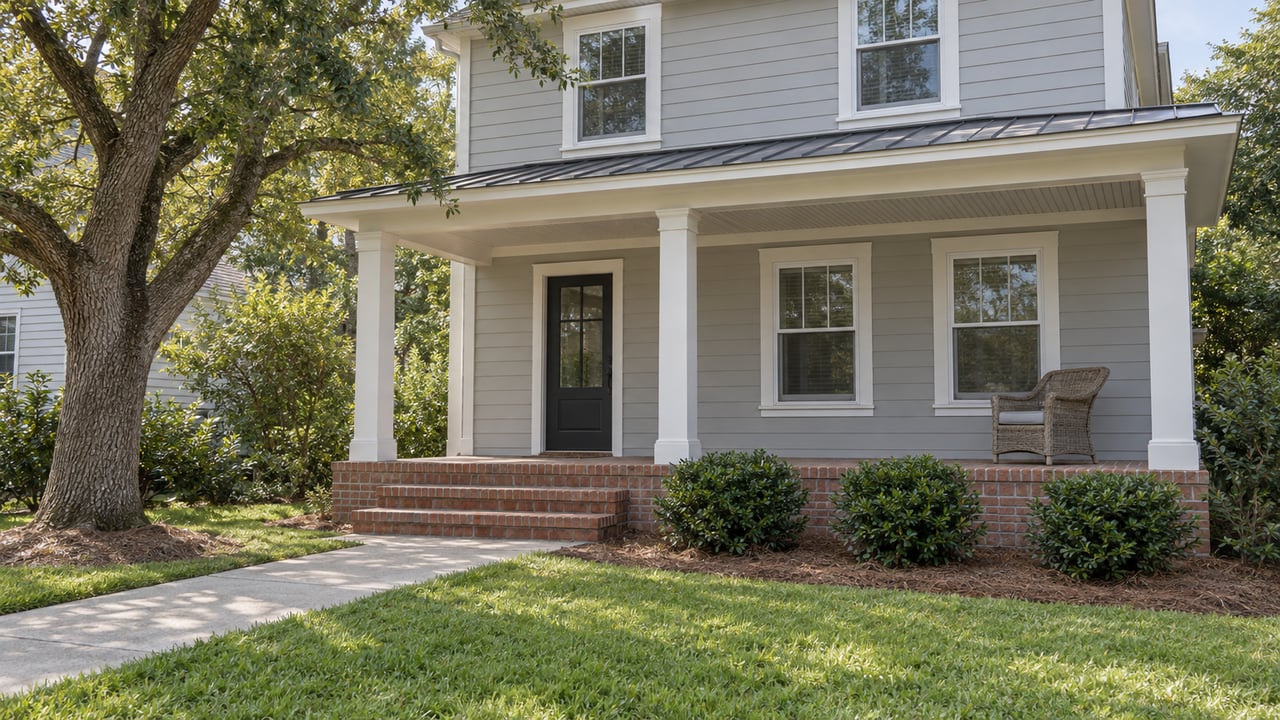
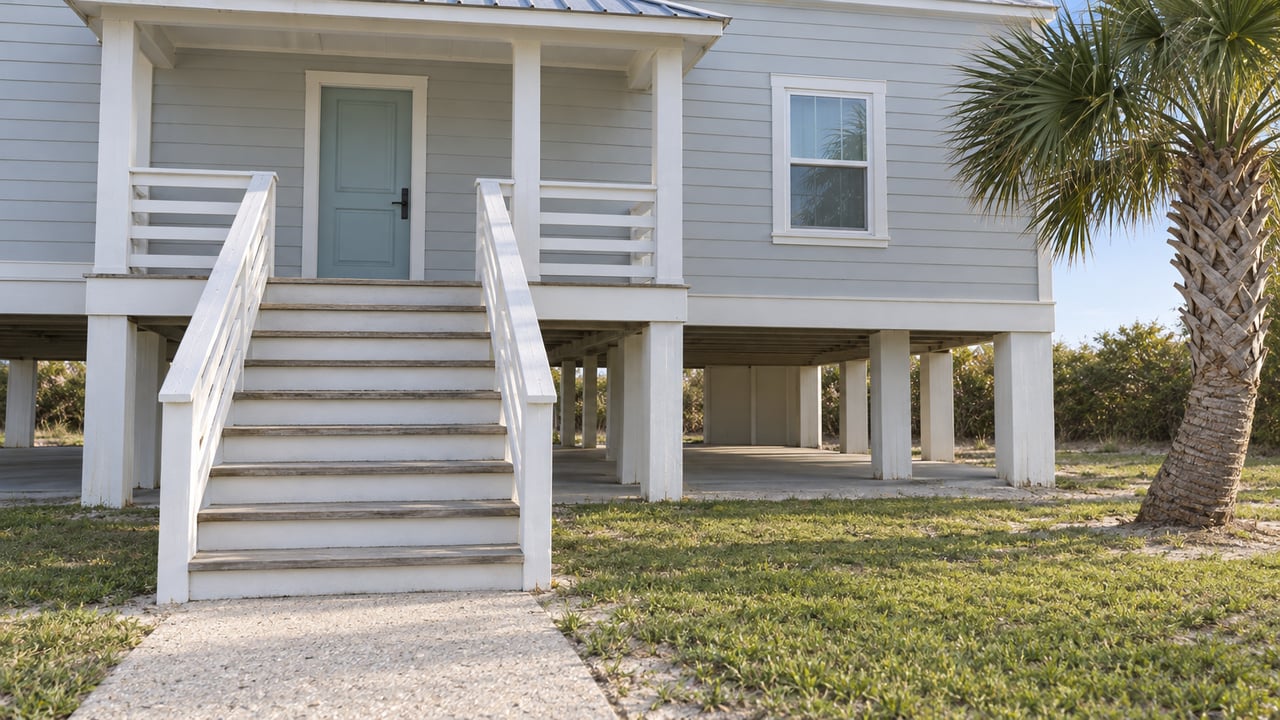
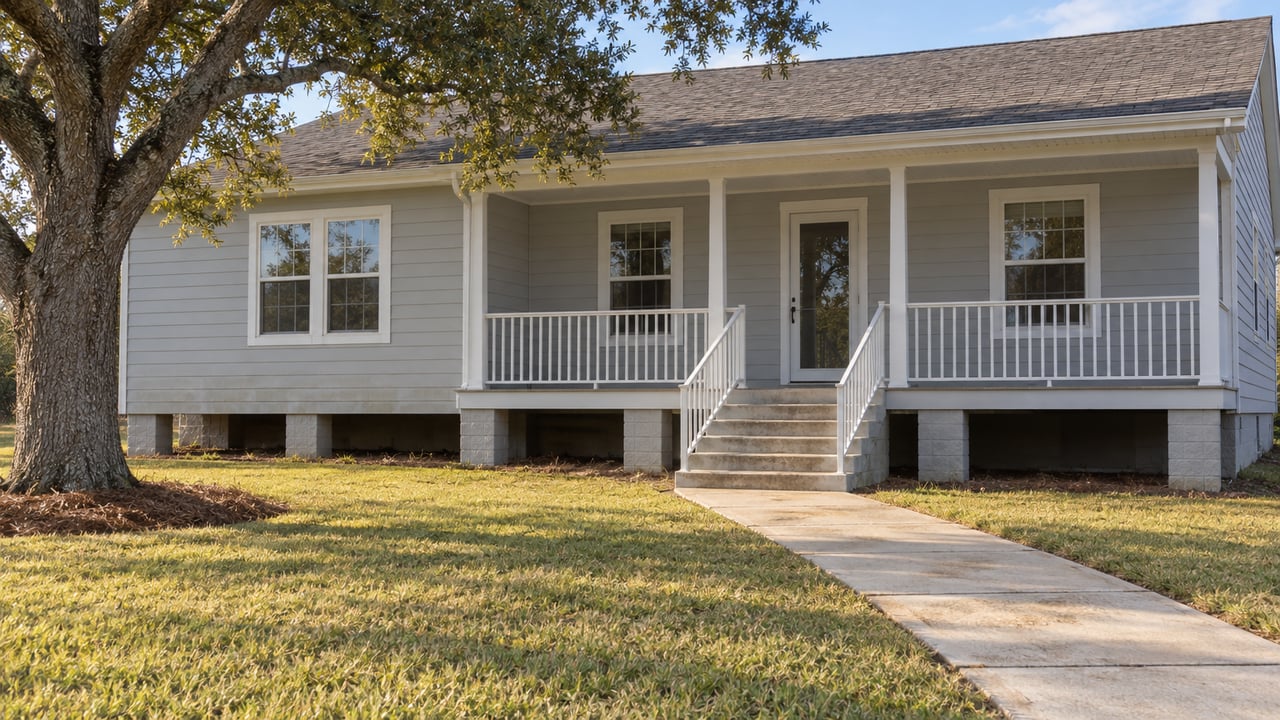
When you hire Jan and Dan, you get a team of professional real estate agent diligently working together on your behalf. They are knowledgeable and experienced professionals you can trust to best represent your interests in our unique market.
JAN AND DAN SITTER | COASTAL BEACH HOMES
ADDRESS
9628 N KINGS HWY
MYRTLE BEACH SC 29572