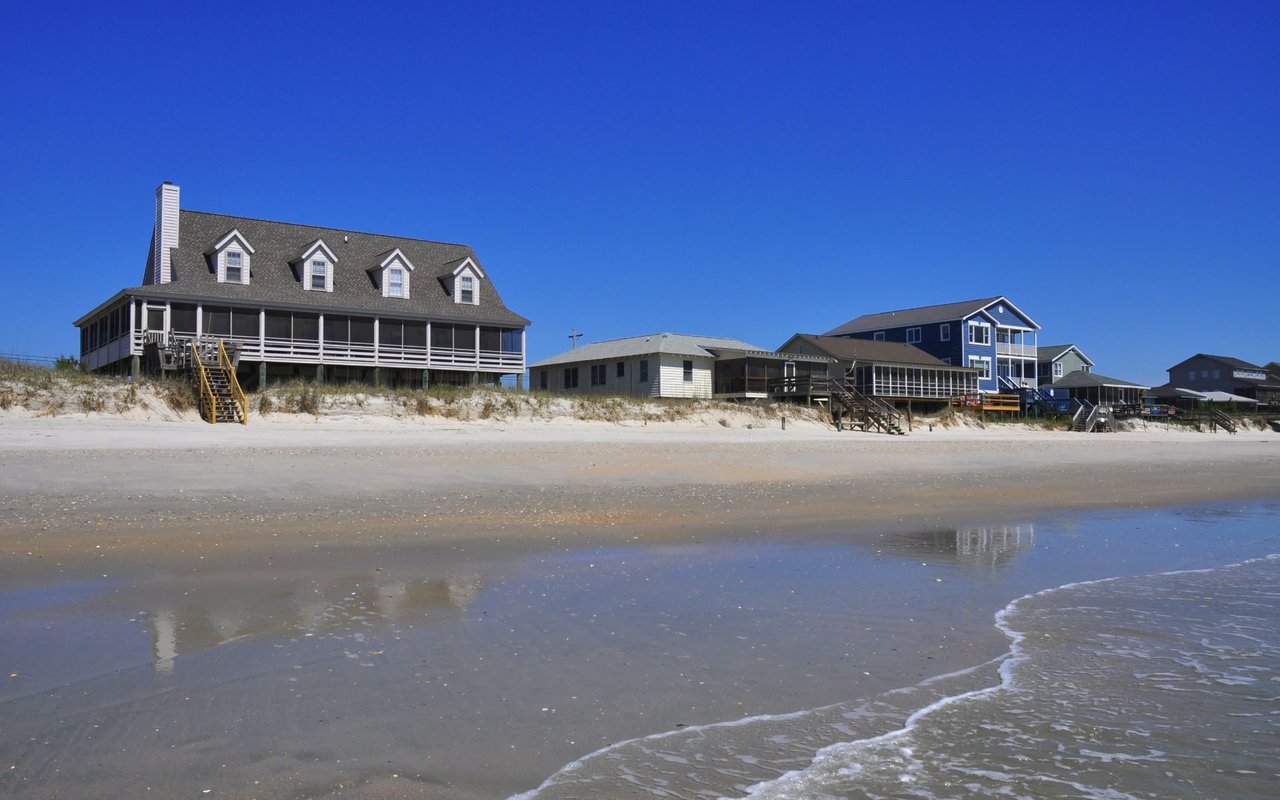
Explore Homes for Sale in Pawleys Island, SC
A historic barrier island community located between Charleston and Myrtle Beach.
A historic barrier island community located between Charleston and Myrtle Beach.


17,346 people live in Pawleys Island, where the median age is 60.1 and the average individual income is $53,814. Data provided by the U.S. Census Bureau.
Total Population
Median Age
Population Density Population Density This is the number of people per square mile in a neighborhood.
Average individual Income
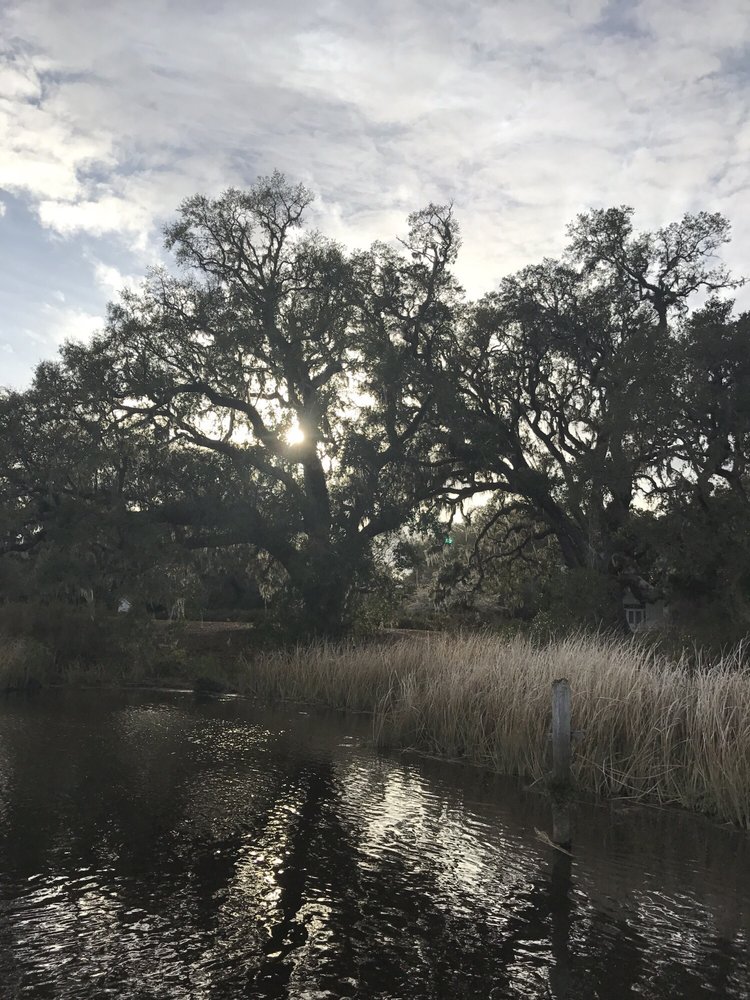
Pawleys Island has spent more than two centuries resisting the thing that happened to the rest of the Grand Strand. While Myrtle Beach built high-rises and North Myrtle Beach built shag clubs, Pawleys kept its dirt-simple beach cottages, its rope hammocks, and its refusal to build anything taller than a live oak. Locals call the ethos "arrogantly shabby," and they mean it as a compliment. It describes weathered cypress siding nobody plans to repaint, a screened porch that matters more than a granite countertop, and an island where the loudest thing on a summer evening is a marsh full of clapper rails.
This is one of the oldest summer resort communities on the East Coast — rice planters from the Waccamaw and Pee Dee river plantations began escaping here in the early 1800s to get away from inland malaria season. Several of the homes they built are still standing on the island's south end. That continuity is the single most important thing to understand about the Pawleys Island real estate market: a lot of this property has never been for sale in the modern sense. It passes down.
What follows is a working guide to how the area is actually structured, what things cost, what the tax and insurance math looks like, and who each part of it tends to suit.
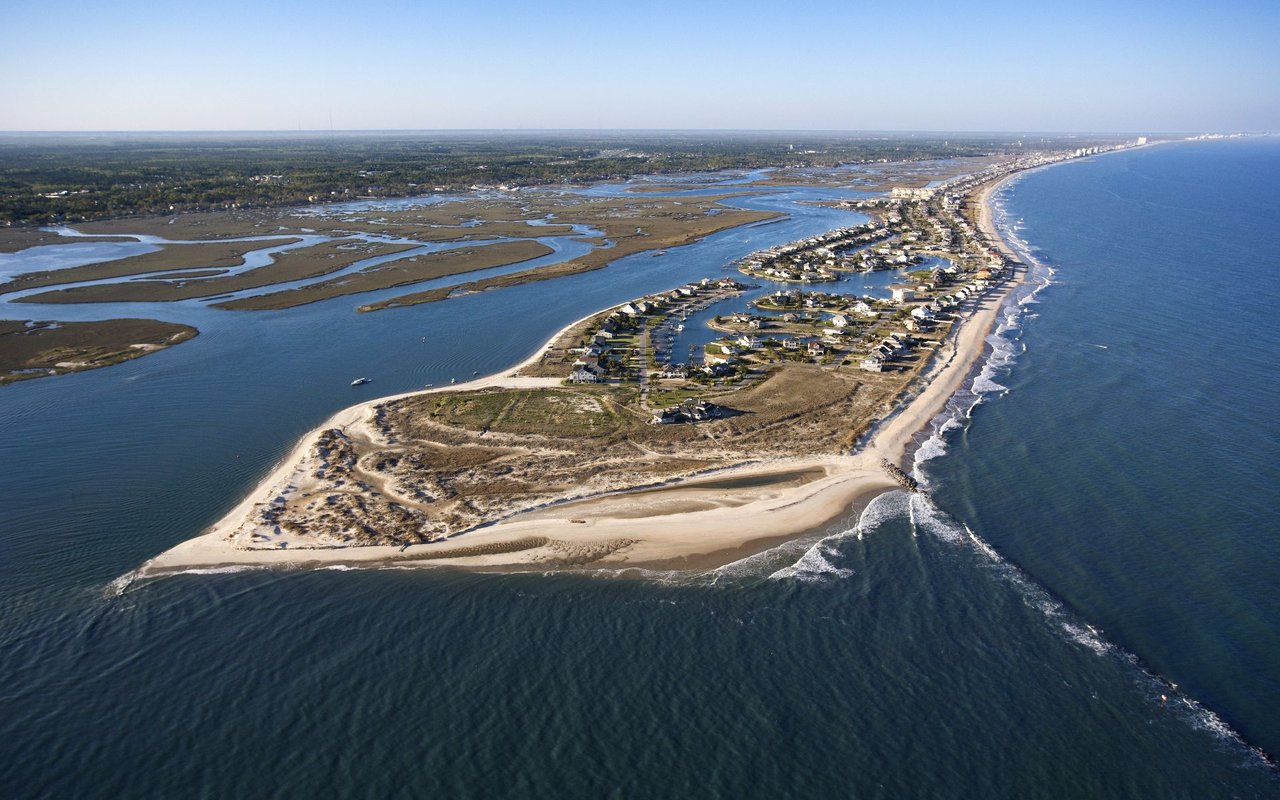
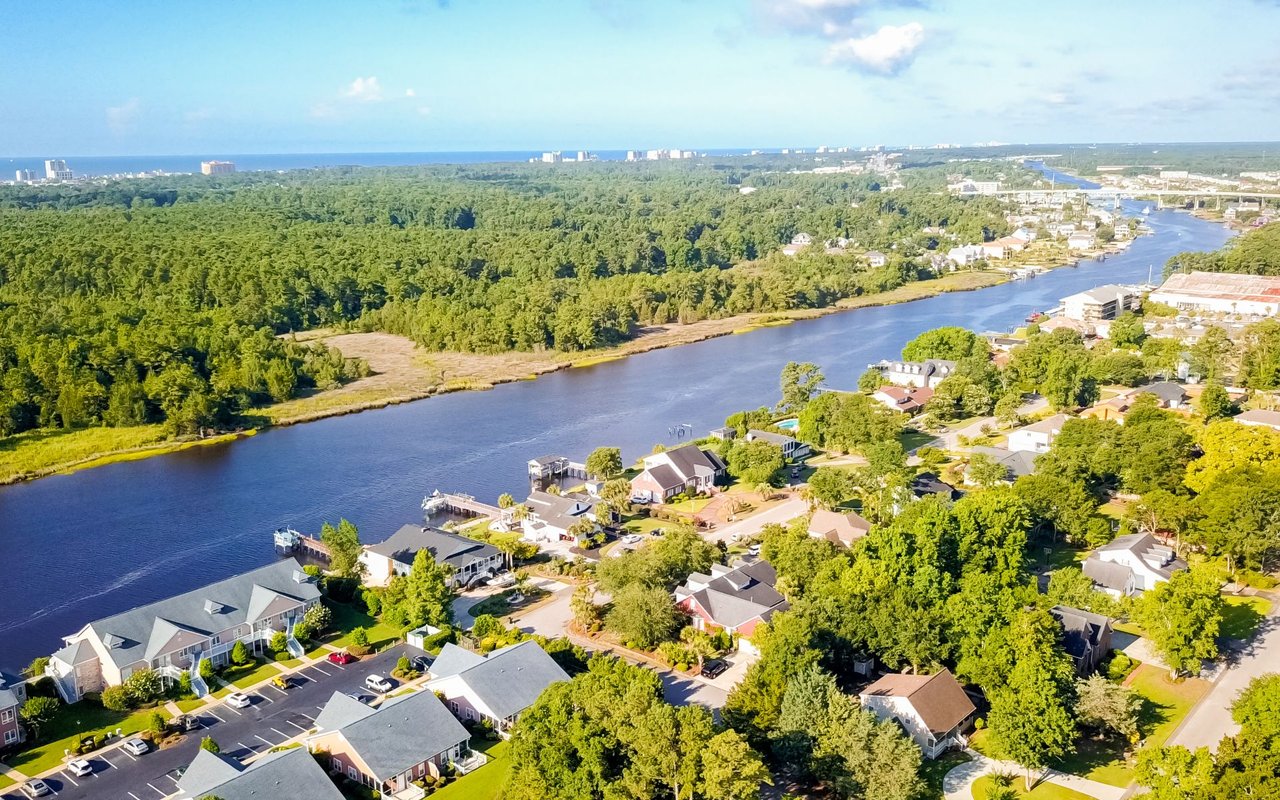
Pawleys Island sits in Georgetown County on the Waccamaw Neck — the strip of land between the Atlantic and the Waccamaw River — about 25 miles south of Myrtle Beach and roughly 70 miles north of Charleston. Everything here runs along U.S. 17, known locally as Ocean Highway.
The critical distinction, and the one that trips up most out-of-state buyers, is that "Pawleys Island" refers to two very different places.
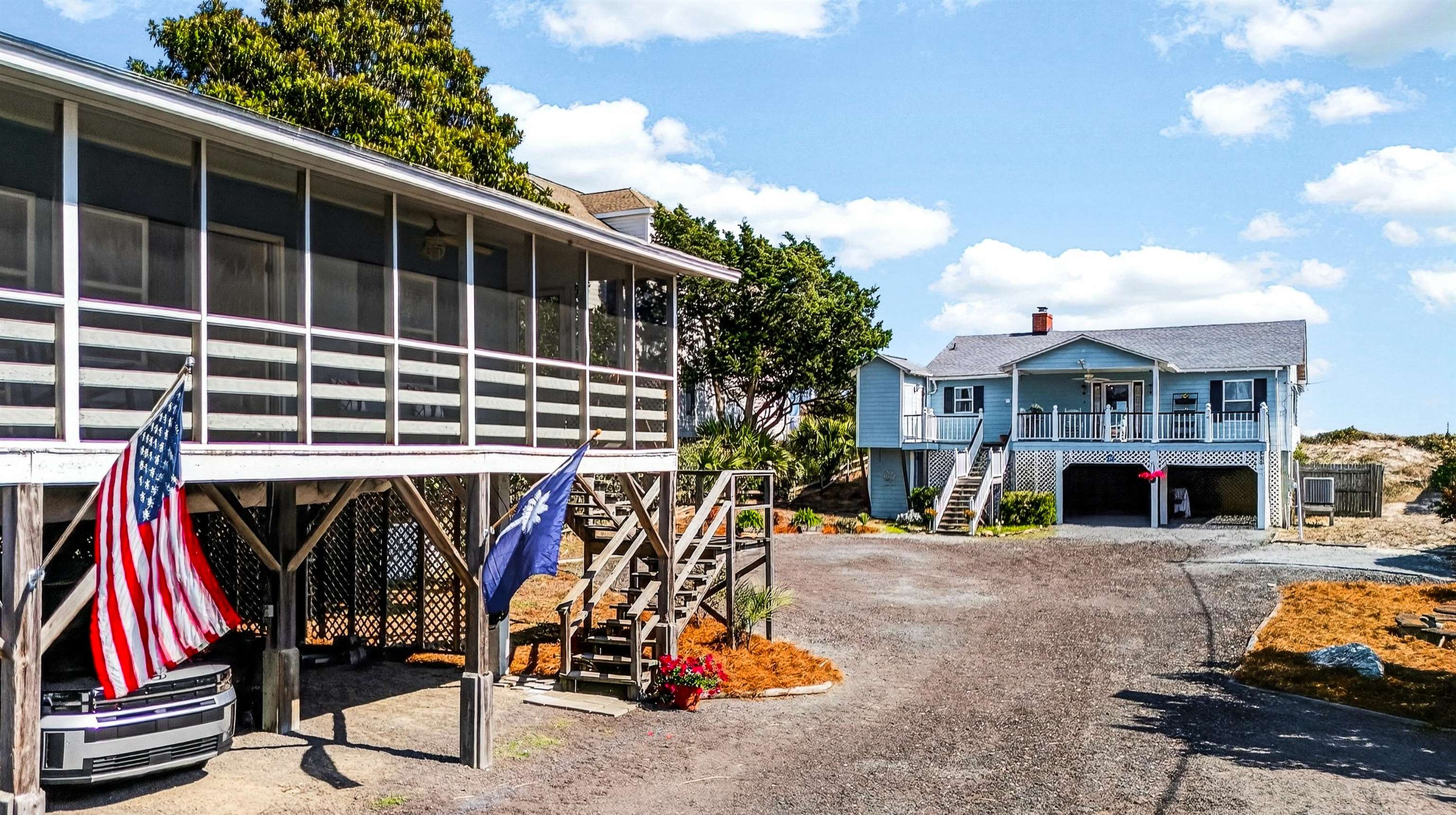
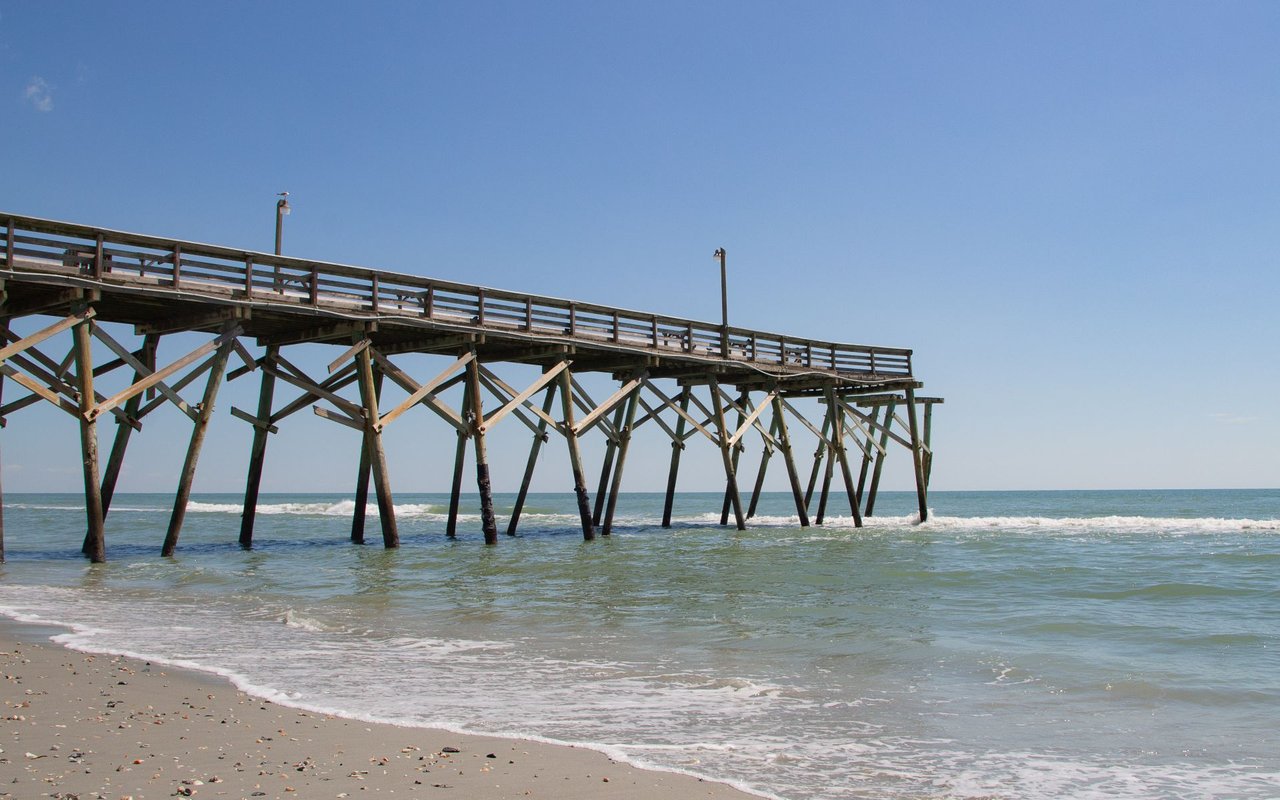
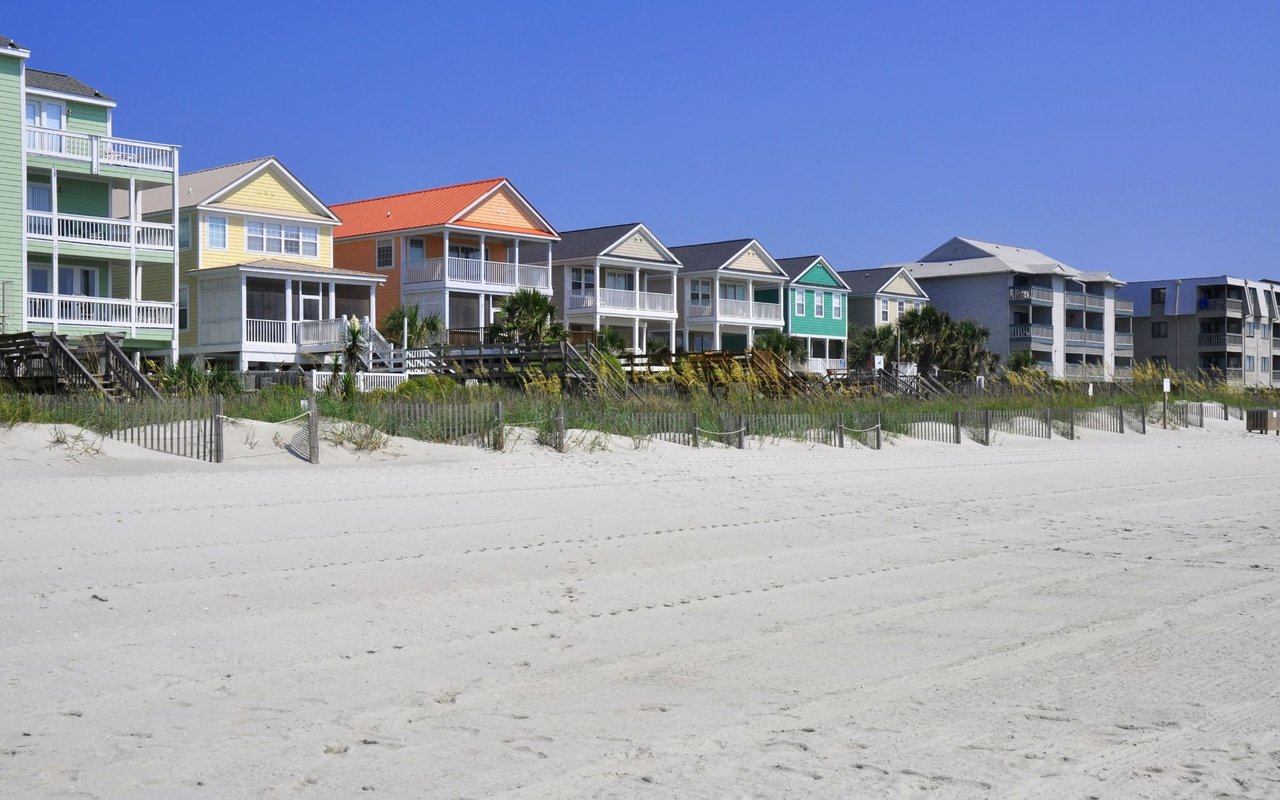
The barrier island proper is the incorporated Town of Pawleys Island: a narrow strip about four miles long, separated from the mainland by salt marsh and reached by exactly two causeways, North and South. It is almost entirely residential. There are no hotels, no chain restaurants, no commercial strip — a handful of raised beach houses, historic cypress cottages, private docks reaching into the creek, and a public beach that stays remarkably empty by Grand Strand standards.
The mainland is the 29585 zip code along Highway 17, and it's where daily life happens. Grocery stores, medical offices, restaurants, the Hammock Shops Village, and nearly all of the gated golf communities and subdivisions are here. When a listing says "Pawleys Island," it is far more likely to be mainland than island, and the price difference between the two is enormous.
A useful mental shortcut: the mainland is where most people live, and the island is where a small number of people own something they intend to keep for a very long time.
Because the geography splits in two, so does the market. Any single "median home price" figure for Pawleys Island is misleading unless you know which half it's describing.
Market Segment | Typical Range | Who It Suits |
|---|---|---|
Mainland condos & townhomes | $200,000 – $400,000 | Retirees downsizing, second-home buyers, rental investors |
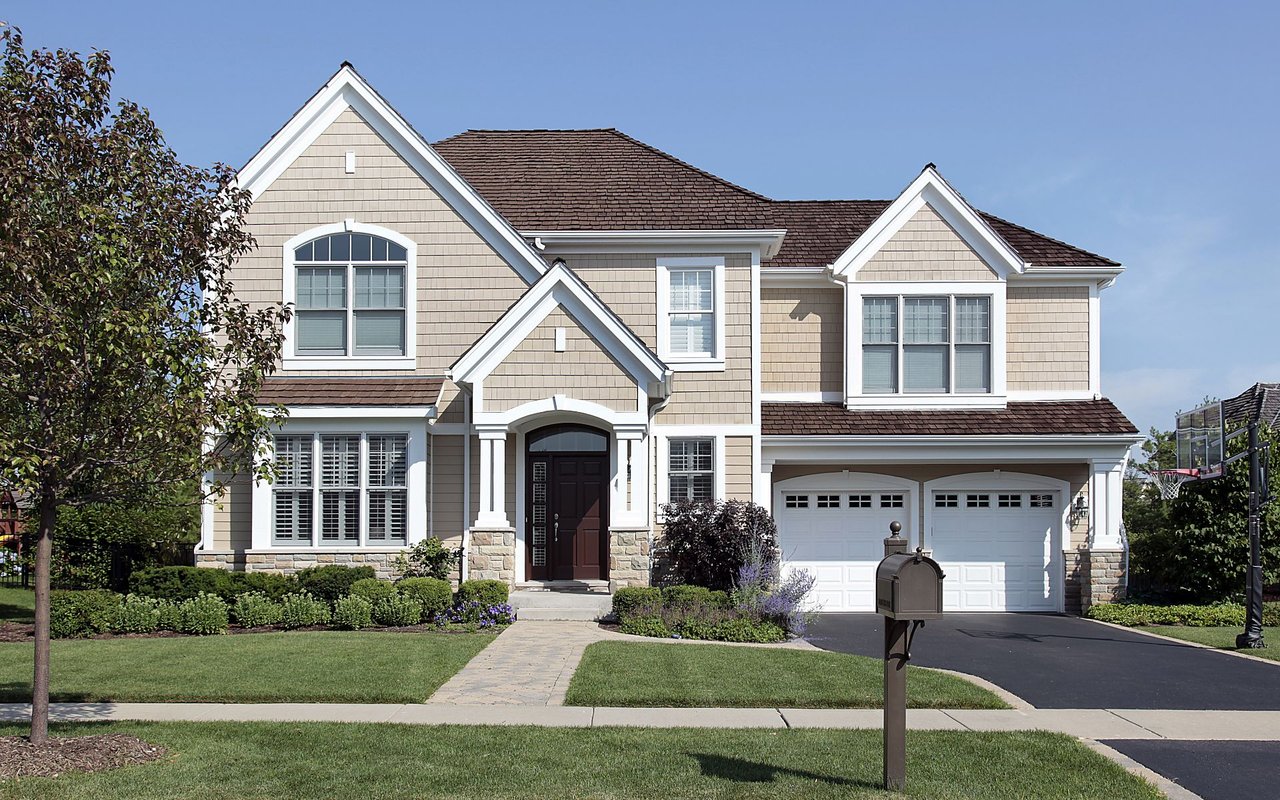
Mainland single-family & golf communities | $450,000 – $900,000 | Full-time residents, relocators, new construction buyers |
Island proper (oceanfront & creekfront) | $1.5M – $4M+ | Legacy buyers, luxury second homes, high-end rental owners |
The broader mainland market runs a median list price in the $540,000–$560,000 range. Statistics that isolate the incorporated town on the island frequently show medians north of $2 million, not because the whole island is priced that way, but because so few properties trade in any given year that a single oceanfront sale skews the number.
Mainland inventory is reasonably balanced, with typical days on market between 30 and 75 depending on price band and season. Island listings are a different exercise entirely — you are often waiting for the right property rather than choosing among several.
One market factor deserves early attention: short-term rental eligibility varies street by street and HOA by HOA. Two homes a quarter-mile apart can have completely different income potential. Verify before you write an offer, not after.
Island property divides by orientation, and the pricing logic surprises people who assume oceanfront always wins.
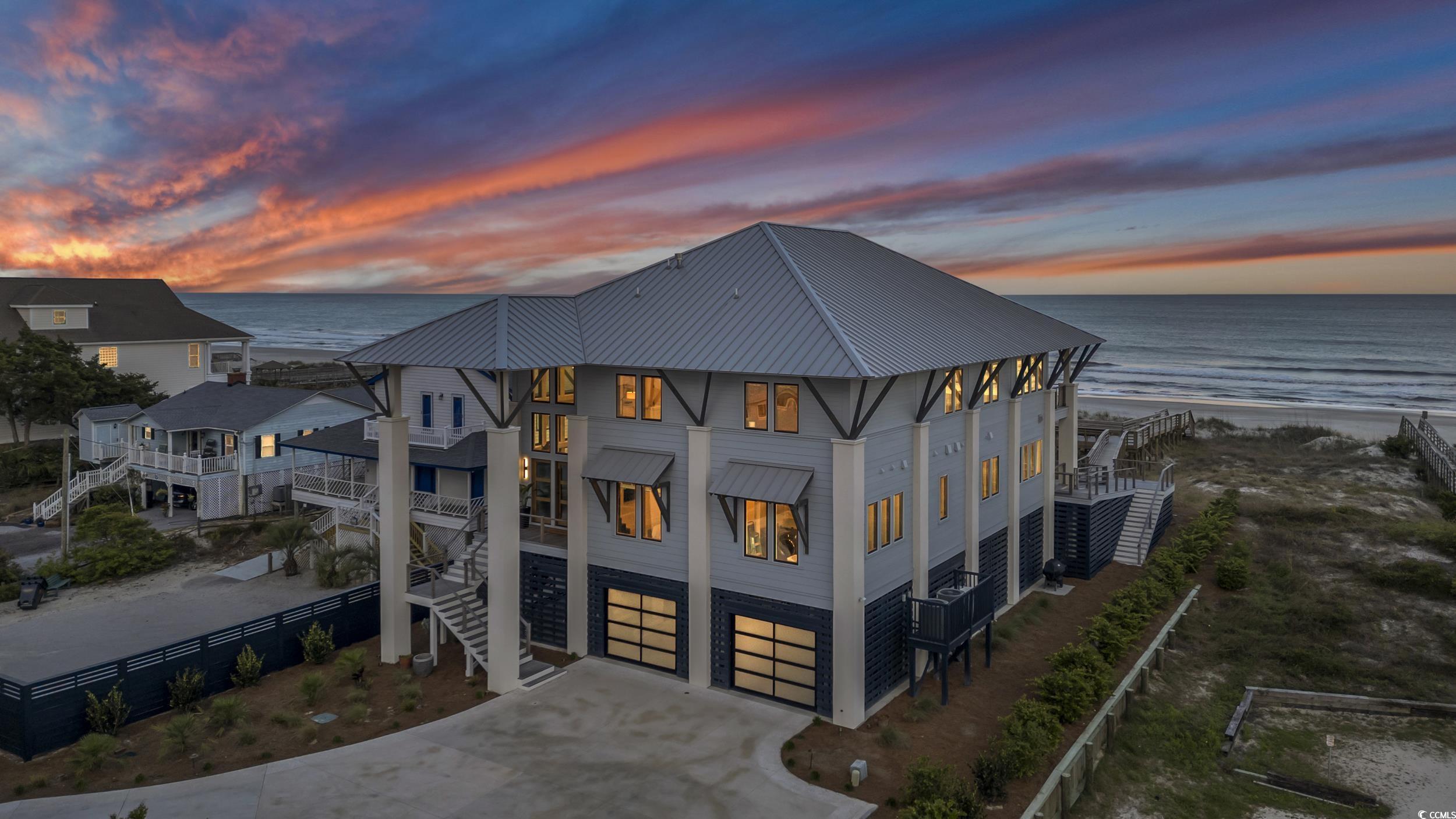
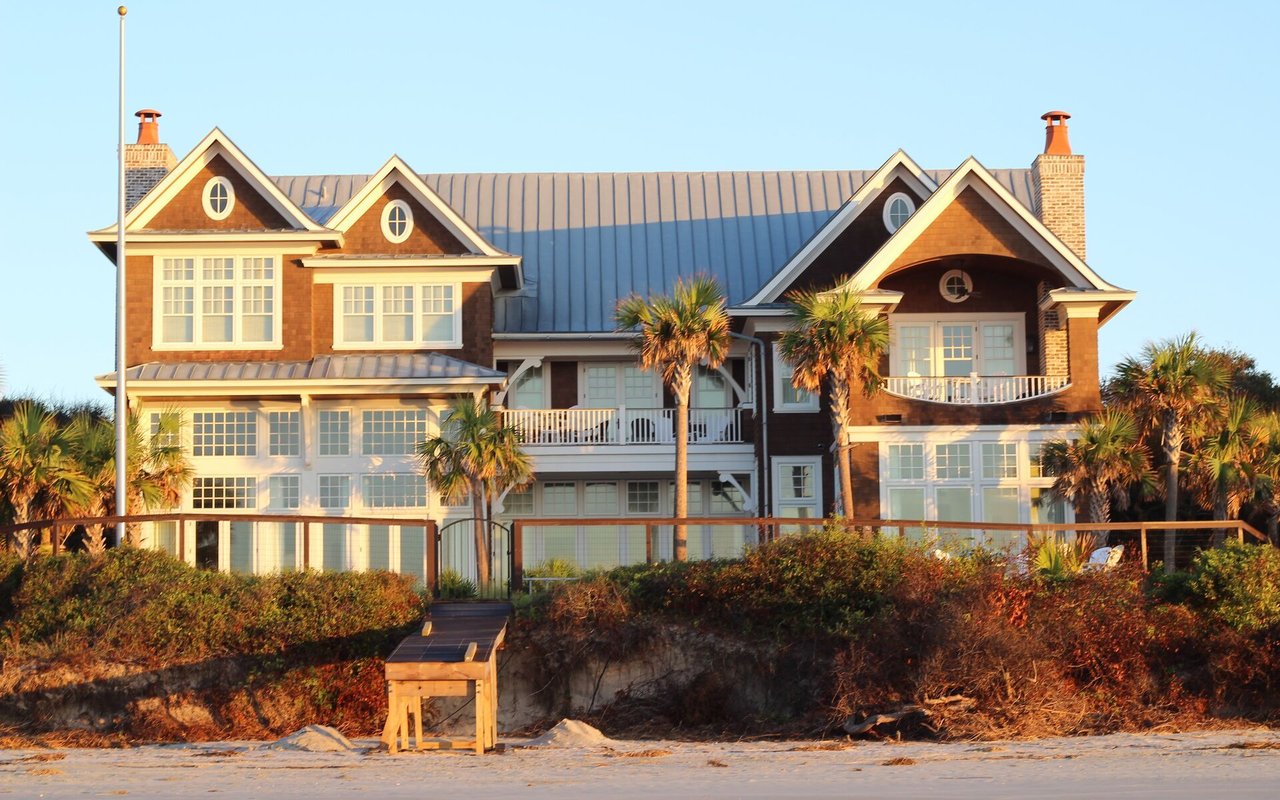
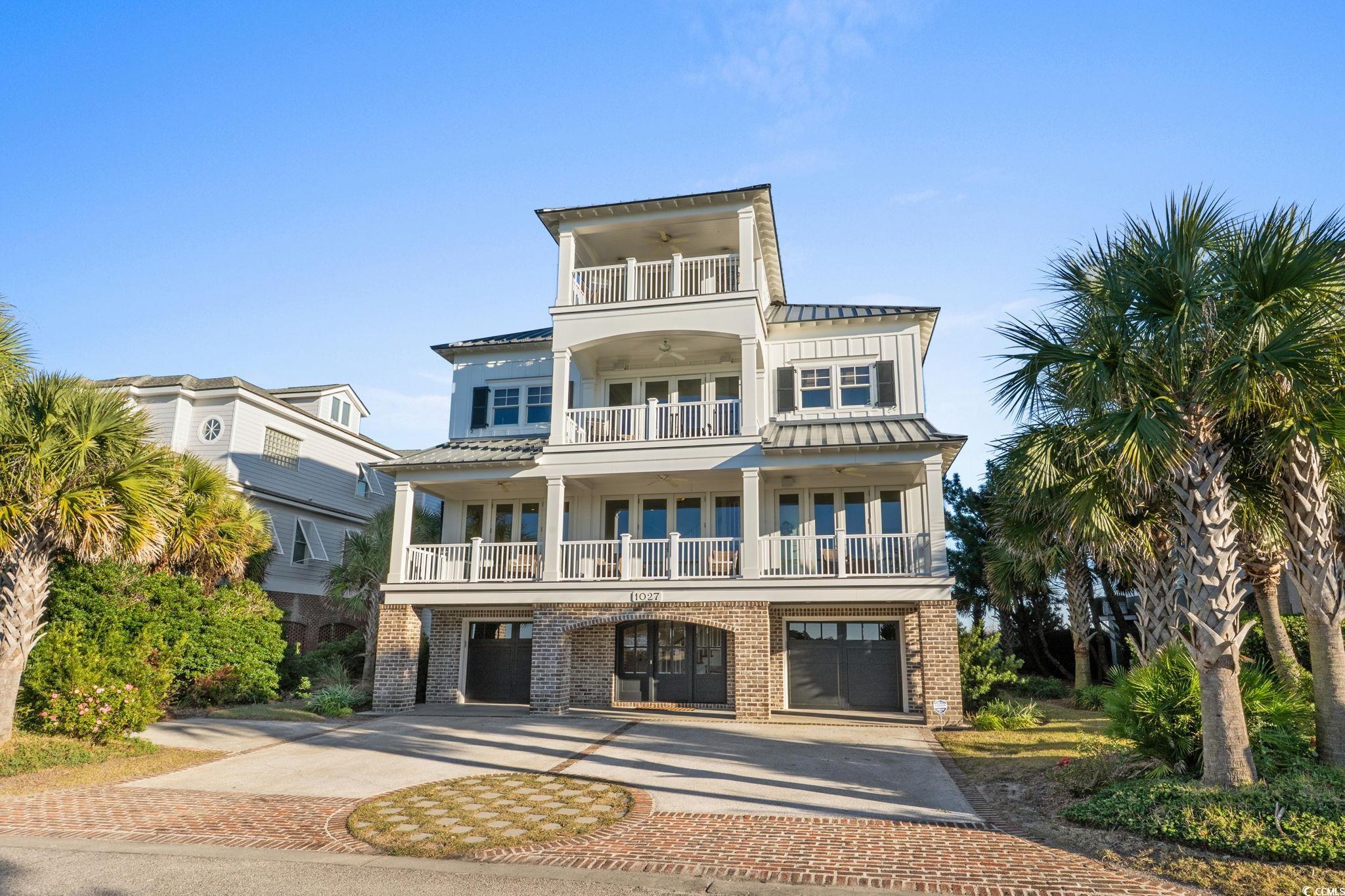
Oceanfront homes sit directly on the Atlantic with private dune crossovers and sweeping water views. Because the island has never allowed commercial development, the housing stock ranges from restored cypress cottages built before air conditioning to modern multi-story reverse-floor-plan homes. These generally start near $2.5 million and move past $5 million for larger or recently rebuilt properties.
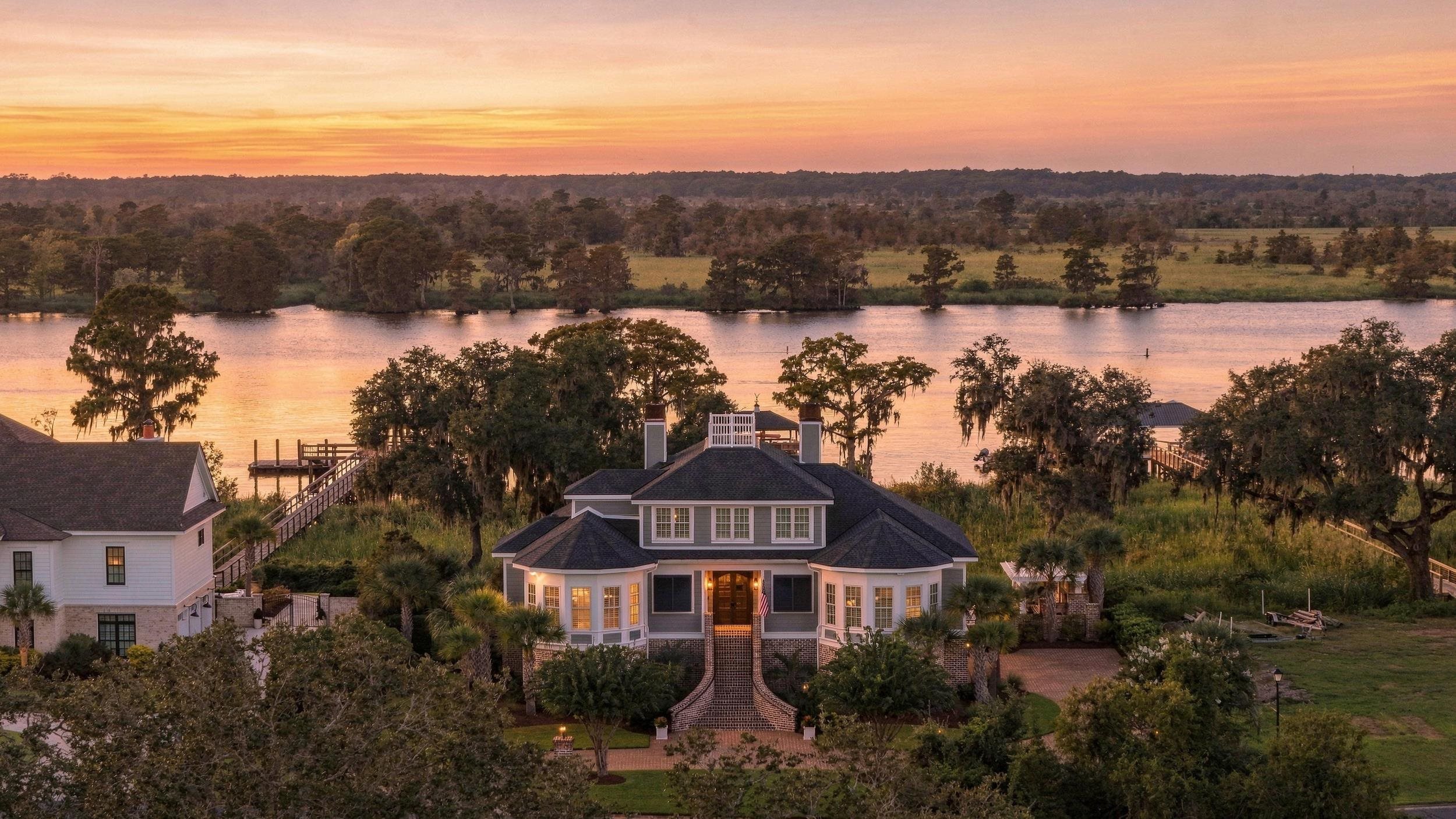
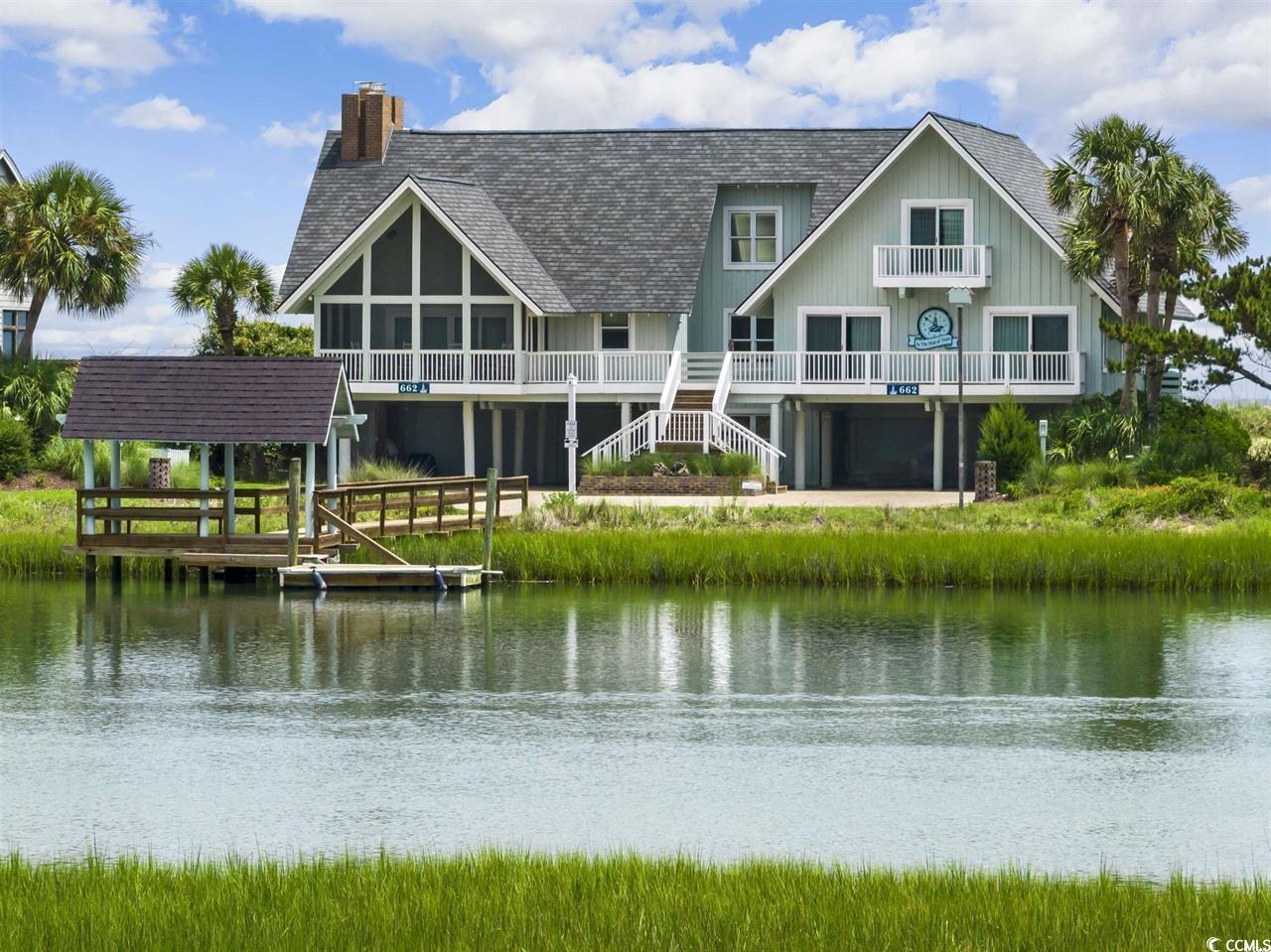
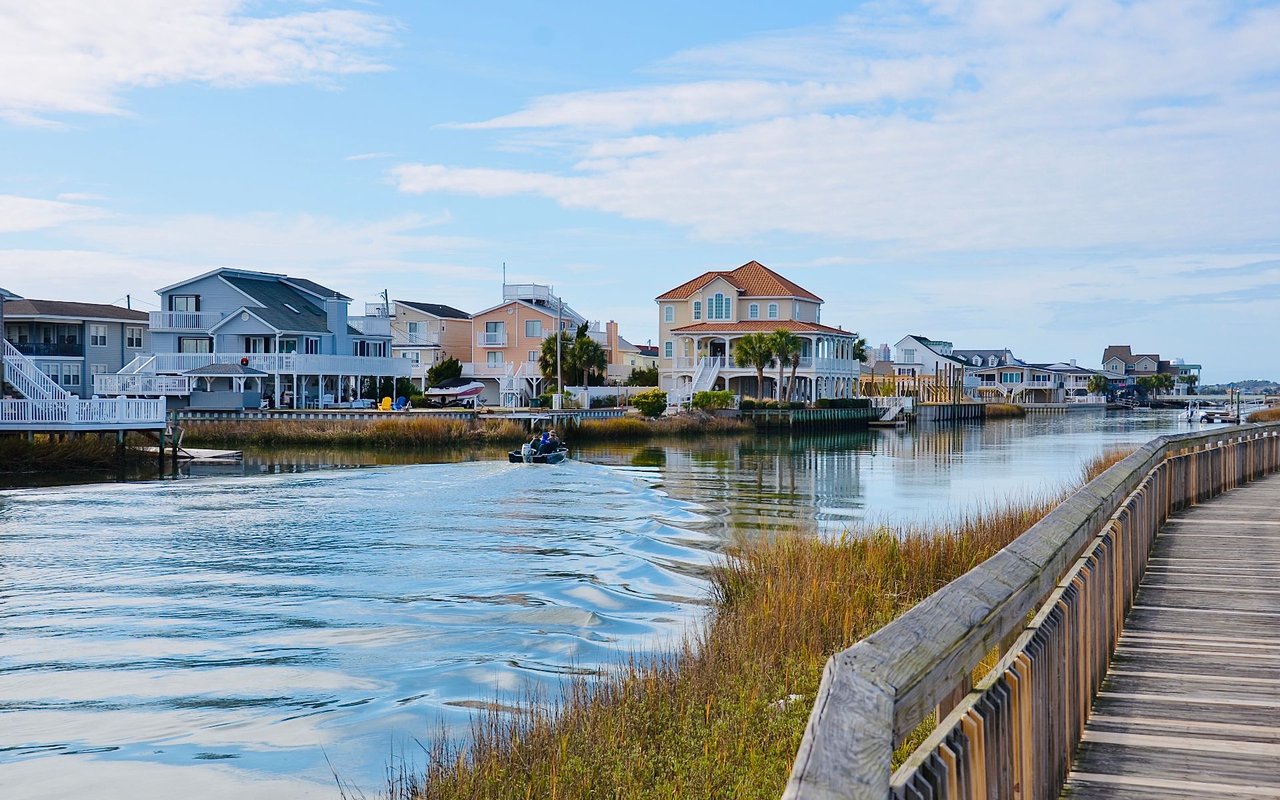
Creekfront homes face the back side of the island along Pawleys Creek. They come with private docks, boat access, and the daily rhythm of crabbing, fishing, and kayaking straight off the property. Among longtime Pawleys families, creekfront often carries equal or greater prestige than oceanfront — the water is calm, the sunsets are better, and the dock is the center of family life. Expect $2 million to $4.5 million.
Marsh-view homes sit along the island's central spine or set back from the creek. They trade the private dock for panoramic marsh and sunset views and short walks to the beach, and they represent the realistic entry point to island ownership at roughly $1.5 million to $2.5 million.
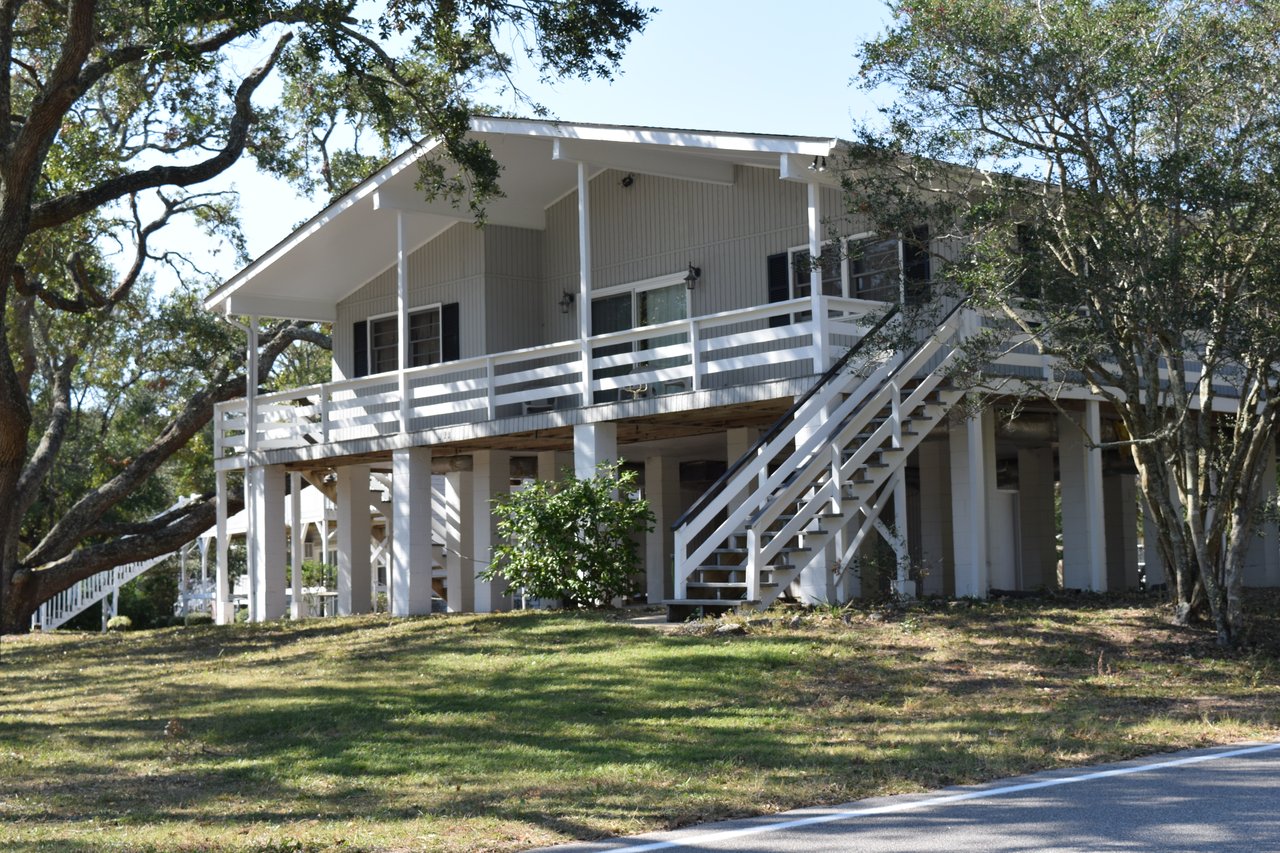
A note on the housing stock itself: many island homes are older, elevated on pilings, and built with materials and methods that predate modern codes. Inspections here should be done by someone who understands coastal construction, piling condition, and elevation — not a generalist from an inland market.
The mainland is where most buyers end up, and its neighborhoods have genuinely distinct personalities.
Litchfield Beach is the closest thing to resort living in the area. It spans oceanfront condo towers, gated enclaves, and single-family homes, with Litchfield-by-the-Sea as the anchor — a gated community offering private beach club access, tennis, and miles of walking and biking trails through marsh and maritime forest. Condos here run roughly $350,000 to $700,000; single-family homes range from about $800,000 well past $2.5 million, depending on proximity to the ocean.
Willbrook Plantation is a gated Lowcountry golf community built on former rice plantation land, with an entrance drive lined in old oaks and a Dan Maples course threading through marsh boardwalks. Lots are generous, the atmosphere is quiet and residential, and homes typically trade between $650,000 and $1.1 million. It skews heavily toward full-time and part-time residents rather than investors.
Heritage Plantation is the riverfront counterpart. Also built on old rice plantation land, it fronts the Waccamaw River and includes a private marina with deepwater access — a serious draw for boaters who want to run the Intracoastal or head to Georgetown Harbor. Custom homes here generally start around $650,000 and climb past $1.4 million.
True Blue has a different energy: a resort-and-golf community built around the Mike Strantz–designed championship course, with a mix of mid-rise condos, townhomes, and single-family homes. It's one of the area's strongest short-term rental markets, which means more turnover and more visitors than the gated single-family communities. Condos typically run $250,000 to $400,000; homes fall between $500,000 and $800,000.
Three communities define the upper tier of the Waccamaw Neck, and each serves a different buyer.
Pawleys Plantation wraps a Jack Nicklaus Signature course around salt marsh, with several holes playing along the water and long views back toward the island. It has a manned gate staffed around the clock and a mix of custom single-family estates and low-maintenance golf villas, which makes it unusually flexible — you can buy a $300,000 lock-and-leave condo or a $1 million-plus marsh-view home inside the same gate. Condos and townhomes run roughly $280,000 to $450,000; single-family homes range from $600,000 to $1.2 million and up.
Caledonia Golf & Fish Club is the area's showpiece. Built on a historic rice plantation, its Mike Strantz design runs beneath century-old live oaks draped in Spanish moss and consistently ranks among the best public courses in the country. Caledonia itself is primarily a club rather than a large residential development, with residential enclaves such as Kings River Club and adjacent plantation properties offering Lowcountry-style homes with river access. Expect $750,000 to $1.5 million-plus.
DeBordieu Colony, just south toward Georgetown, is the most private option on this stretch of coast. It spans roughly 2,700 acres, much of it permanently protected nature preserve, with private Atlantic beach access, a Pete Dye golf course, a boat ramp with creek access, and an oceanfront clubhouse. The appeal is direct beachfront living without a causeway and without traffic. Interior and golf-view homes run $1.3 million to $2.5 million; oceanfront and creekfront estates run $3 million to $6 million and beyond.
A large share of buyers here want the coast without the maintenance. The mainland delivers that in three distinct forms.
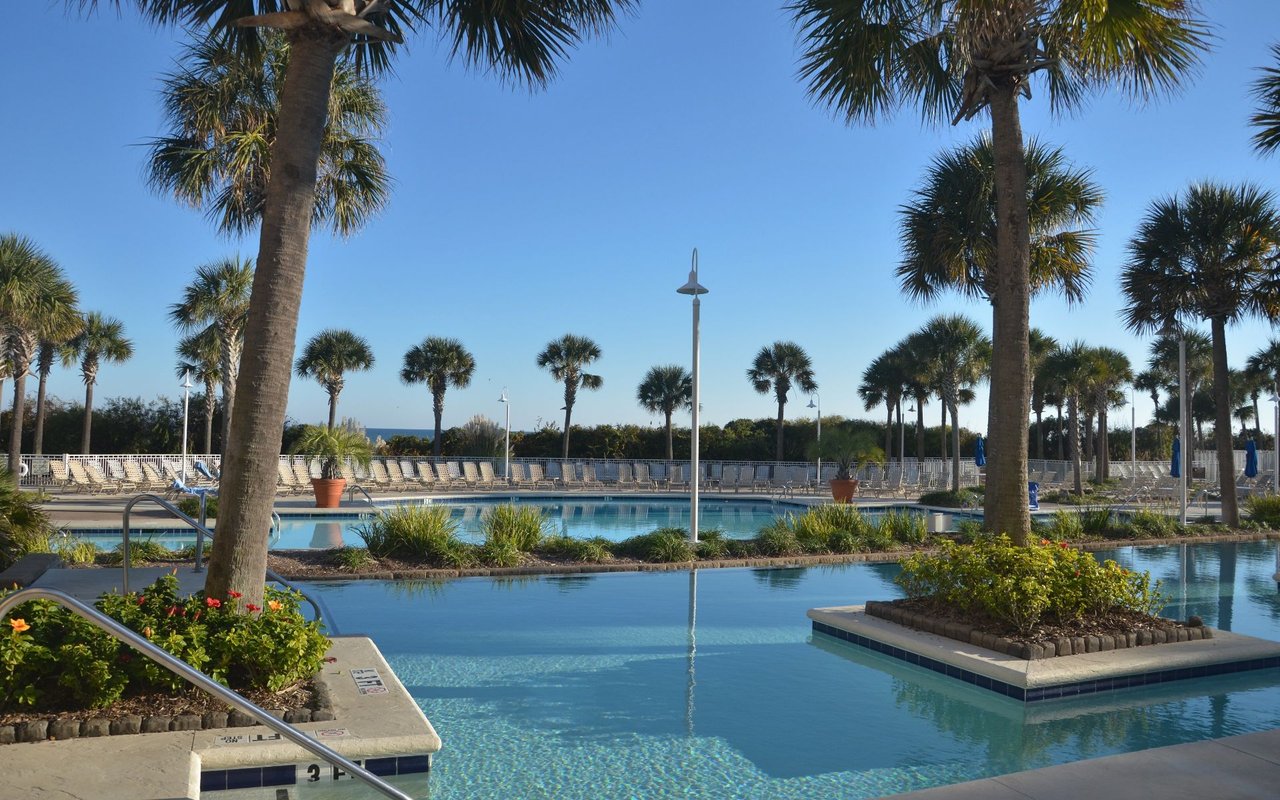
Golf condos and villas at True Blue, Pawleys Plantation, and the Plantation Club typically offer two- and three-bedroom layouts with pools, tennis, and optional on-site rental management. They're the most common entry point for vacationers and investors, generally $250,000 to $450,000.
Oceanfront and marsh-view condos cluster inside Litchfield-by-the-Sea — buildings like Empress, Camelot, and Topsail offer elevators, private beach access, and resort amenities. These serve buyers who want water views and zero exterior upkeep, at $450,000 to $1.2 million-plus.
Patio homes and courtyard cottages in neighborhoods like Ricefields, Parkersville, and the Lakes at Litchfield are the retirement sweet spot: zero-lot-line construction, HOA-maintained landscaping, main-floor primary suites, and attached garages. Most fall between $400,000 and $650,000.
If you plan to age in place, pay close attention to floor plan and elevation. Many coastal homes here are raised, which is excellent for flood risk and less excellent for knees. Single-level homes on slab in Zone X communities are a specific and limited inventory pool — worth targeting deliberately.
This is the section most out-of-state buyers underestimate, and the one that most often changes which house someone buys.
Flood zones. The island proper sits entirely within FEMA Special Flood Hazard Areas. Oceanfront and marsh-edge homes typically fall in VE zones, which account for storm surge and wave action, or AE zones, which account for rising water. The mainland varies considerably: inland gated golf communities are largely in low-risk Zone X, while properties near the salt marsh or the Waccamaw River fall into Zone AE. Two listings in the same neighborhood can carry very different flood costs.
Elevation certificates. An EC, prepared by a licensed surveyor, documents a home's finished floor height relative to Base Flood Elevation. In AE and VE zones it effectively sets your premium. The Town of Pawleys Island requires construction elevated three feet above BFE, and homes that meet or exceed that freeboard see meaningfully lower rates. Always ask for the existing EC during due diligence — if there isn't one, order it before closing.
The coastal insurance stack. Standard homeowners insurance does not cover rising water or surge. Owners here typically carry three layers: a hazard/homeowners policy for fire, theft, and standard risks; a wind and hail policy or endorsement for hurricane damage, which usually carries a separate named-storm deductible of 2% to 5% of insured value rather than a flat dollar amount; and a flood policy through the NFIP or a private carrier.
One local advantage worth knowing: Pawleys Island participates in FEMA's Community Rating System at Class 5, which translates to discounts of up to 25% on NFIP flood premiums for properties in the participating area. That's a real, recurring savings most buyers never hear about until after closing.
Practical advice: get insurance quotes during your due diligence period, not after. On a marginal property, annual carrying costs can differ by five figures between two homes at the same purchase price.
South Carolina taxes property based on how it's occupied, and the spread between the two rates is one of the largest in the country.
4% Legal Primary Residence | 6% Second Home / Investment | |
|---|---|---|
Assessment ratio | 4% of fair market value | 6% of fair market value |
School operating taxes | Exempt under Act 388 | Fully taxed |
Effective annual burden | Roughly 0.45% – 0.6% of value | Roughly 1.2% – 1.8%+ of value |
How it's applied | Must be applied for with the county assessor | Default rate for non-residents |
The assessment ratio itself is only half the story. Under Act 388, legal primary residents are exempt from local school operating property taxes — and school operations make up the largest share of local millage. The combined effect is that a second-home owner commonly pays two and a half to three times the annual property tax of a full-time resident on an identical house.
On a $700,000 home, that's frequently the difference between roughly $3,500 and roughly $10,000 a year. It should be part of your purchase math from day one.
Two things to remember. First, the 4% rate is not automatic — you must file with the Georgetown County Assessor and document residency with items like South Carolina vehicle registration, a state tax return, or voter registration. Second, if you're buying a second home now with plans to retire here later, model both numbers, because your carrying cost will drop substantially the year you convert.
Rental income potential here depends almost entirely on which side of a property line you're standing on.
On the island, short-term vacation rentals are a long-standing tradition — many families have rented their cottages for generations. The Town enforces rules on parking (on-street guest parking is restricted), noise, trash, and occupancy, and homes must meet structural and fire safety requirements. The investment profile is high barrier, high gross: prime oceanfront and creekfront homes can produce $80,000 to $200,000+ in seasonal gross revenue. But with a $1.5M–$5M basis, wind and flood premiums, and the 6% non-primary tax rate, net yield is far less dramatic than the gross suggests. Island rentals tend to make sense for buyers who want the house and would like it to help carry itself — not for buyers running a pure return calculation.
On the mainland, unincorporated Georgetown County treats short-term rentals as a residential use with relatively light county-level regulation beyond lodging tax registration and business licensing. The HOA is the real gatekeeper. Most single-family golf communities — Heritage, Willbrook, and similar — either prohibit short-term rentals outright or impose six- to twelve-month minimum leases.
The purpose-built rental hubs are Litchfield-by-the-Sea for oceanfront condos and True Blue and the golf villa complexes for resort condos. Both are designed for turnkey rental operation with management programs in place. Gross cap rates on mainland condos generally land in the 6% to 9% range.
If rental income is central to your plan, read the master deed and HOA covenants before you fall in love with a property. This is the single most common expensive mistake we see in this market.
Pawleys Island falls within Georgetown County School District, and specifically within the Waccamaw cluster — widely considered one of the strongest public school tracks on the Grand Strand and a genuine factor in mainland home values.
The cluster is structured as four schools rather than the usual three. Waccamaw Elementary serves Pre-K through grade 3 and consistently earns high marks on state report cards. Waccamaw Intermediate handles grades 4 and 5, with strong standardized test performance, STEM programming, and outdoor learning space. Waccamaw Middle covers grades 6 through 8 and regularly rates "Excellent" on South Carolina report cards, with well-developed athletics and arts. Waccamaw High serves grades 9 through 12 with AP coursework, dual-enrollment options, and a competitive athletic program — particularly in golf, soccer, and tennis.
On the private side, The Lowcountry School in Pawleys Island emphasizes small classes and experiential, individualized learning. Lowcountry Preparatory School, also in Pawleys Island, is a K–12 college-preparatory school offering an International Baccalaureate program. St. Michael's Catholic School in Murrells Inlet, about 10 minutes north, serves Pre-K through grade 8.
Because the cluster covers the whole Waccamaw Neck, school assignment is less of a variable here than in larger districts — but confirm zoning on any specific address, particularly near the northern and southern edges of the Neck.
For a place with no commercial strip, Pawleys Island is surrounded by an unusual concentration of genuinely significant attractions.
The Original Hammock Shops Village sits under moss-draped oaks on Highway 17 and functions as the area's town center. It's a collection of boutiques, galleries, and restaurants built around the original workshop where Captain Richard Ward wove the first Pawleys Island rope hammock in the late 1800s. The hammocks are still made and sold there.
Brookgreen Gardens, just north, spans 9,100 acres and holds the largest collection of American figurative sculpture in the country, set within formal botanical gardens laid out over four former rice plantations. It also includes a Lowcountry Zoo and nature trails through the old rice fields. Annual memberships are common among residents — it's a place people visit dozens of times, not once.
Huntington Beach State Park sits directly across Highway 17 from Brookgreen, covering 2,500 acres of undeveloped beach, freshwater lagoon (with a reliable alligator population), and some of the best birding on the East Coast. At its center is Atalaya, the 1930s Moorish-style winter home and studio of sculptor Anna Hyatt Huntington — an extraordinary structure to walk through, and the site of an annual arts festival.
Murrells Inlet, ten minutes north, bills itself as the Seafood Capital of South Carolina and largely earns it. The MarshWalk is a half-mile boardwalk along a natural saltwater estuary, lined with waterfront restaurants, live music, and charter boat slips. It's where Pawleys residents go when they want a crowd — and then come home to an island where there isn't one.
Healthcare. Tidelands Health anchors medical care on the Waccamaw Neck. The Tidelands Health Medical Park at Pawleys Island provides primary care, internal medicine, cardiology, and physical therapy locally. For hospital-level care, Tidelands Waccamaw Community Hospital in Murrells Inlet is a full-service 167-bed facility 10 to 15 minutes north, and Tidelands Georgetown Memorial Hospital is 15 to 20 minutes south. For retirement buyers, this proximity matters more than almost any other logistical factor — and it's a meaningful advantage over more remote coastal alternatives.
Shopping and everyday services. The Highway 17 corridor covers daily needs comfortably: two Publix locations, a Fresh Market, Food Lion, Lowes Foods, plus local hardware stores, pharmacies, and independent restaurants. For big-box retail — Target, Costco, Home Depot, Walmart — plan on 15 to 20 minutes north toward Murrells Inlet and Surfside Beach. There is no Costco run that doesn't involve Highway 17.
Commuting. U.S. 17 is the only north-south arterial, which is both the area's charm and its constraint.
Myrtle Beach is about 25 miles north, or 30 to 45 minutes depending on where you start and when you leave. Traffic tightens around Murrells Inlet and the US-17 Bypass merge, and summer tourist season adds real time. Myrtle Beach International Airport is the practical air connection.
Charleston is roughly 70 to 73 miles south, or 90 minutes to 1 hour 45 minutes — a straightforward drive through Georgetown and Francis Marion National Forest, with the usual slowdowns approaching Mount Pleasant. It's an easy day trip, but not a daily commute.
Plan around the single-corridor reality: it shapes where you'd want to live if you work in Myrtle Beach, and it's worth driving your likely commute at rush hour before you commit to a neighborhood.
Pawleys Island rewards buyers who know exactly what they're buying. The difference between an AE and a VE zone, between a 4% and a 6% assessment, between an HOA that permits weekly rentals and one that requires a twelve-month lease — these aren't footnotes here. They're the difference between a home that works the way you expected and one that doesn't.
Jan and Dan Sitter of Coastal Beach Homes LLC are licensed South Carolina REALTORS® who work across the Grand Strand and handle every stage of a transaction personally, from first showing through closing and after. Clients regularly point to their working knowledge of local specifics — school zoning, area regulations, and the practical questions that come up when you're buying from out of state. If you're weighing Pawleys against Litchfield, trying to understand what a particular property's insurance and tax picture actually looks like, or preparing to sell, they're a straightforward place to start.
Reach Jan and Dan at (854) 269-1593 or [email protected]. Their office is at 9628 N Kings Hwy, Myrtle Beach, SC 29572, and you can browse current listings and area guides at coastalbeachhomessc.com.
There's plenty to do around Pawleys Island, including shopping, dining, nightlife, parks, and more. Data provided by Walk Score and Yelp.
Explore popular things to do in the area, including Quigley's Pint and Plate, Kudzu Litchfield, and Teakwoods Bar vs Grill.
| Name | Category | Distance | Reviews |
Ratings by
Yelp
|
|---|---|---|---|---|
| Dining · $$ | 3.24 miles | 484 reviews | 4.1/5 stars | |
| Dining · $$ | 3.29 miles | 58 reviews | 4.2/5 stars | |
| Dining | 3.32 miles | 15 reviews | 3.5/5 stars | |
| Dining | 3.32 miles | 4 reviews | 3.8/5 stars | |
| Active | 1.43 miles | 8 reviews | 5/5 stars | |
| Active | 1.96 miles | 14 reviews | 3.9/5 stars | |
| Active | 2.44 miles | 0 reviews | 0/5 stars | |
| Active | 2.78 miles | 0 reviews | 0/5 stars | |
| Active | 2.96 miles | 1 review | 5/5 stars | |
| Active | 3.29 miles | 0 reviews | 0/5 stars | |
| Active | 3.3 miles | 0 reviews | 0/5 stars | |
| Active | 3.32 miles | 0 reviews | 0/5 stars | |
| Active | 3.32 miles | 0 reviews | 0/5 stars | |
| Beauty | 3.26 miles | 0 reviews | 0/5 stars | |
| Beauty | 3.27 miles | 17 reviews | 4.9/5 stars | |
| Beauty | 3.28 miles | 20 reviews | 4.8/5 stars | |
| Beauty | 3.3 miles | 0 reviews | 0/5 stars | |
| Beauty | 3.3 miles | 6 reviews | 4.8/5 stars | |
| Beauty | 3.32 miles | 7 reviews | 4.3/5 stars | |
|
|
||||
|
|
||||
|
|
||||
|
|
||||
|
|
||||
|
|
Pawleys Island has 7,662 households, with an average household size of 2.26. Data provided by the U.S. Census Bureau. Here’s what the people living in Pawleys Island do for work — and how long it takes them to get there. Data provided by the U.S. Census Bureau. 17,346 people call Pawleys Island home. The population density is 281 and the largest age group is Data provided by the U.S. Census Bureau.
Total Population
Population Density Population Density This is the number of people per square mile in a neighborhood.
Median Age
Men vs Women
Population by Age Group
0-9 Years
10-17 Years
18-24 Years
25-64 Years
65-74 Years
75+ Years
Education Level
Total Households
Average Household Size
Average individual Income
Households with Children
With Children:
Without Children:
Marital Status
Blue vs White Collar Workers
Blue Collar:
White Collar:
When you hire Jan and Dan, you get a team of professional real estate agent diligently working together on your behalf. They are knowledgeable and experienced professionals you can trust to best represent your interests in our unique market.
JAN AND DAN SITTER | COASTAL BEACH HOMES
ADDRESS
9628 N KINGS HWY
MYRTLE BEACH SC 29572