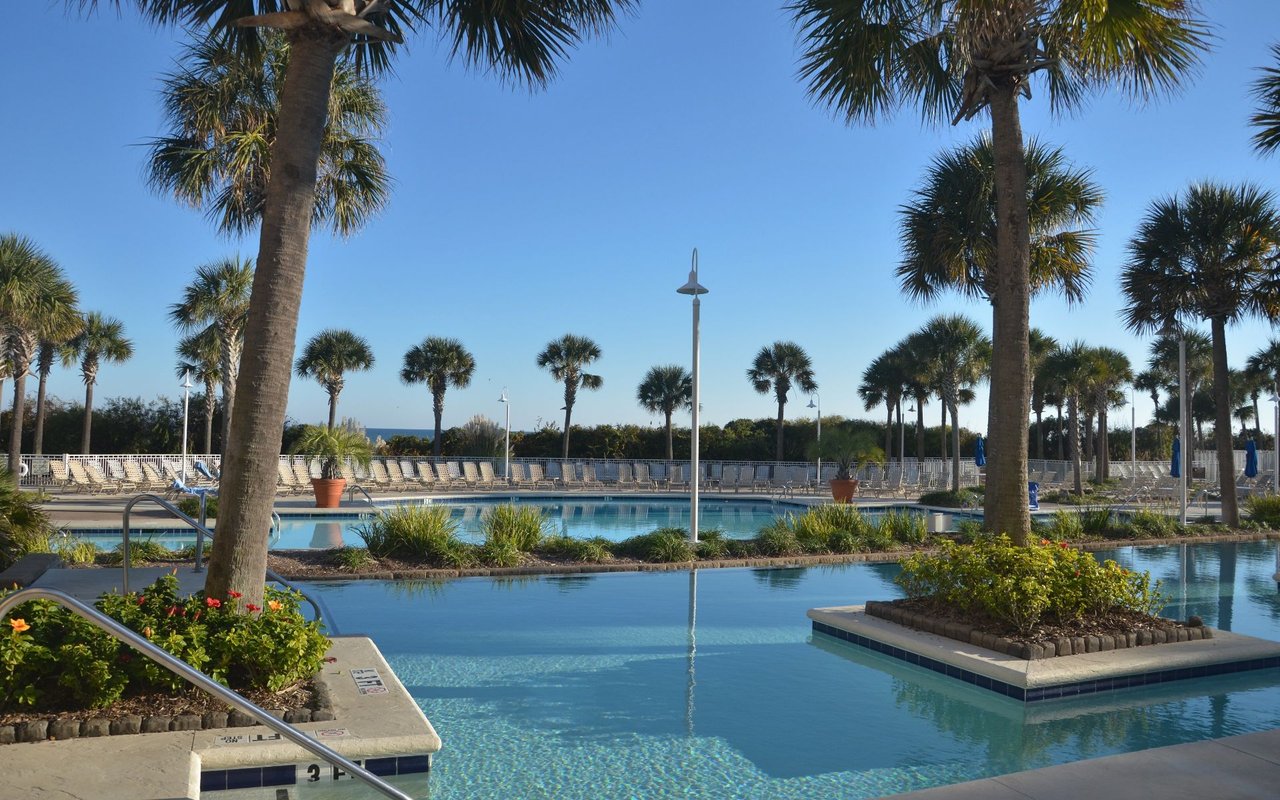
Explore Homes for Sale in Garden City Beach, SC
An exciting beach community, located just south of Surfside Beach.
An exciting beach community, located just south of Surfside Beach.
89 people live in Garden City Beach, where the median age is 50 and the average individual income is $52,944. Data provided by the U.S. Census Bureau.
Total Population
Median Age
Population Density Population Density This is the number of people per square mile in a neighborhood.
Average individual Income
Garden City Beach is one of those rare coastal pockets that people discover almost by accident and then never want to leave. It doesn't have the neon skyline of Myrtle Beach or the polished historic gates of Charleston. What it has is something harder to manufacture: a narrow ribbon of land where the Atlantic sits on one side, the marshes of Murrells Inlet sit on the other, and golf carts—not tour buses—set the pace. For buyers relocating from out of state or shopping for a place to retire, that combination is the whole appeal. This guide walks you through what it's actually like to own here, what it costs, and the specific local details that separate a smart purchase from an expensive surprise.
The Grand Strand is a continuous 60-mile arc of beach along South Carolina's Atlantic coast, running from Little River in the north down to Winyah Bay. Garden City Beach occupies a genuine sweet spot in the southern third of that arc—roughly ten miles south of downtown Myrtle Beach, far enough to escape the high-rise density but close enough that the airport, shopping, and entertainment are a short drive away.
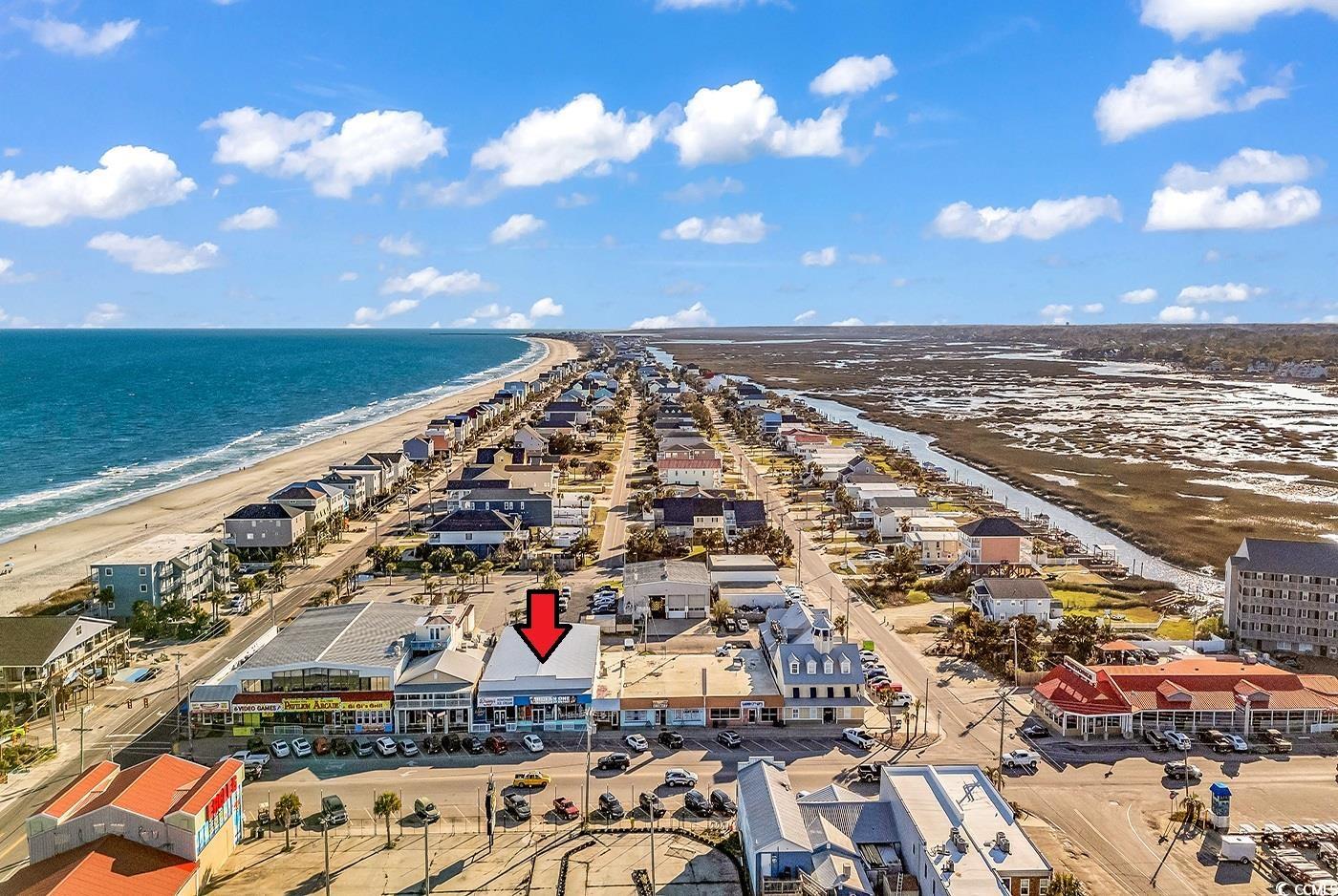
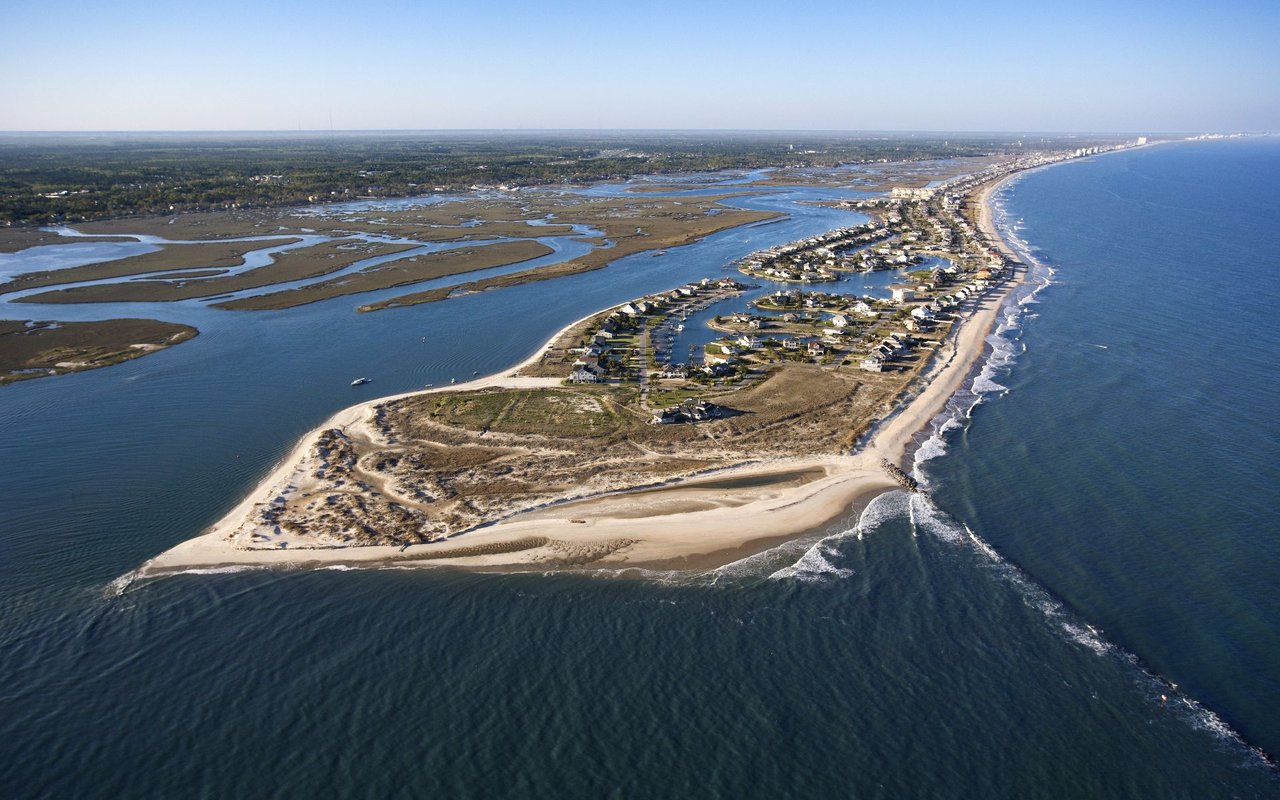
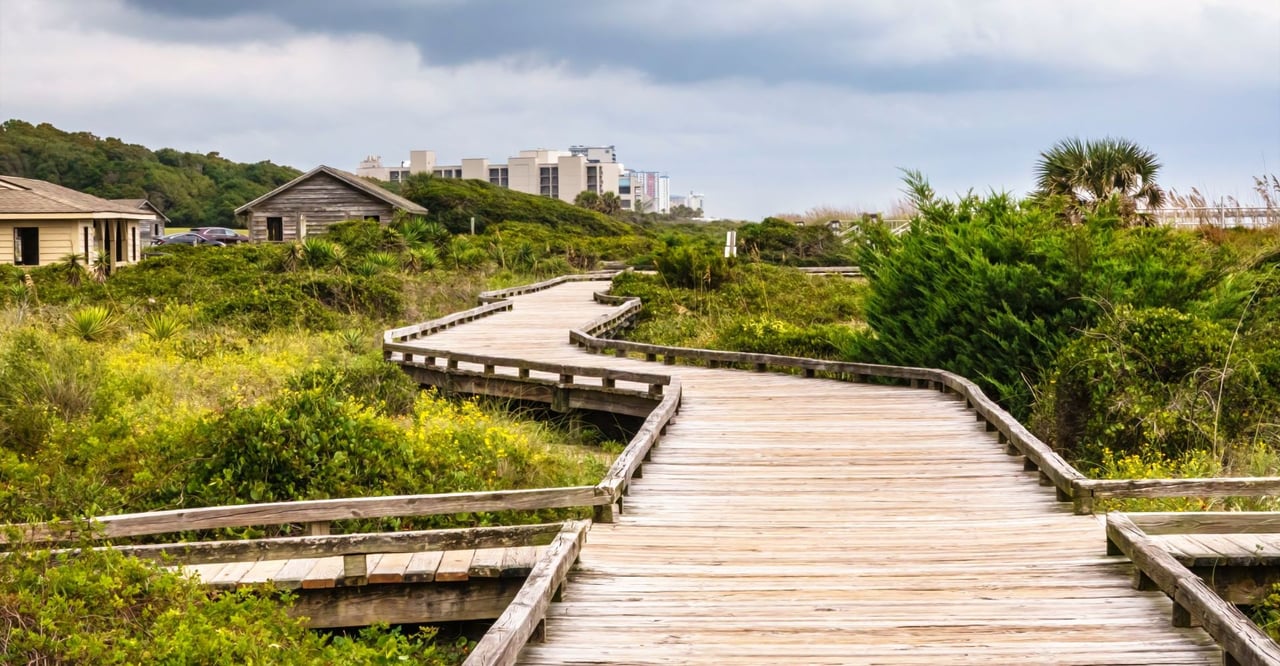
What truly defines Garden City Beach is its geography. The community sits on a slender peninsula with the ocean to the east and the tidal marshes of Murrells Inlet to the west. On many streets you can watch the sun rise over the Atlantic from your front porch and watch it set over the marsh from your back deck. To the north is family-oriented Surfside Beach; to the south, the peninsula ends right at the mouth of Murrells Inlet, the self-styled "Seafood Capital of South Carolina." That position—wedged between a quiet residential beach town and one of the best dining corridors in the state—is a large part of why demand here has stayed so steady.
If you're moving here from the Northeast, the Midwest, or anywhere with a heavy tax burden and long winters, the math and the lifestyle both tend to work in your favor. A few reasons stand out.
The first is taxes. South Carolina is consistently ranked among the most retiree-friendly states in the country, and the savings are concrete rather than theoretical. The state does not tax Social Security benefits at all. Residents 65 and older can deduct up to $15,000 of retirement income—pensions, IRA and 401(k) withdrawals—from their state income taxes. And property taxes in Horry and Georgetown counties are strikingly low compared with most of the country, especially once a long-term resident qualifies for the Homestead Exemption, which shields the first $50,000 of a primary home's value from property tax.
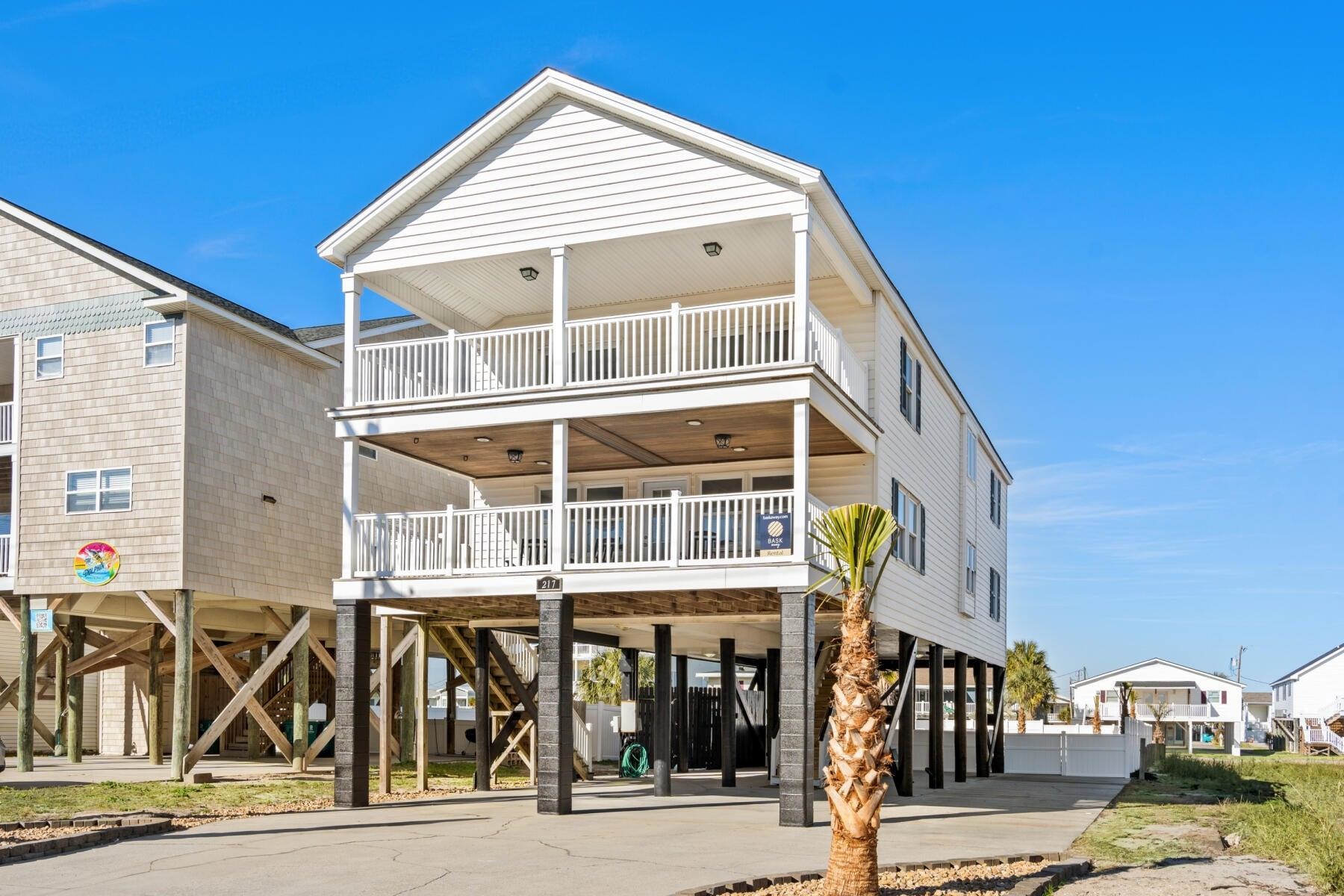
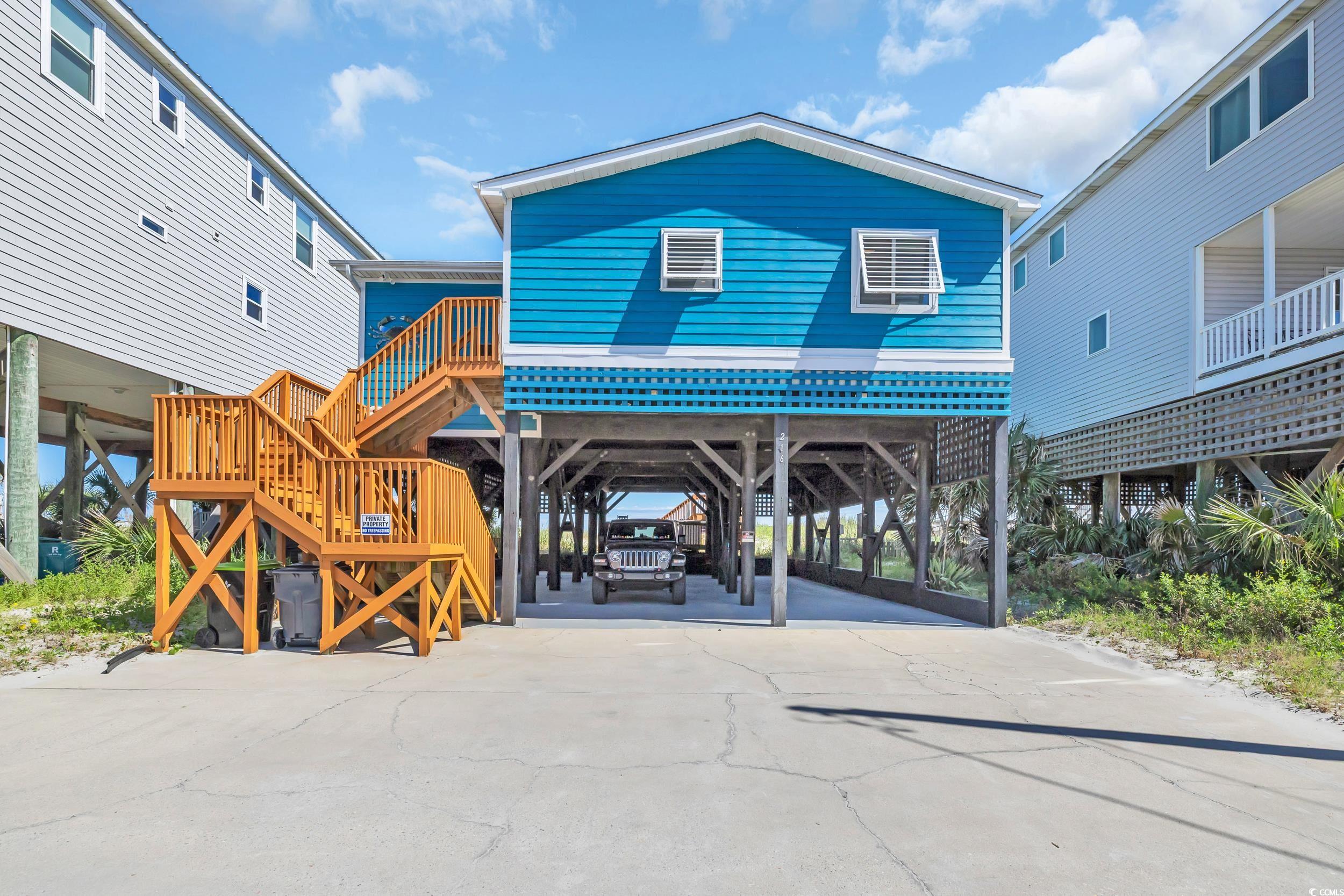
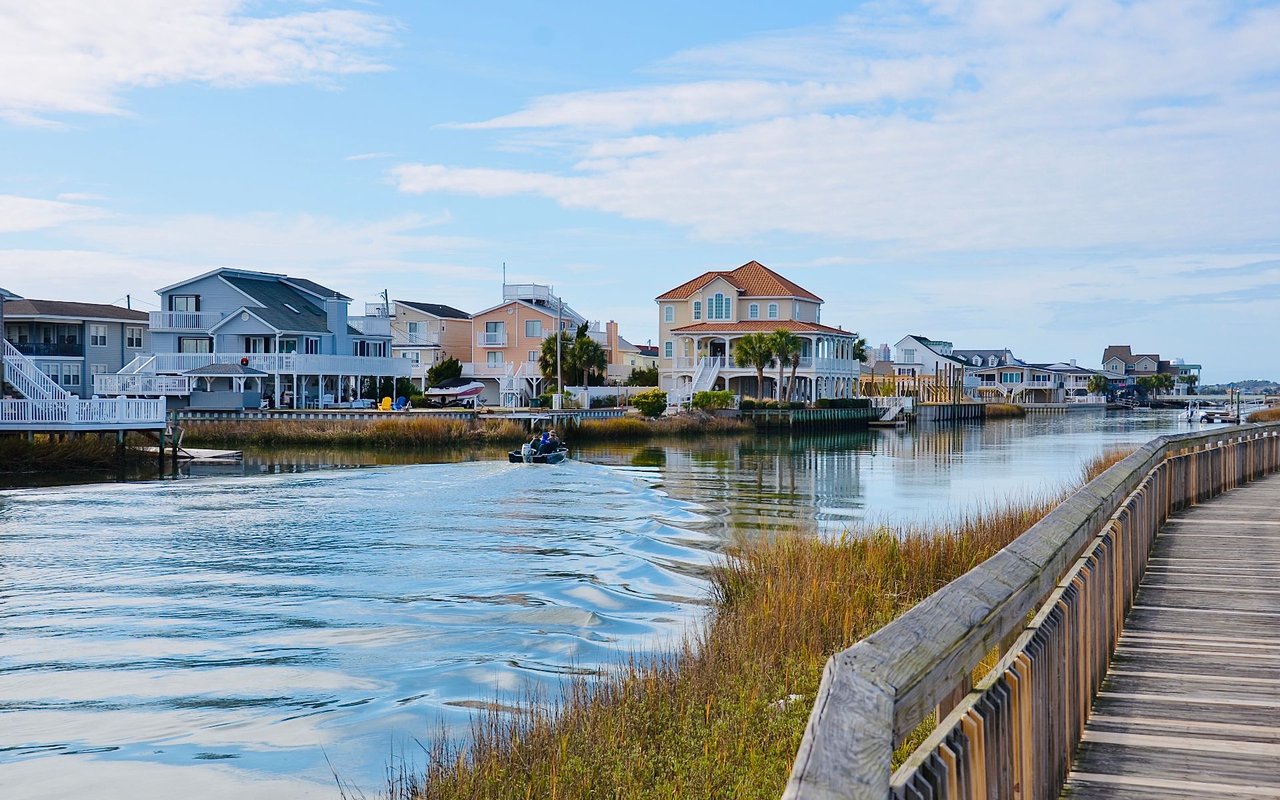
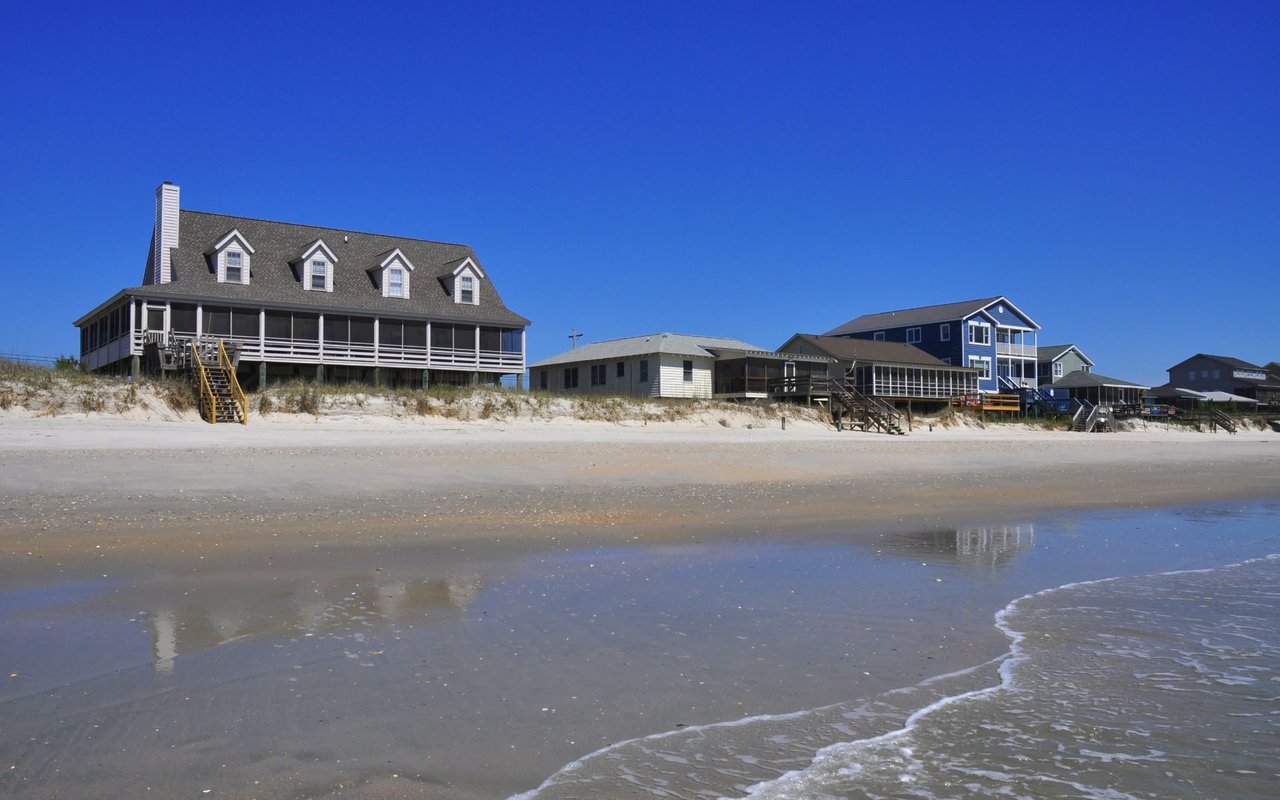
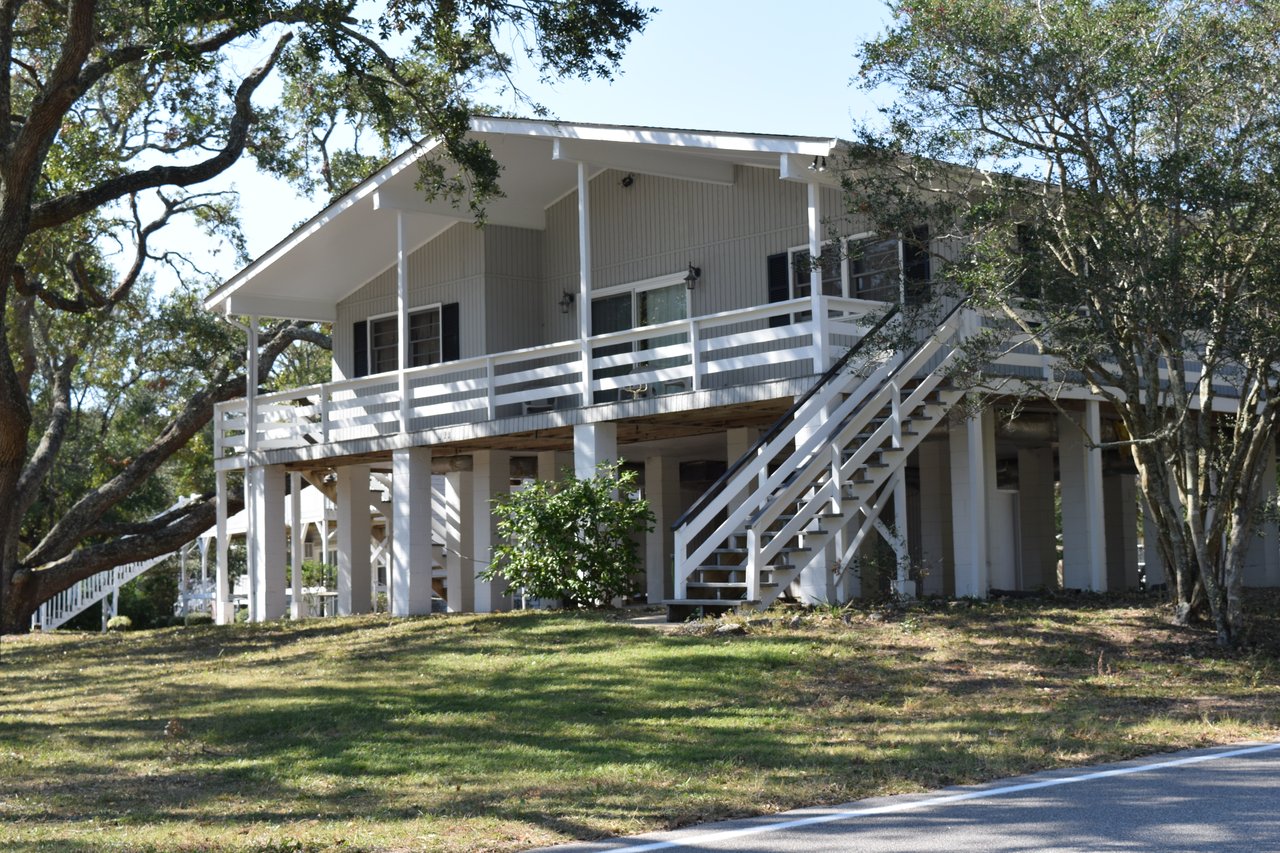
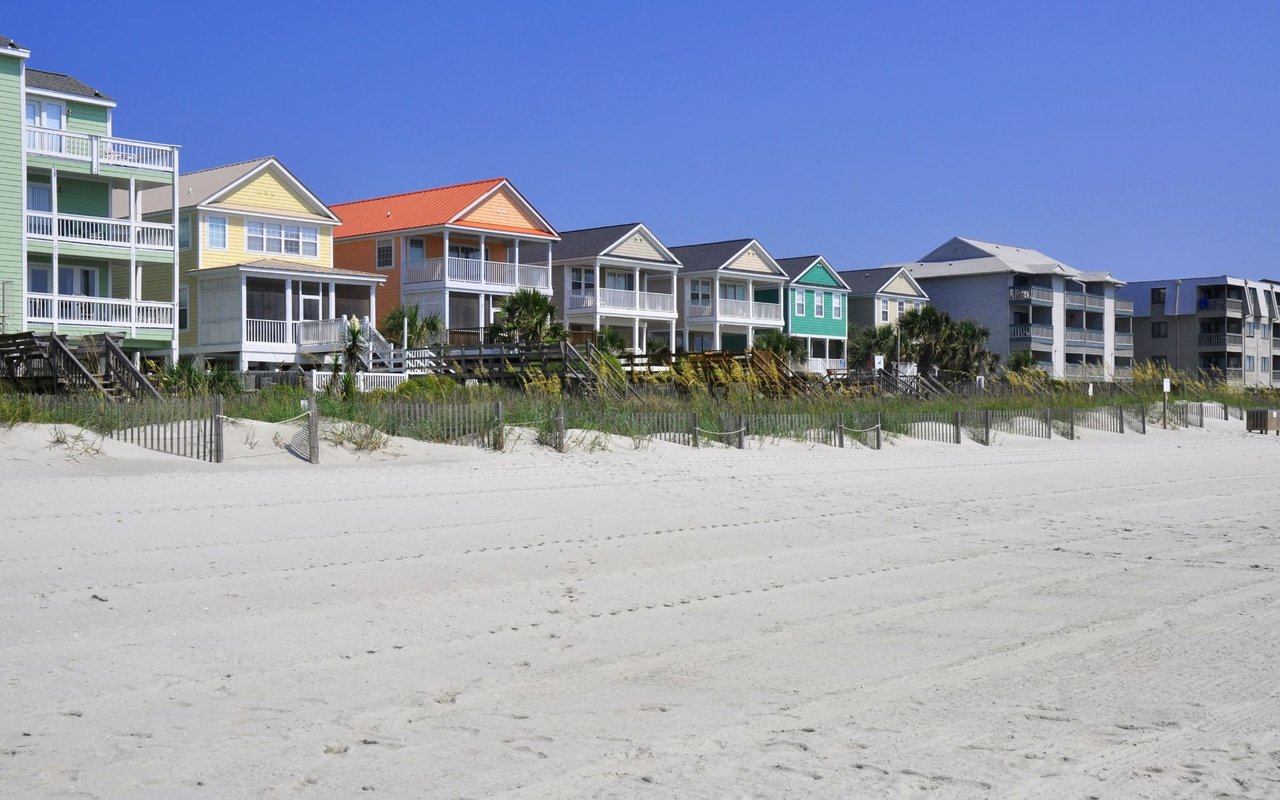
The second reason is the pace. There are no towering oceanfront hotels here. The shoreline is lined with raised beach cottages and modest condo buildings instead, and daily life runs on what locals affectionately call "golf cart culture"—residents cruise to the pier, the beach, or the grocery store by cart rather than fighting for parking. It feels like a neighborhood, not a resort.
Beyond that, the recreation and the medical access make it practical for the long haul. Boating, crabbing, kayaking, and deep-sea fishing are all at your doorstep thanks to the inlet, and dozens of championship golf courses—True Blue, Caledonia, Tupelo Bay among them—are minutes away. Just as importantly, top-tier healthcare is close, anchored by Tidelands Waccamaw Community Hospital in Murrells Inlet and backed by McLeod Health and Grand Strand Health networks. For anyone who has watched friends retire to a beautiful place that turned out to be an hour from a good hospital, that proximity matters enormously.
One geographic reality shapes everything that follows: because the peninsula itself is narrow and almost fully built out, large new master-planned developments rarely fit on the beach. The new construction boom is happening a few minutes inland—across the bypass and into neighboring Murrells Inlet and Surfside Beach—while the peninsula itself sees premium infill and custom raised-beach builds.
For buyers who want modern floor plans, energy-efficient construction, and community amenities rather than a 1970s cottage to renovate, the strongest options sit just off the oceanfront. Here are the developments worth knowing.
Middlebrooke, right on the Garden City/Murrells Inlet border off the Garden City Connector and US-17, has become one of the most popular newer communities in the immediate area. It mixes single-family homes with townhomes in a clean coastal aesthetic, and its location gives residents fast beach access—a short golf cart ride—without sitting in oceanfront traffic. A community pool, clubhouse, and walking trails round it out.
The Cove at Glenns Bay, a few minutes north on the Surfside/Garden City line, is a newer townhome community built by major national builders like D.R. Horton. With multi-story townhomes frequently starting in the high-$200ks to mid-$300ks, it's one of the more attainable ways to buy brand-new construction this close to the ocean—a natural fit for low-maintenance and lock-and-leave buyers.
SayeBrook, including the Toll Brothers section, sits slightly north toward the southern edge of Surfside and Myrtle Beach. This is the area's premier master-planned address, delivering higher-end single-family homes with open-concept layouts, luxury finishes, and meaningful structural customization for buyers who want a turnkey luxury build.
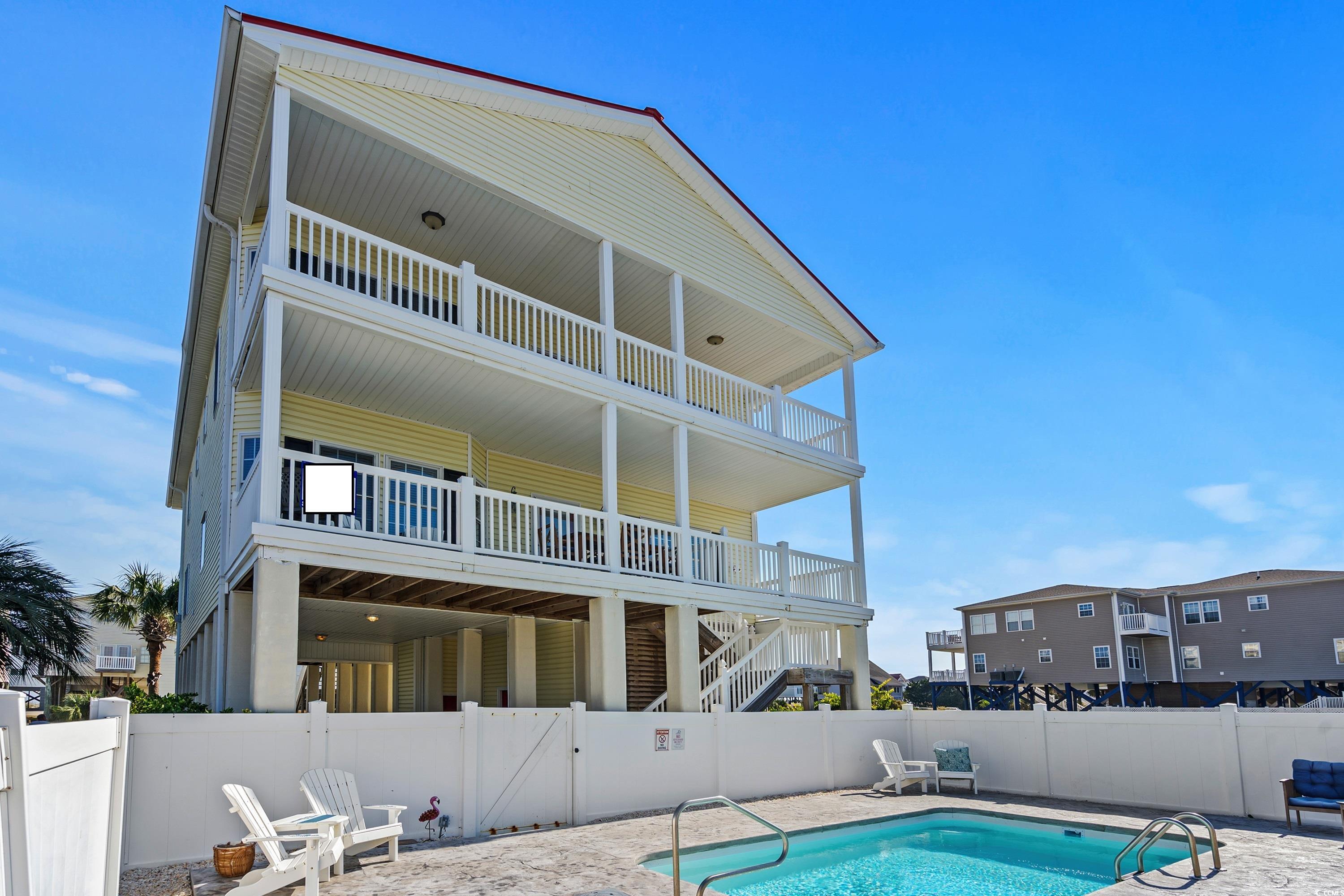
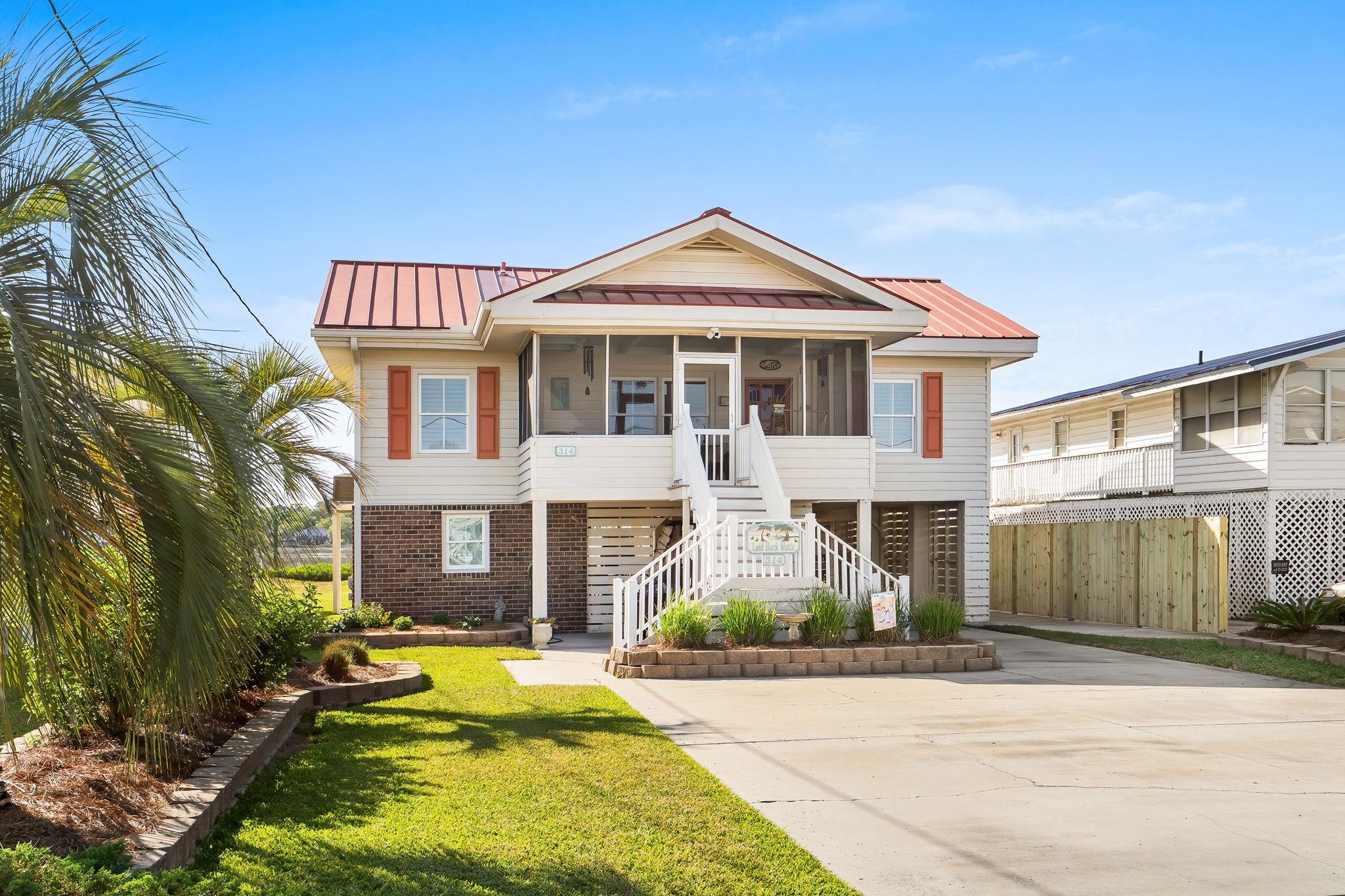
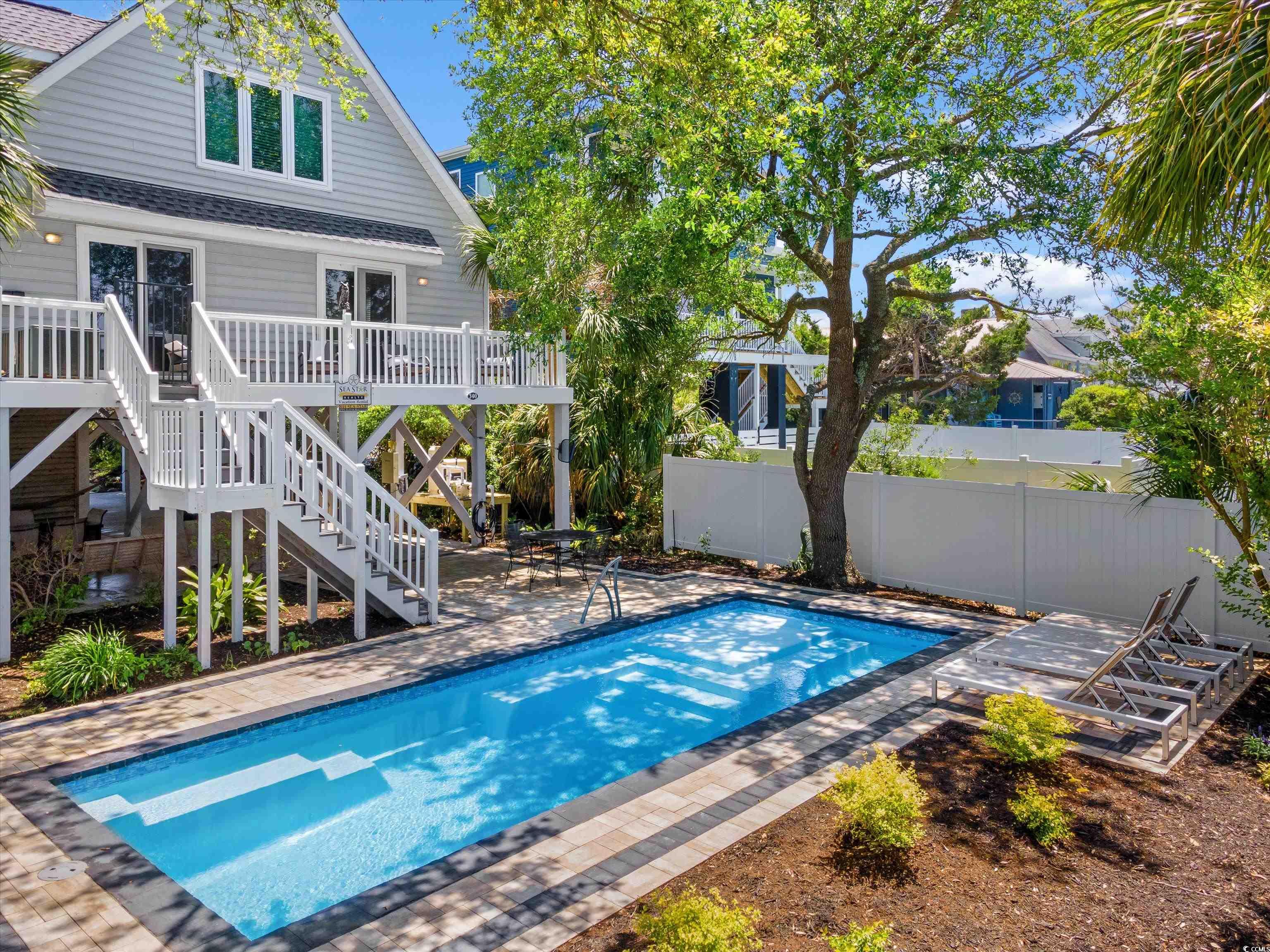
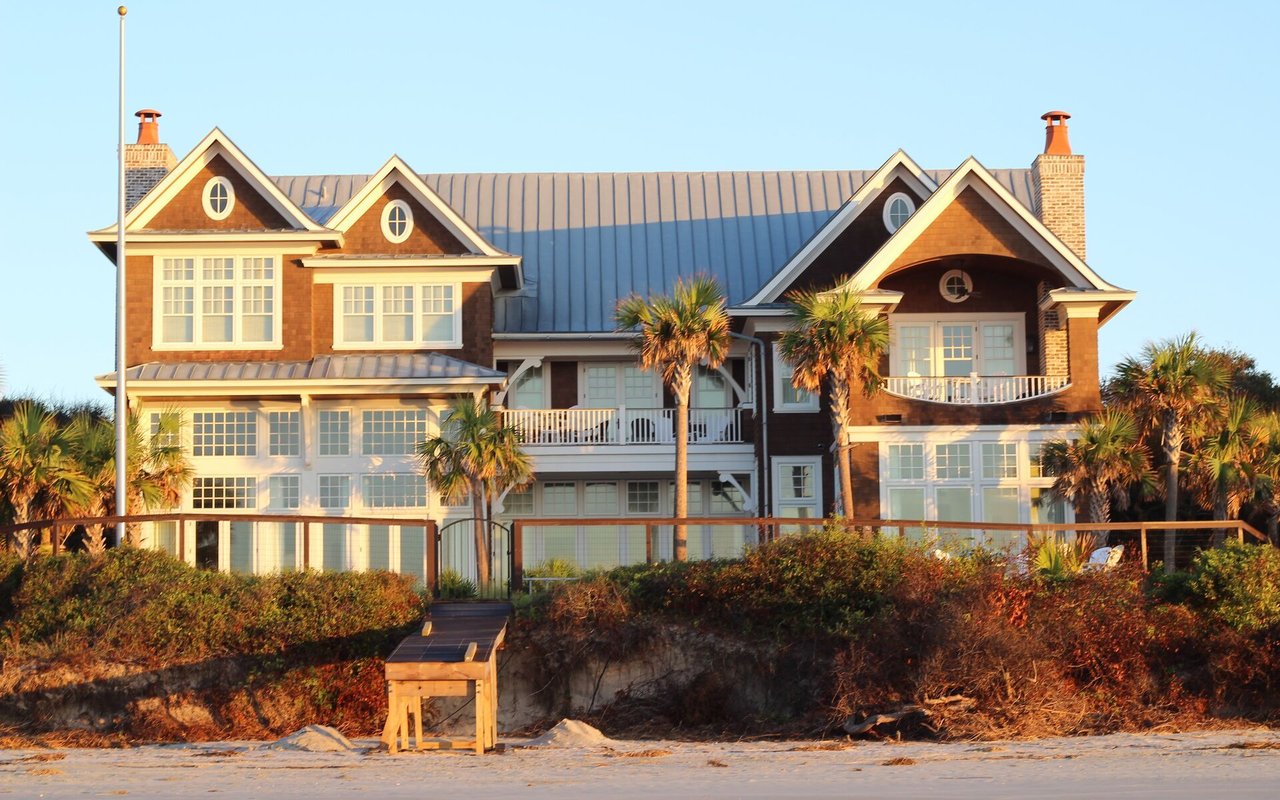
Finally, for buyers who insist on being on the actual peninsula, "new construction" usually means a custom raised beach home. Builders routinely buy an older cottage, clear the lot, and put up a large five-to-eight-bedroom home on stilts with a private pool and an elevator—built either as a luxury rental machine or a multigenerational family estate.
If you want built-in social life, single-level living, or a true age-restricted setting, the South Strand offers some of the best options in the state, and several are within a few minutes of the beach.
Woodlake Village, just off the Garden City Connector, is an established and genuinely beloved age-restricted 55+ community—often described by residents as one of the friendliest neighborhoods on the South Strand. The homes are single-family patio and ranch styles built for easy one-level living, and the community runs an active calendar of dinners, clubs, and holiday events alongside a clubhouse, pool, and pickleball and tennis courts.
Ocean Pines, tucked right into Garden City itself, is a dedicated 55+ manufactured-home community with a much lower barrier to entry. Set among mature pines and magnolias, it offers two clubhouses, two pools, a catch-and-release fishing lake, bocce, organized events, and even dedicated RV and boat storage. For retirees who want the location without the price tag, it's one of the best values on the coast.
About ten minutes south in Murrells Inlet, Seasons at Prince Creek West is a gated 55+ active-adult community for buyers who want amenities at full scale: a 29,000-square-foot clubhouse, indoor and outdoor pools, a fitness center, sports lounge, tennis and pickleball, and access to the only TPC golf course in South Carolina. Lawn maintenance is folded into the HOA.
Also in Murrells Inlet, StoneGate at Prince Creek caters heavily to active retirees even though it isn't strictly age-segregated. Its single-level patio homes, attached garages, and full exterior maintenance make it an ideal lock-and-leave neighborhood for snowbirds who spend part of the year elsewhere.
The current market favors buyers more than it has in years. After the frantic competition of the early 2020s, inventory across the Grand Strand has loosened considerably, and the dynamic has shifted into balanced—occasionally buyer-friendly—territory. Homes are spending more time on the market, often somewhere between 60 and 120-plus days depending on the type and price band, and there's real room to negotiate on price or ask for seller concessions.
For the broader Garden City zip code, the median listing price tends to land somewhere around $285,000 to $320,000—but that figure is misleading on its own, because it blends affordable inland condos and manufactured retirement homes with multimillion-dollar oceanfront estates. The number that matters is what a home costs in the specific setting you want, which is exactly what the next section breaks down.
On a peninsula this narrow, the single biggest decision you'll make isn't the floor plan—it's which side of the land you want to be on. Each setting comes with its own lifestyle, its own views, and a very different price tag.
The beachfront side, along the Golden Mile and Waccamaw Drive, is the classic ocean lifestyle: stepping onto the sand from your door, waves as your soundtrack, and—if you choose to rent—strong vacation income. Here you'll find oceanfront condos and tall raised beach houses on stilts. One-bedroom oceanfront condos can still start in the $230,000 to $270,000 range, with larger two-to-three-bedroom units running roughly $350,000 to $550,000. Single-family homes carry a steep premium: second-row, ocean-view homes typically start around $800,000, and true oceanfront houses regularly run from $1.5 million to $3.5 million and beyond.
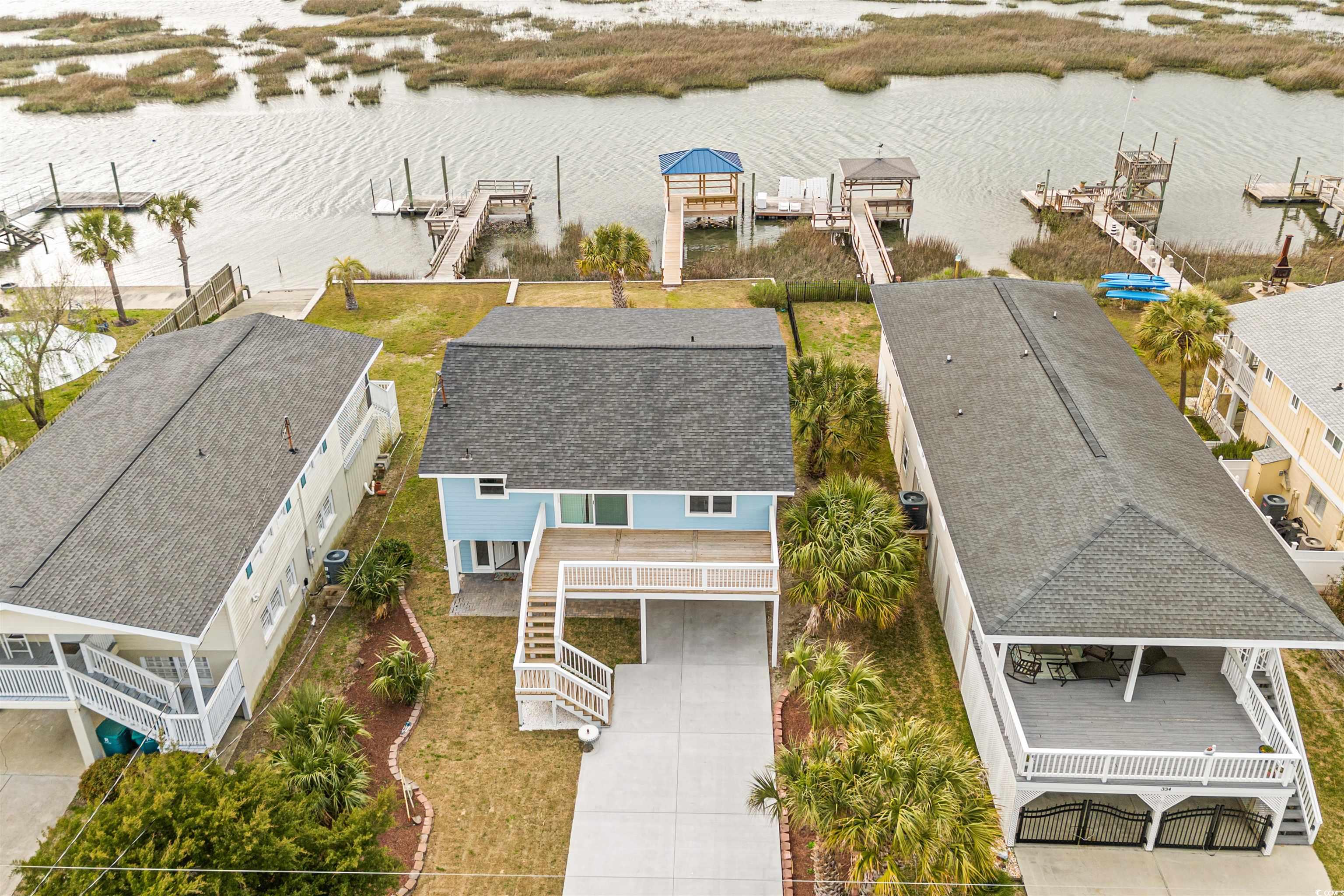
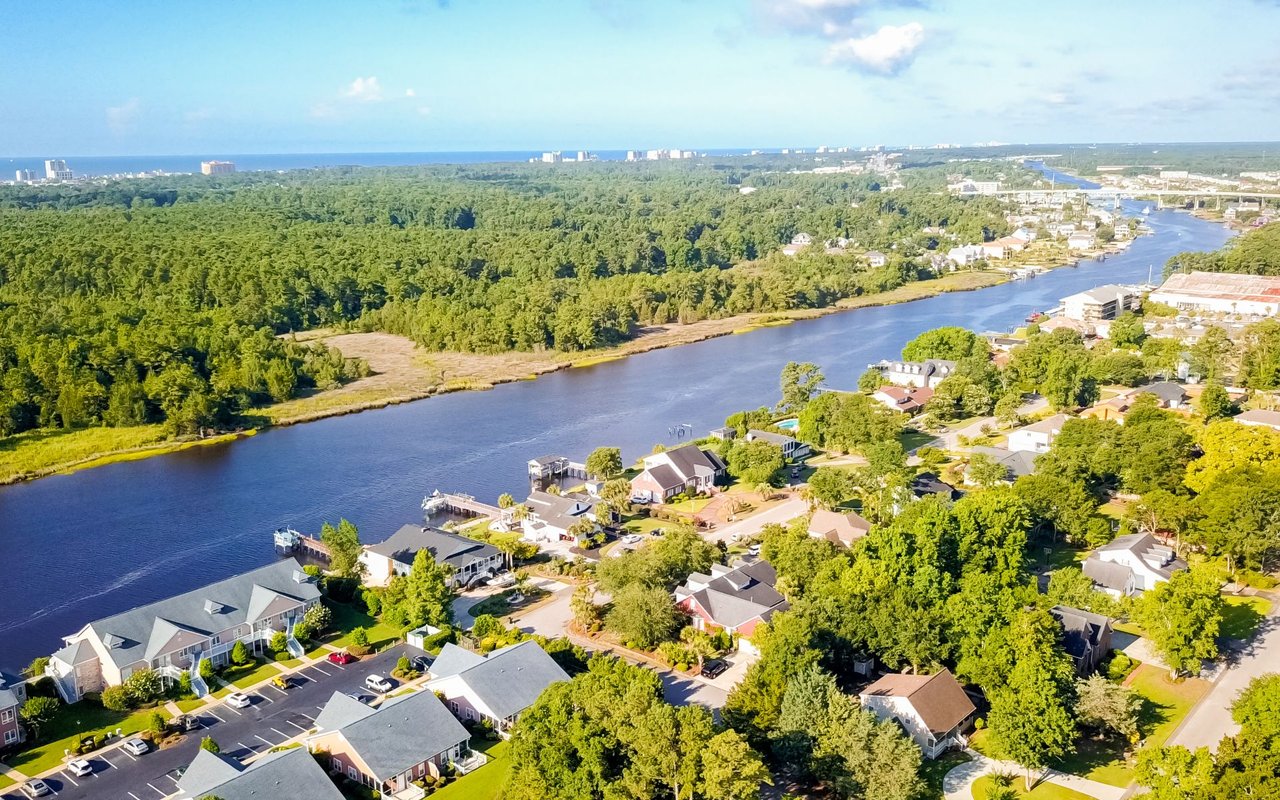
The marsh side, facing Murrells Inlet, trades crashing surf for tidal creeks, marsh grass, herons, and some of the best sunsets on the coast. It's quieter, more private, and a magnet for boaters and nature lovers, with many homes offering private docks or boat lifts. Marsh-front single-family homes generally land between $650,000 and $1.2 million, driven mostly by the age of the home and whether it has deep-water or tidal-creek dock access.
The inland side, just across the Highway 17 Bypass, is where most year-round residents and retirees actually settle. It offers traditional neighborhoods, mature trees, golf-course views, and gated privacy—removed from summer tourist traffic but still a five-to-ten-minute cart ride to the sand. It's also the most affordable by a wide margin.
Setting | Typical buyer | What you'll generally pay |
|---|---|---|
Beachfront | Vacation lifestyle, rental investors | Condos $230K–$550K; homes $800K–$3.5M+ |
Marsh / inlet | Boaters, privacy seekers | Homes $650K–$1.2M |
Inland | Year-round residents, retirees | Condos/townhomes $160K–$250K; homes $300K–$450K; 55+ manufactured $80K–$150K |
One budgeting note that catches out-of-state buyers off guard: beachfront and marsh properties carry significantly higher wind/hail and flood insurance premiums, plus the potential for beachfront HOA assessments. Inland homes carry meaningfully lower insurance and HOA costs—something to weigh alongside the purchase price, not after.
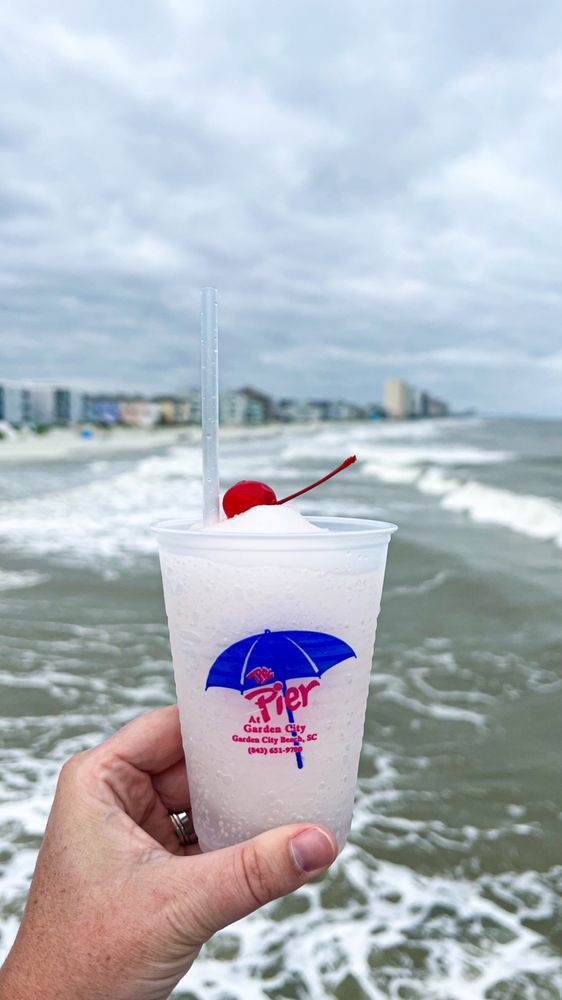
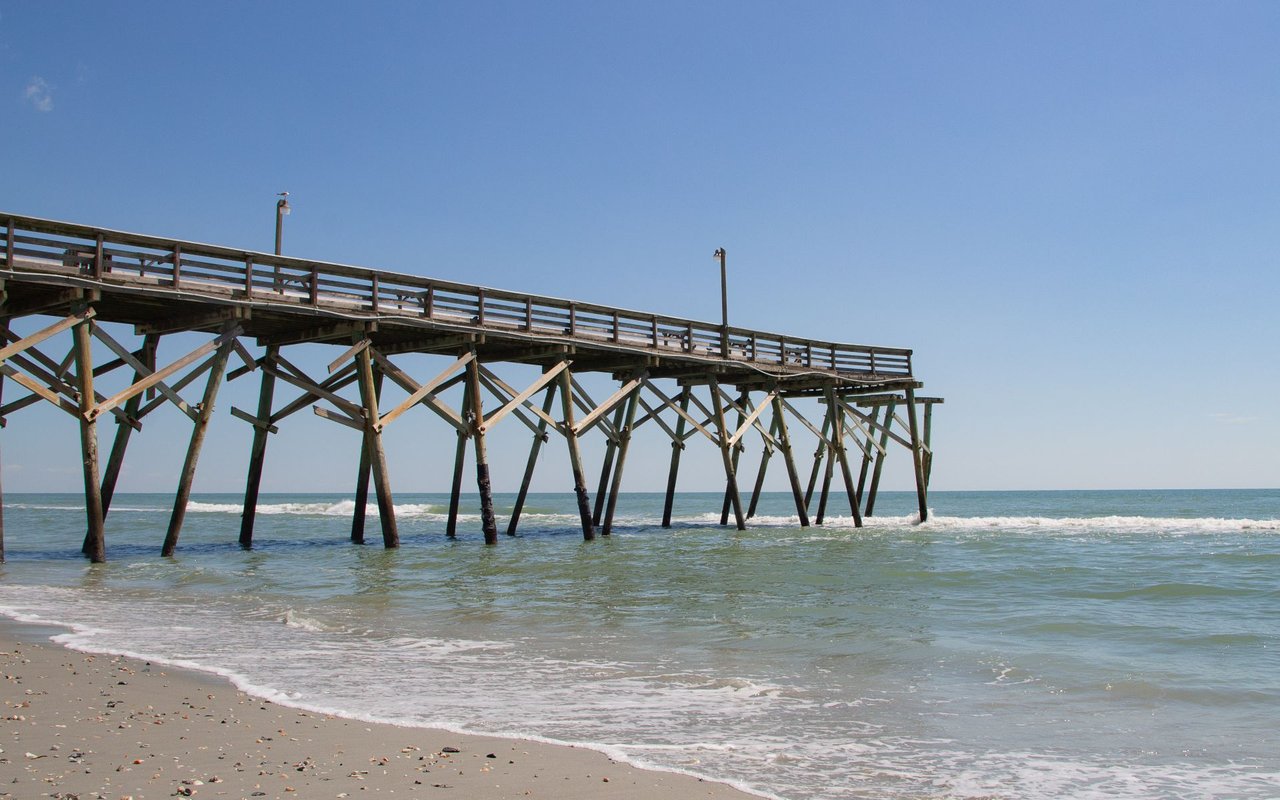
Day-to-day life here orbits the water and the pier, and most of it is reachable by golf cart. The center of gravity is The Pier at Garden City, which stretches 668 feet into the Atlantic and functions as the town's living room. By day it's a fishing destination—because the pier holds a commercial license, you can fish without your own state license—and it comes with a stocked tackle shop, a casual café known for its "Hugo Burger," and a sprawling family arcade. After dark, the shelter at the pier's end turns into one of the Grand Strand's most distinctive bars, with live music and karaoke playing out over the waves.
Dining runs from beloved old-school to genuinely world-class. In Garden City itself, institutions like Sam's Corner (foot-long hot dogs since the 1950s) and Sara J's Seafood deliver the casual coastal staples. But the real draw is five minutes south: the Murrells Inlet MarshWalk, a waterfront boardwalk lined with standout restaurants like Wicked Tuna and Drunken Jack's, where fresh seafood, live music, and marsh-front sunsets are the nightly default.
Daily errands are refreshingly easy. Kroger, Publix, and Walmart sit just across Highway 17 on the mainland and connect to the neighborhoods through golf cart paths, so basic shopping rarely means battling commercial traffic. The streets near the pier fill out the rest with surf shops, beach boutiques, and ice cream parlors that give the town its slightly vintage, unhurried character.
For anyone relocating later in life, the medical picture here is reassuring, and it's worth being specific about. Garden City Beach sits in the middle of a dense and growing healthcare grid. Tidelands Waccamaw Community Hospital, minutes south in Murrells Inlet, serves as the primary hospital for the area and is well regarded for joint replacement, spine surgery, and critical care, with a 24-hour ER. A few miles north, South Strand Medical Center runs a 24/7 standalone emergency department plus imaging and outpatient surgery. Further north in Myrtle Beach, Grand Strand Medical Center operates as a Level I adult trauma center with strong cardiac and stroke programs.
Outpatient and specialized senior care is just as accessible. The Tidelands Health Medical Park in Murrells Inlet consolidates family medicine, orthopedics, cardiology, gastroenterology, and physical therapy in one modern complex, while McLeod Health and MUSC maintain a heavy presence of primary care and specialists along the Highway 17 corridor. Whether it's a routine checkup, rehab after a round of golf, or ongoing cardiac care, you're never far from it.
Buying coastal real estate in South Carolina is rewarding, but the rules around taxes and the way the town is governed surprise nearly every first-time out-of-state buyer.
Start with an unusual fact: Garden City Beach is split between two counties. The northern half lies in Horry County (the Myrtle Beach side); the southern half lies in Georgetown County (the Murrells Inlet side). Millage rates, school tax treatment, and certain county regulations differ between them, which means two similar homes a few blocks apart can carry different annual costs. Always confirm with your agent which county a specific address falls in before you run your numbers.
The tax point that matters most is the assessment ratio, and it's the single most common mistake out-of-state buyers make.
Property classification | Assessment ratio | What it means for you |
|---|---|---|
Primary residence | 4% | Permanent residents; also exempt from the local school operating tax, which keeps the bill very low |
Second home / investment | 6% | Vacation homes and rentals; no school tax exemption |
The gap between 4% and 6% is not small—a second home can owe two to three times the annual tax of an identical primary residence. The catch is that when you close, the county automatically defaults you to the higher 6% rate. If you're relocating permanently, you have to actively file for the 4% Legal Residence rate with the Horry or Georgetown County Assessor, proving residency with a South Carolina driver's license and voter registration. Skipping that step quietly is one of the costliest oversights a relocating buyer can make.
Coastal ownership carries costs that simply don't exist inland, and understanding them up front protects you from sticker shock at closing.
On property disclosures you'll see FEMA flood-zone designations. As a rough guide, Zone VE covers true oceanfront property exposed to wave action and storm surge—flood insurance is lender-required and rates run highest. Zone AE covers the marsh side, tidal channels, and low-lying areas just off the beach, and also requires flood insurance. Zone X covers most inland and higher-elevation property, where lenders do not require flood insurance. Worth knowing: under FEMA's modern Risk Rating 2.0 system, premiums no longer depend only on your broad zone. They factor in your home's exact elevation, foundation type, distance from water, and rebuild cost—so two identical houses on the same street can quote very differently.
The other thing to understand is that a single homeowner's policy isn't enough on the coast. You're typically buying three layers: standard hazard/homeowners coverage (fire, theft); a separate wind and hail policy or rider, because standard policies exclude hurricane wind damage in this debris zone; and a separate flood policy through the NFIP or a private insurer, since no homeowner's policy ever covers rising water. For an inland townhome or 55+ home in Zone X, flood coverage can run as little as $400 to $800 a year. For a raised single-family beach house in an AE or VE zone, all three layers combined can easily reach $3,000 to $8,000-plus annually. Before you make an offer, always ask for the current owner's active insurance declaration pages so the real carrying cost is on the table.
One last item for condo and townhome buyers: examine the HOA's financial health, not just its monthly dues. Coastal buildings take a beating from salt, humidity, and wind, and if a roof or structural repair comes due without adequate reserves, the association issues a special assessment—a lump-sum bill to every owner that can range from a few thousand dollars to tens of thousands. Reserve studies and meeting minutes tell that story before you buy.
If you're weighing Garden City Beach as an income property and not only a home, it's one of the strongest short-term rental micro-markets on the Grand Strand—and notably more investor-friendly than its neighbors. Where Myrtle Beach and Surfside Beach have layered on strict zoning overlays that restrict short-term rentals in residential areas, much of the Garden City peninsula sits in unincorporated pockets of Horry and Georgetown counties, which means it largely avoids those aggressive municipal limits.
The most lucrative play is the large second-row or oceanfront raised beach house—six to ten bedrooms, a private pool, an elevator—rented to multigenerational families who travel from across the East Coast and Midwest. These command peak-season weekly rates in the $6,000 to $12,000-plus range. If that's out of reach, oceanfront condos near the pier post strong May-through-September occupancy and benefit from a reliable snowbird market, with Northern retirees renting for one to three months at a time through the winter. And because tourism is the region's economic engine, you don't have to manage anything from out of state—local firms handle pricing, marketing, linens, and maintenance, though full-service management typically runs 18% to 35% of gross rental revenue.
Two compliance points are non-negotiable before you buy. First, even when the county permits short-term rentals, the individual condo or community association can override that—so have your agent verify the CC&Rs to confirm there's no minimum 30-day lease rule. Second, any rental under 90 days requires you to collect and remit South Carolina accommodations tax plus local hospitality fees; platforms like Airbnb and VRBO collect most of it automatically, but you'll still need a local business license.
Garden City Beach is an exceptional fit if you want a laid-back, cart-centric coastal life without high-rises and crowds; if you love fishing, boating, and the MarshWalk dining scene a few minutes away; if you're retiring and want to stretch your dollars with South Carolina's generous senior tax treatment; or if you want a high-yielding rental in one of the area's most permissive STR markets. It's probably not your fit if you want a walkable urban downtown with public transit and luxury shopping, or if you need to avoid seasonal tourist traffic entirely in June and July.
If it does check your boxes, the move from browsing to buying rewards genuine local expertise—coastal real estate has too many variables to navigate cold. A strong local agent should do a property-specific tax breakdown comparing the 4% and 6% rates for the exact homes you're considering, pull flood-zone data and the current owner's insurance declarations so the carrying costs are clear before you offer, audit HOA reserves and meeting minutes on any condo, and even map the "golf cart geography" to confirm you can legally and safely reach the beach and the grocery store by cart.
That's exactly where Jan and Dan Sitter of Coastal Beach Homes come in. As licensed South Carolina REALTORS® who know the Myrtle Beach and South Strand markets street by street—from county lines and flood zones to which neighborhoods truly live the golf-cart lifestyle—they work as a dedicated team on your behalf through every stage of the purchase and well past closing. They're especially well suited to out-of-state buyers and those relocating or retiring, guiding you carefully so you find the right home, at the right price, with no surprises on that first tax bill. If you're ready to explore Garden City Beach in person or just want honest answers to your questions, reach out to Jan and Dan at (854) 269-1593 or [email protected], or visit their office at 9628 N Kings Hwy, Myrtle Beach, SC 29572. No one will work harder for you.
There's plenty to do around Garden City Beach, including shopping, dining, nightlife, parks, and more. Data provided by Walk Score and Yelp.
Explore popular things to do in the area, including Garden City Pavilion Arcade & GiGi's Grill, Garden City Grocery, and Causeway Grill & Raw Bar.
| Name | Category | Distance | Reviews |
Ratings by
Yelp
|
|---|---|---|---|---|
| Dining · $ | 0.16 miles | 30 reviews | 3.6/5 stars | |
| Dining | 0.17 miles | 4 reviews | 4/5 stars | |
| Dining · $$ | 0.2 miles | 120 reviews | 3.5/5 stars | |
| Active | 0.16 miles | 80 reviews | 3.8/5 stars | |
|
|
||||
|
|
||||
|
|
||||
|
|
||||
|
|
||||
|
|
Garden City Beach has 114 households, with an average household size of 2. Data provided by the U.S. Census Bureau. Here’s what the people living in Garden City Beach do for work — and how long it takes them to get there. Data provided by the U.S. Census Bureau. 89 people call Garden City Beach home. The population density is 26,141 and the largest age group is Data provided by the U.S. Census Bureau.
Total Population
Population Density Population Density This is the number of people per square mile in a neighborhood.
Median Age
Men vs Women
Population by Age Group
0-9 Years
10-17 Years
18-24 Years
25-64 Years
65-74 Years
75+ Years
Education Level
Total Households
Average Household Size
Average individual Income
Households with Children
With Children:
Without Children:
Marital Status
Blue vs White Collar Workers
Blue Collar:
White Collar:
When you hire Jan and Dan, you get a team of professional real estate agent diligently working together on your behalf. They are knowledgeable and experienced professionals you can trust to best represent your interests in our unique market.
JAN AND DAN SITTER | COASTAL BEACH HOMES
ADDRESS
9628 N KINGS HWY
MYRTLE BEACH SC 29572