Welcome to Socastee, SC
Socastee is the part of the Grand Strand that most visitors drive through without realizing they've been there — and that's precisely why locals like it. It is an unincorporated community in Horry County, which means there is no town hall, no city council, and no municipal tax line on your bill. What there is instead is a wide, low-lying stretch of neighborhoods laid out between the Intracoastal Waterway and the Waccamaw River, roughly eight miles inland from the sand.
Life here runs on a different rhythm than the oceanfront. Mornings are quiet. Driveways hold boats and golf carts rather than rental cars with out-of-state plates. The commercial life of the community is spread along SC-544 and SC-707 in strip plazas rather than concentrated in a walkable downtown, and there is no historic main street of boutiques — the Socastee Historic District is a small, genuinely old cluster of houses near the swing bridge, not a shopping destination.
The trade is straightforward and most buyers understand it within a day of touring: you give up the ability to walk to the beach, and in exchange you get more house, a lower tax bill, real water access for a boat, and a neighborhood that still feels lived-in during February. Socastee draws primary residents rather than investors — families feeding into Socastee High School, retirees relocating from the Northeast and Midwest, and boaters who care more about a deep-water slip than an ocean view. Short-term rental activity is minimal here compared to the beach zip codes, which keeps the streets residential year-round.
The one thing prospective buyers should understand before they fall in love with a house: elevation matters enormously in Socastee, and it changes block to block. That is covered in detail further down, and it is the single most important piece of due diligence in this market.
Where Is Socastee? Location, Access, and Drive Times
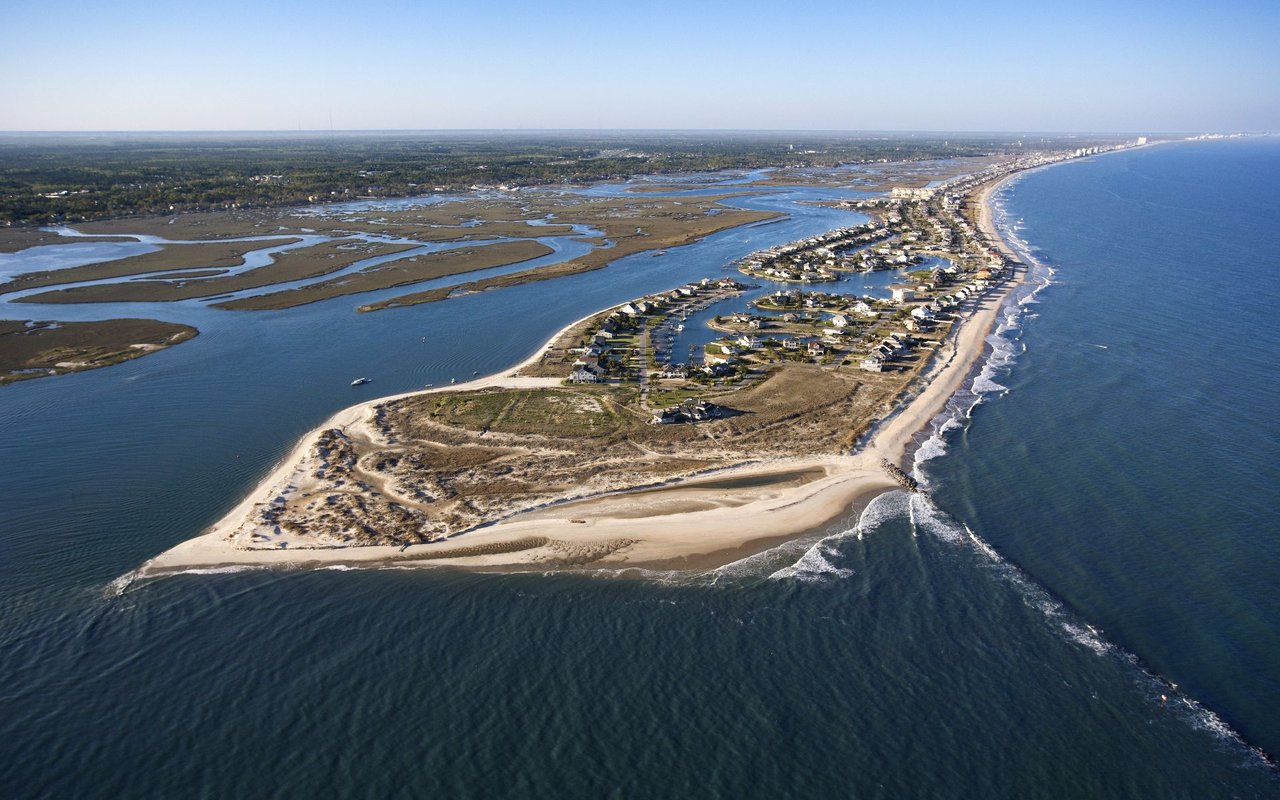
Socastee sits directly southwest of Myrtle Beach, wrapped around the Intracoastal Waterway, with Conway to the northwest and Surfside Beach to the southeast. Its geography is defined by water on two sides — the ICW cutting through the middle and the Waccamaw River basin to the west — which is why the road network funnels through a handful of key corridors.
Those corridors are SC-544, SC-707, the US-17 Bypass, and US-501. SC-544 is the spine of the community and crosses the waterway at the historic Socastee Swing Bridge, still an operational bridge that pivots open for tall vessels. Locals plan around it. SC-707 runs south toward Burgess and the St. James area, and the US-17 Bypass gets you north to the airport and Coastal Grand Mall or south to Murrells Inlet without touching Ocean Boulevard traffic.
The practical upside of this location is that Socastee is genuinely central. From most neighborhoods here you can reach:
Destination | Approximate Drive |
|---|
Myrtle Beach International Airport (MYR) | 10–15 min (5–7 mi) |
The Market Common | 8–12 min (4–6 mi) |
Surfside Beach & Pier | 10–15 min (5–7 mi) |
Downtown Myrtle Beach / Boardwalk | 15–20 min (8–10 mi) |
Murrells Inlet MarshWalk | 15–20 min (9–11 mi) |
Conway (County Seat) | 20–25 min (14–16 mi) |
Being ten to fifteen minutes from a commercial airport is a bigger deal than it sounds for relocating buyers with family up north — it changes how often people visit. The honest counterweight is congestion: SC-544 and SC-707 carry heavy commuter volume in the morning and late afternoon, and the swing bridge opening at the wrong moment can add ten minutes to a trip. Buyers who commute daily to the beach side should drive their intended route at 8 a.m. before committing to a street.
Socastee Real Estate Market Overview
Socastee functions as a balanced market rather than a boom-or-bust resort market. Prices move with regional demand — largely relocation traffic from the Northeast, Midwest, and Mid-Atlantic — but the buyer pool here is dominated by people who intend to live in the house, which produces steadier pricing and slower, more deliberate transactions than the condo market at the beach.
Market Metric | Current Range |
|---|
Median listing price | ~$323,000 – $355,000 |
Price per square foot | ~$197 – $209 |
Median days on market | 60 – 84 days |
Sale-to-list ratio | ~97.9% – 99% |
Median rent | ~$1,900 / month |
Two numbers in that table deserve explanation. The 60 to 84 day market time is not a sign of weakness — it reflects a market where buyers are relocating, financing, and often selling a home elsewhere first. Sellers who price to the market still sell; sellers who price to the beach comparables sit. The sale-to-list ratio just under 100% tells you there is room to negotiate here, unlike the oceanfront condo segment. Well-prepared offers routinely land slightly below asking.
What defines the Socastee market structurally is its housing diversity. Very few Grand Strand submarkets let you shop $150,000 condos and $900,000 waterway estates within the same three-mile radius. Island Green and Seagate Village sit at the affordable end; Arrowhead offers golf-course living in the middle; Cypress River Plantation and Harbor Oaks Marina anchor the top. That spread is why Socastee appears on so many buyers' lists regardless of budget.
The market's persistent constraint is flood-zone variation. Two homes on adjacent streets can carry insurance premiums that differ by thousands of dollars annually, and that difference gets capitalized directly into value. Elevation certificates and current insurance quotes are not optional paperwork in this market — they are part of the pricing conversation.
Types of Homes and Price Ranges in Socastee
The housing stock here spans four decades of building cycles, and each era left a distinct product behind.
Home Type | Approx. Price Range | What You Get |
|---|
Condos & townhomes | $130,000 – $230,000 | Low-maintenance one- and two-level units with community pools and exterior maintenance included. Concentrated in Island Green and along the River Oaks/Socastee margins. |
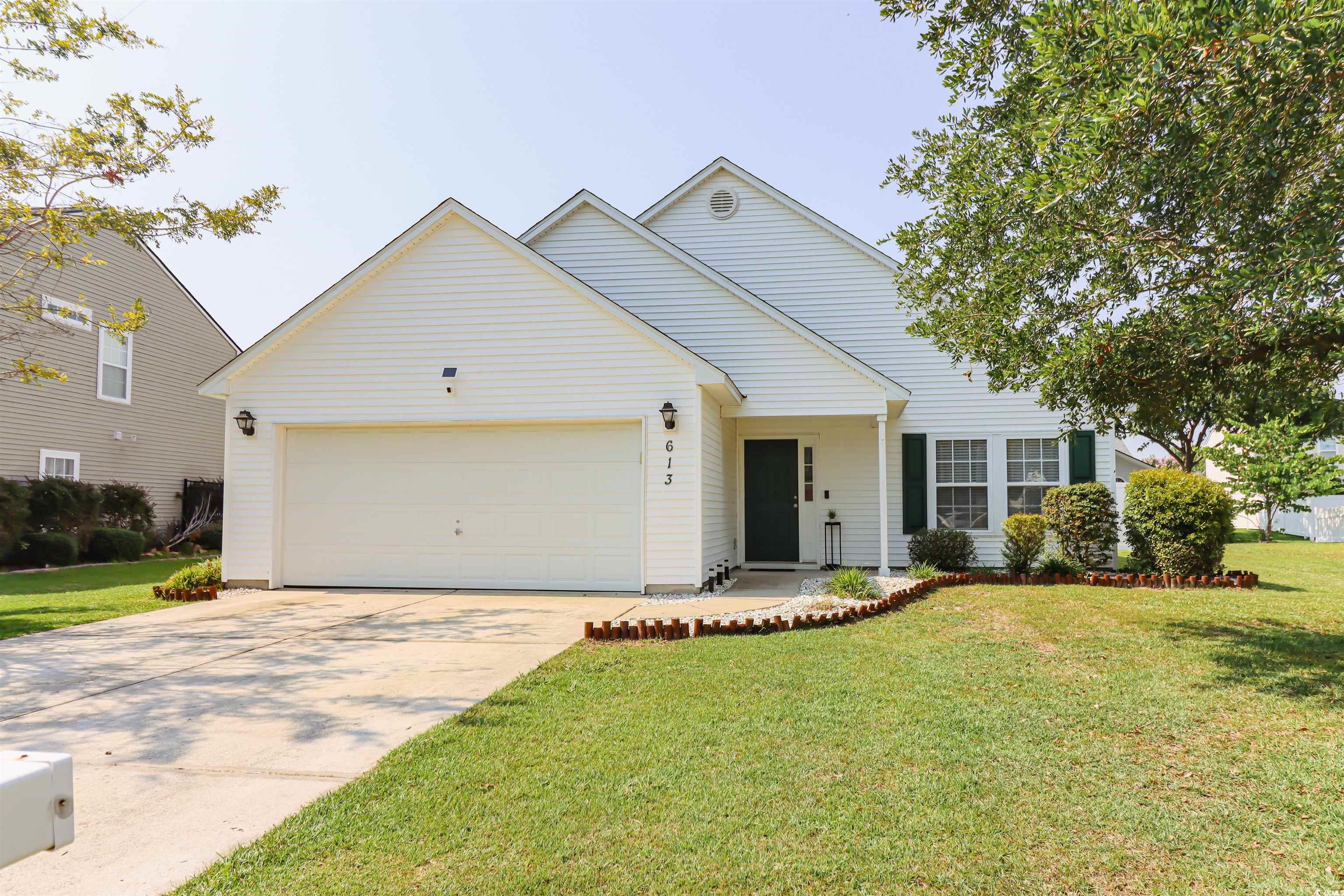
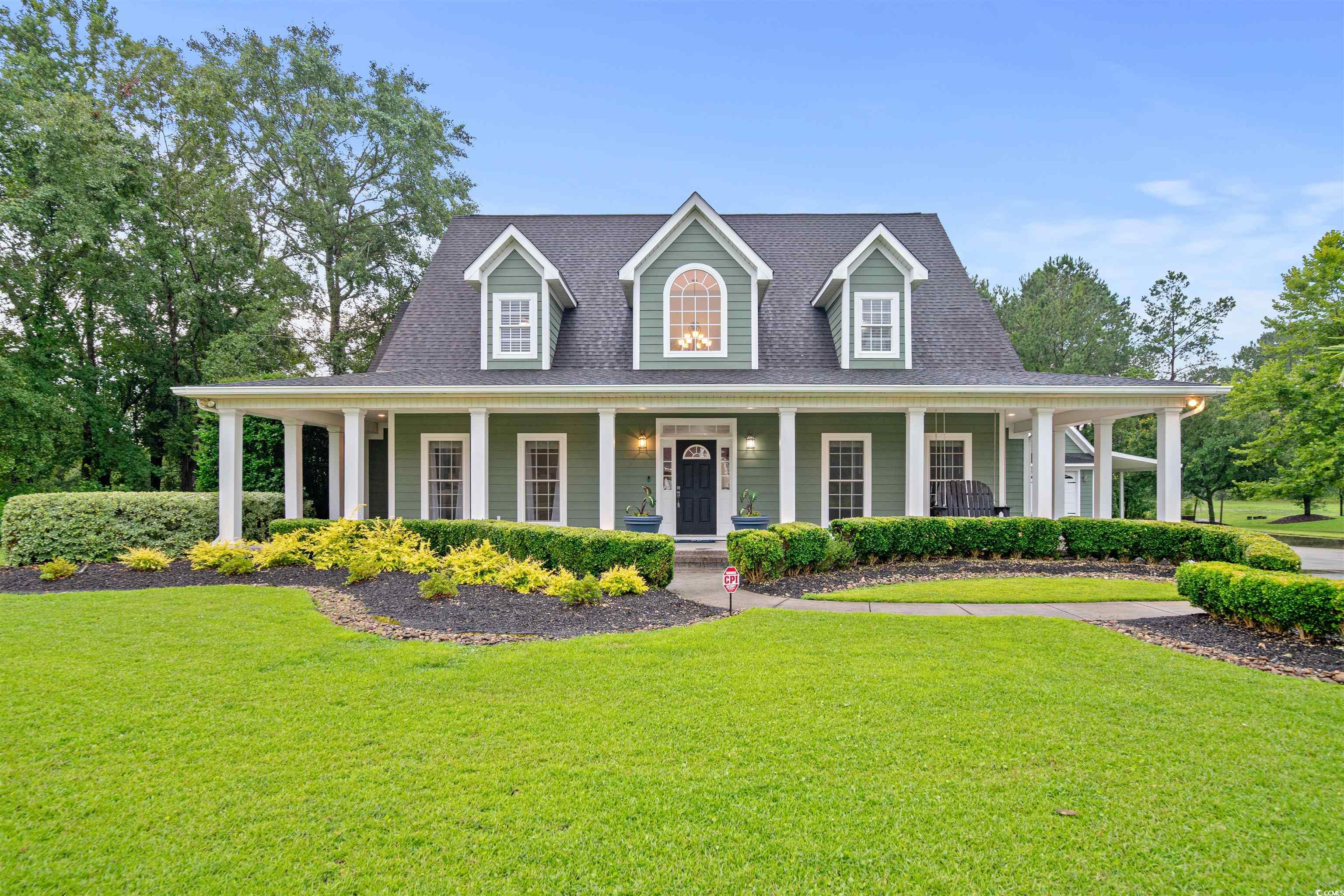
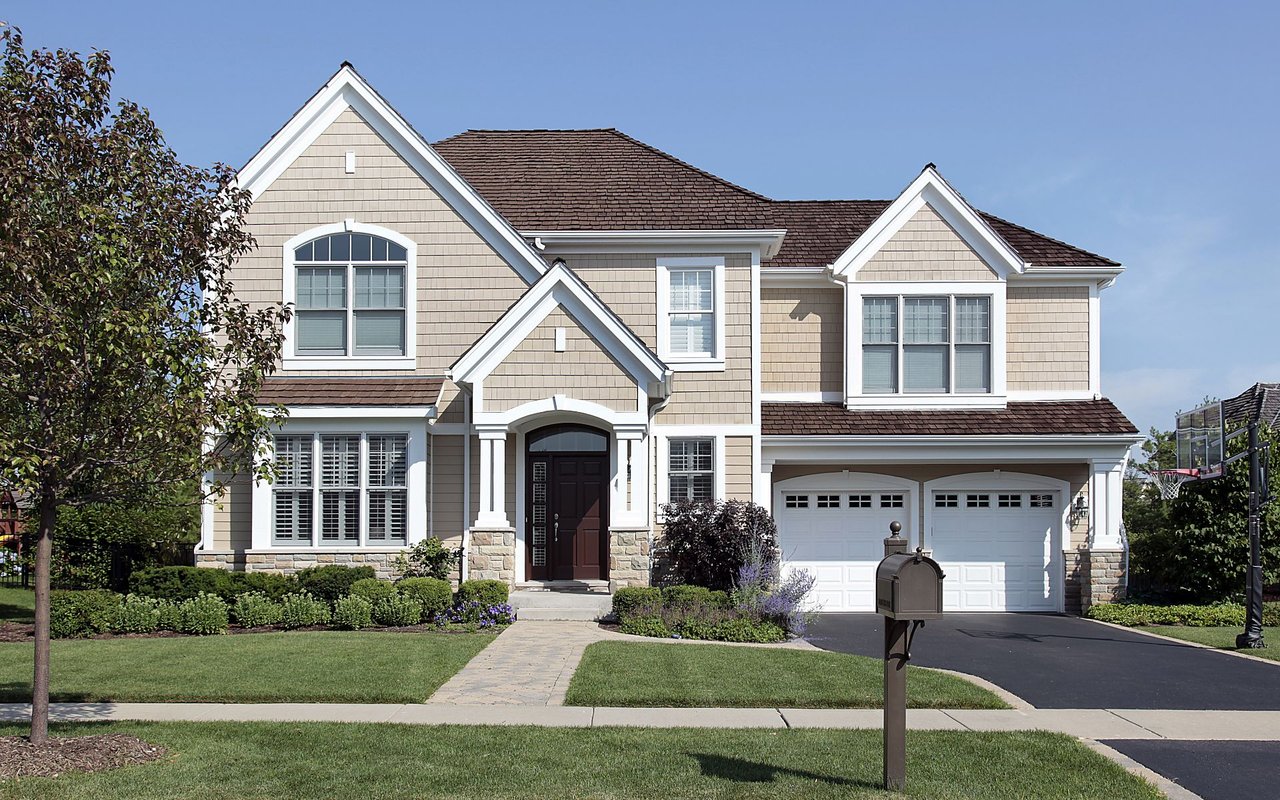
Established single-family | $240,000 – $360,000 | 1,200–2,000 sq ft ranch-style 3/2s built roughly 1980s–2000s, on generous lots in no-HOA or low-HOA subdivisions like Brandy Mill and Brynfield Park. |
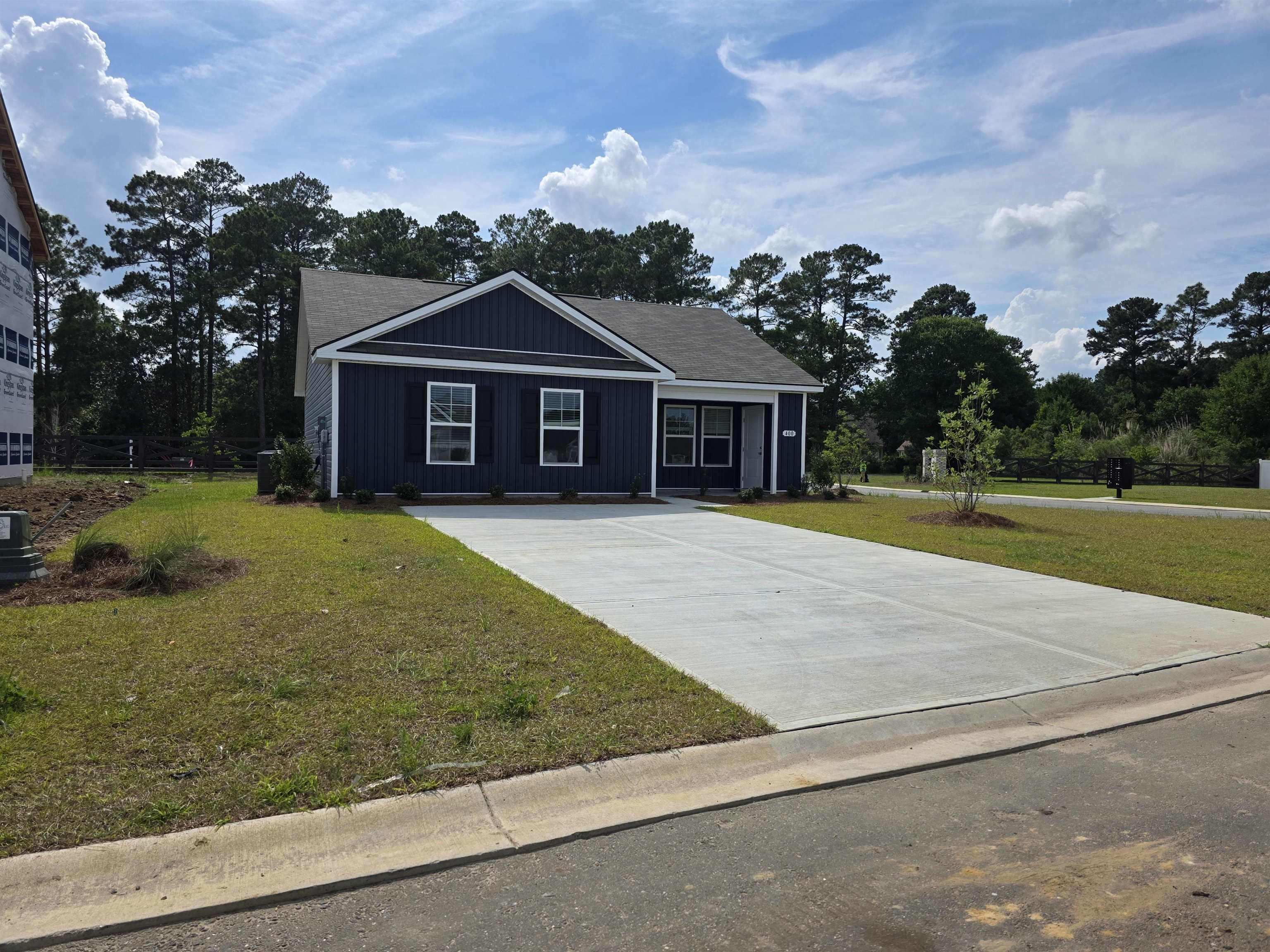
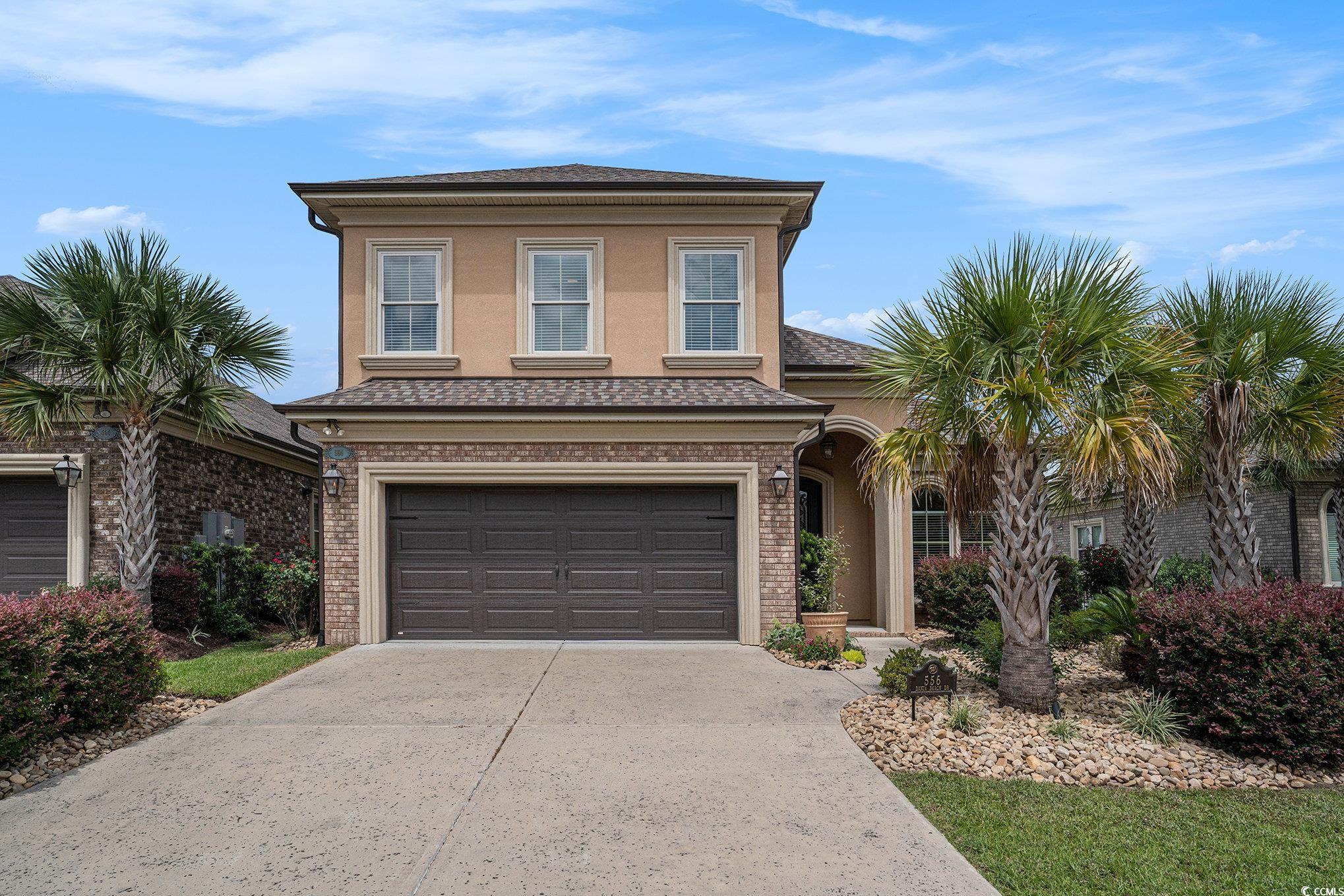
New construction & modern subdivisions | $340,000 – $480,000 | Post-2015 builds with open plans, energy-efficient systems, and neighborhood amenities. Cameron Village and Brighton Woods are the primary examples. |
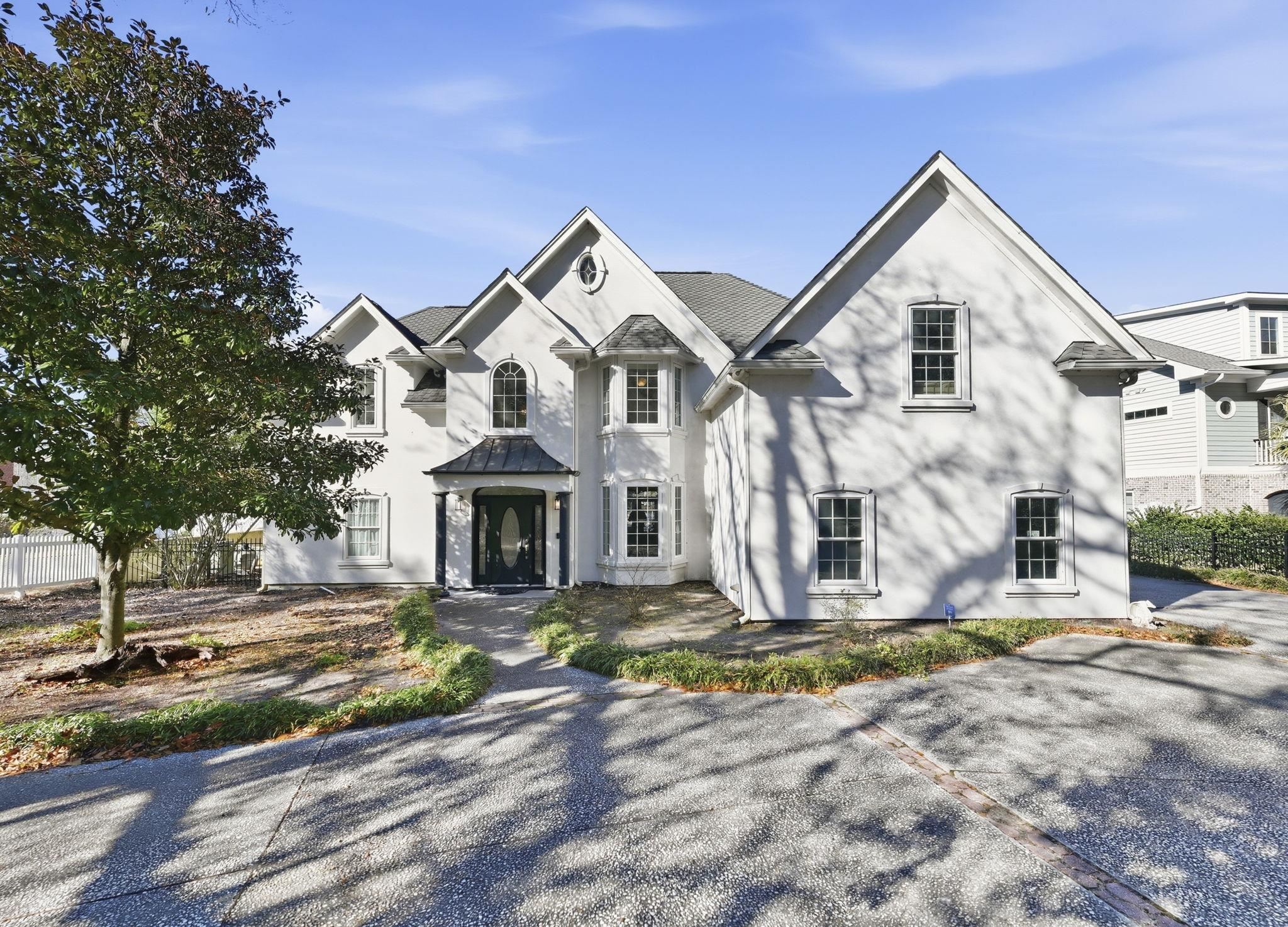
Waterfront & custom estates | $500,000 – $1,000,000+ | Custom homes on large or gated lots with private docks and deep-water ICW access. Cypress River Plantation and Harbor Oaks Marina define this tier. |
The most competitive segment — and the one where good listings move fastest — is the established single-family range between roughly $260,000 and $340,000. These are the homes that satisfy relocating families and retirees simultaneously: single-story layouts, real yards, no monthly HOA drain, and a payment that works on one income or a fixed retirement budget.
Buyers should know that the 1980s and 1990s inventory comes with age-appropriate questions. Original HVAC systems, polybutylene plumbing in some builds, and roofs at or past twenty years show up regularly in inspections. None of it is disqualifying, but it belongs in your negotiation strategy rather than as a surprise on day twelve of due diligence.
At the top of the market, the pricing driver is not square footage — it's the dock. A permitted, existing dock with a lift on deep water can add well into six figures over an otherwise comparable home, because permitting a new one is neither fast nor guaranteed.
Popular Neighborhoods and Communities in Socastee
Socastee is not one neighborhood; it's a collection of subdivisions with meaningfully different personalities, HOA structures, and price points.
Cypress River Plantation is the flagship. Gated, set along the Intracoastal Waterway, it features custom-built homes on oversized lots with a boat ramp, floating docks, a large clubhouse, pool, and tennis courts. It is the address most often cited when someone says they want luxury without leaving the mainland.
Myrtle Beach Golf and Yacht Club is the largest established gated community in the area, with over 1,000 single-family homes, 24-hour security, notably low HOA dues for what's included, a pool, tennis courts, and an unusually active social calendar. It skews toward retirees and has a genuine community culture — the kind of place where new residents get invited to things in their first month.
Cameron Village is the family-oriented pick. Mid-to-late 2000s construction, community pool, clubhouse, tennis courts, and floor plans built for households with kids rather than couples downsizing.
Island Green is the value play. A sprawling golf-centered development mixing low-rise condos, townhomes, and detached houses, it consistently offers some of the most affordable entry-level housing anywhere in Horry County. It's where a lot of first-time buyers and part-time residents get their foothold.
Brighton Woods, near the SC-544 and SC-707 junction, offers newer single-family homes with larger yards and spacious plans, appealing to buyers who want quiet and proximity to schools.
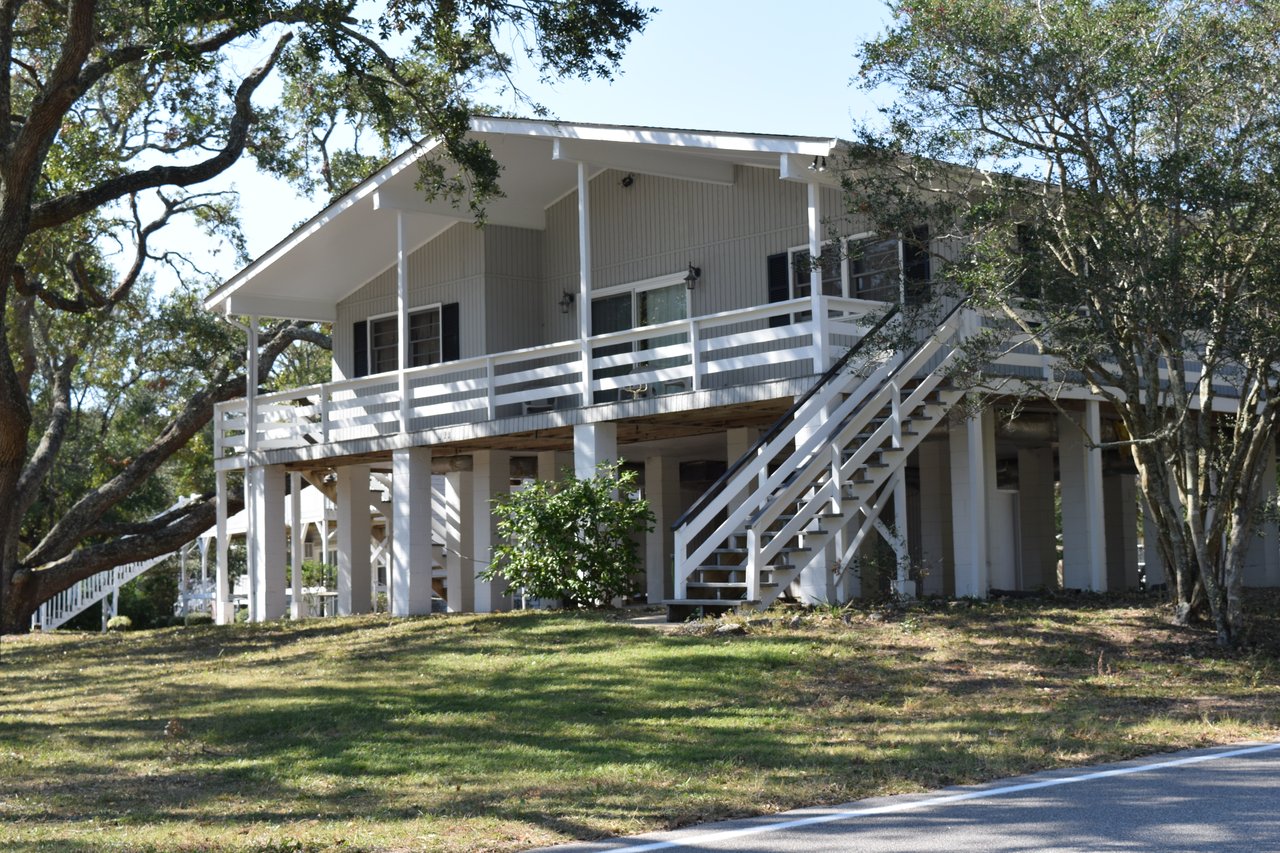
Harbor Oaks Marina is a specialty community — small, gated, and purpose-built for boaters, with raised beach-style homes and private or assigned slips. If the boat is the point of the move, this is the shortlist.
Brandy Mill and Brynfield Park represent the established, low-or-no-HOA side of Socastee: older homes, mature trees, mixed architectural styles, and the freedom that comes with minimal covenants. Buyers who want to park a boat in their own driveway tend to end up here.
Intracoastal Waterway and Waterfront Homes in Socastee
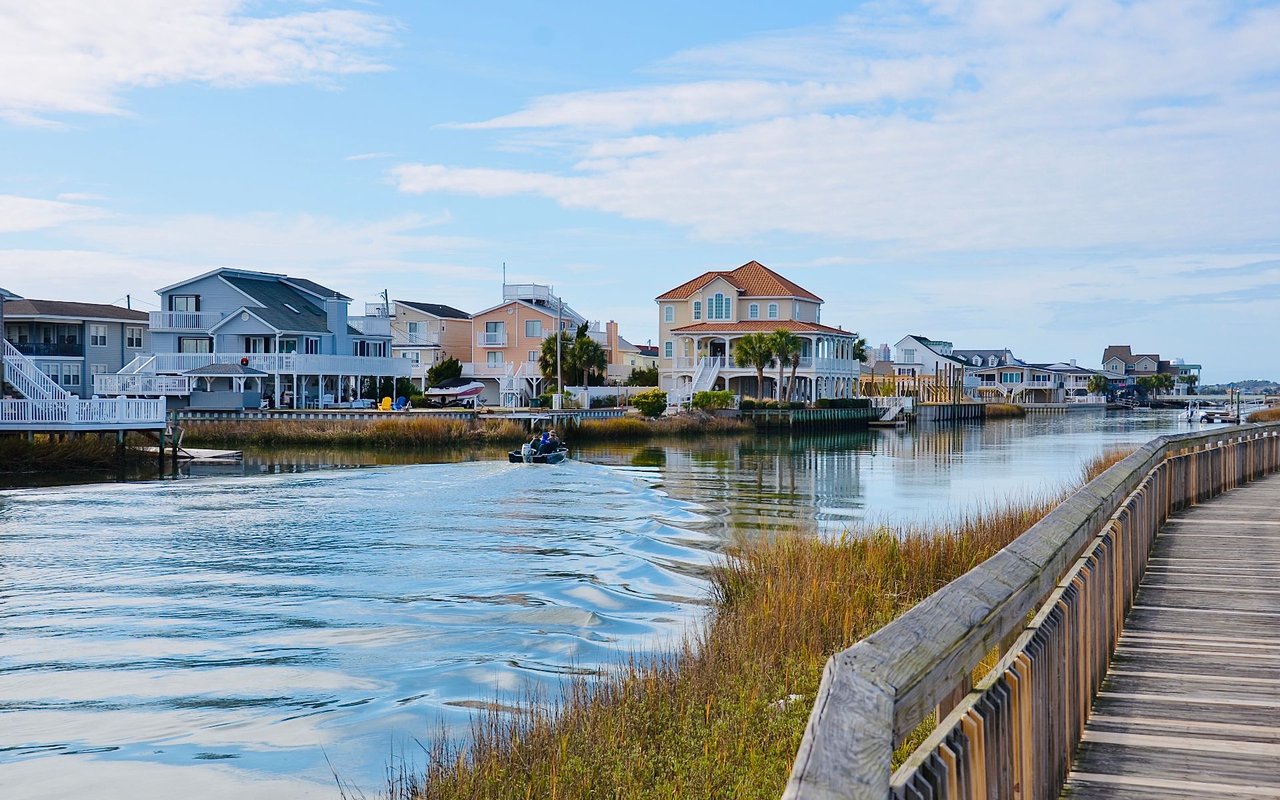
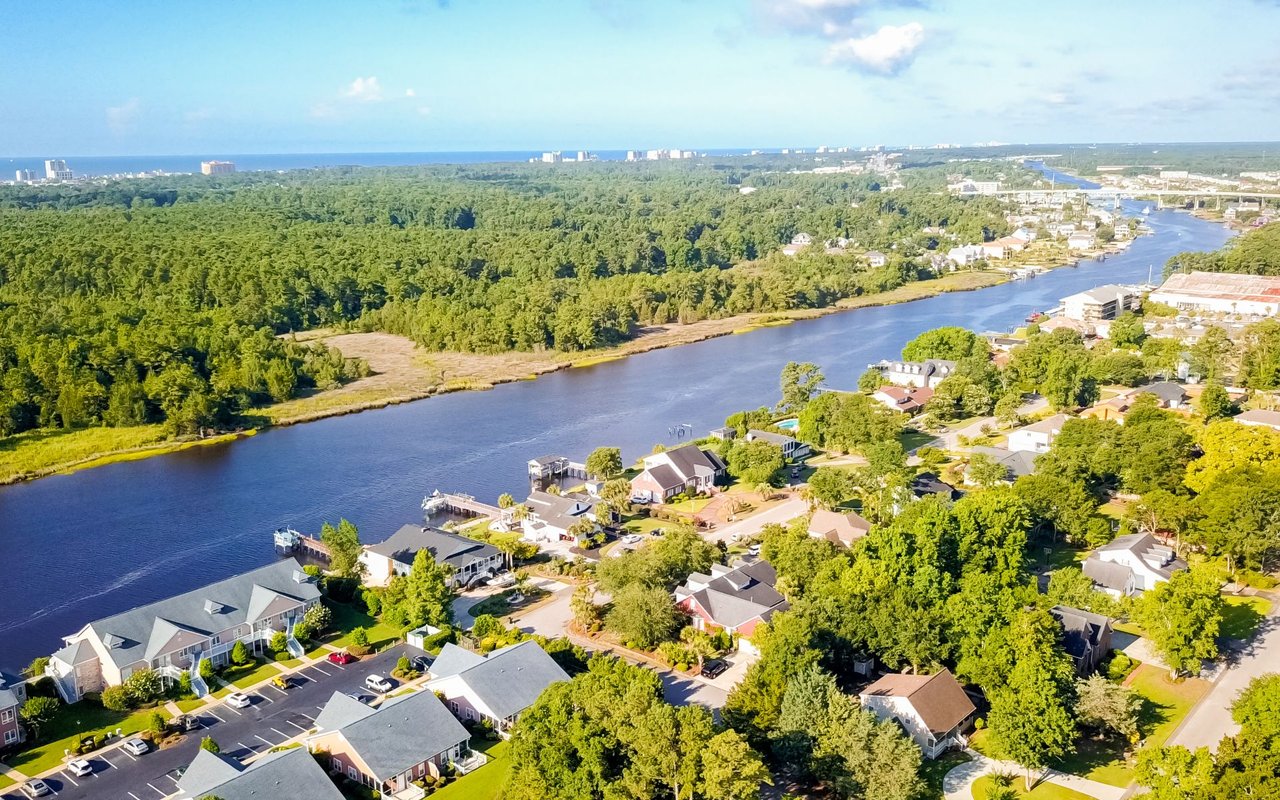
Water is Socastee's defining asset. The Intracoastal Waterway runs through the community, the Waccamaw River basin sits just west, and a network of creeks and tidal tributaries connects the two. For boaters, this is one of the most practical places to own on the Grand Strand — you are minutes from open water without paying oceanfront prices.
Property Style | Typical Range | Access & Features |
|---|
Direct ICW custom estates | $700,000 – $1,500,000+ | Deep-water frontage, private docks, covered lifts, immediate waterway access |
Gated waterway communities | $500,000 – $950,000 | Cypress River Plantation, Harbor Oaks Marina — community ramps, wet/dry slips, storage |
Channel & creek homes | $350,000 – $550,000 | Secondary channels and tidal tributaries feeding the ICW, often with floating docks for smaller craft |
Waterfront condos & townhomes | $180,000 – $320,000 | Lake, pond, or marsh views with shared amenities and no exterior upkeep |
Two regulatory realities shape waterfront purchases here. First, dock permitting falls under South Carolina's Office of Ocean and Coastal Resource Management and the U.S. Army Corps of Engineers. An existing, permitted dock is a transferable asset with real value; a vacant waterfront lot with an assumption that a dock "should be" permittable is a risk that needs written verification before closing, not after. Critical-line setbacks, channel width, and neighboring structures all factor into approval.
Second, no-wake zones are enforced through portions of the waterway, particularly around the Socastee Swing Bridge. This is a benefit for shoreline homeowners — less wake means less erosion and calmer dockage — and a minor inconvenience for boaters in a hurry.
For buyers evaluating creek and channel properties, tidal depth at low water is the question that matters. A dock that floats a 24-foot center console at high tide may sit on mud at low tide. Ask for depth soundings, and if possible, look at the property twice — once at each tide.
Flood Zones and Insurance Considerations for Socastee Buyers
This is the section that saves Socastee buyers the most money, and it deserves close reading.
Socastee receives water from two directions: coastal tidal influence from the east and inland drainage from the Waccamaw River system to the west. Because of that, elevation and flood-zone designation vary dramatically over short distances. Two homes on the same street can carry different classifications.
The primary FEMA zones you'll encounter:
Zone X designates minimal-risk areas outside the 100-year and 500-year floodplains. Flood insurance is generally not federally required for a mortgaged property here, though many owners carry an inexpensive preferred-risk policy anyway. Zone AE covers areas within the 1%-annual-chance floodplain, where flood insurance is mandatory for federally backed mortgages and premiums scale with elevation. Zone VE applies to areas subject to high-velocity wave action — uncommon in Socastee's inland river geography, but relevant in a few low tidal pockets.
Riverine flooding behaves differently than storm surge. This is the part out-of-state buyers most often misunderstand. At the oceanfront, surge arrives with the storm and recedes within hours. In Socastee, the serious flooding often arrives days or weeks after the rain stops, as upstream water works its way down the Waccamaw basin toward the coast. Hurricane Florence demonstrated this clearly, with river cresting affecting low-elevation pockets long after the weather had cleared. The implication for buyers is that a property's storm history should be evaluated on river-crest records, not just wind events.
What due diligence should look like here:
Get an elevation certificate — it establishes the structure's height relative to Base Flood Elevation and drives your actual premium. Understand that FEMA's Risk Rating 2.0 now prices policies on structural characteristics like foundation type, first-floor height, and distance to water rather than zone lines alone, which means the flood map is a starting point, not the answer. Verify any mitigation work on higher-risk properties: raised HVAC platforms, flood vents, retrofitted foundations. And ask about buyout history in the immediate area — Horry County has acquired and demolished repeatedly flooded structures in certain low-lying Socastee pockets, returning that land to floodplain. Adjacent buyout parcels are useful information about how a specific block performs.
The practical rule: obtain a bindable insurance quote during your due diligence period, not after. In Socastee, the insurance number is part of the purchase price.
Property Taxes in Unincorporated Horry County: 4% vs. 6% Assessment Ratios
South Carolina taxes real estate based on how it's used, and the difference between the two classifications is the single largest ongoing cost variable in a Socastee purchase. Because Socastee is unincorporated, owners pay Horry County taxes with no additional municipal levy — a structural advantage over buying inside Myrtle Beach, North Myrtle Beach, or Surfside Beach city limits.
| 4% Ratio | 6% Ratio |
|---|
Applies to | Primary residence (legal SC resident) | Second homes, rentals, investment property |
School operating tax | Exempt under SC Act 388 | Fully subject |
How it's applied | Must be applied for with the Horry County Assessor | Default classification |
Est. annual tax, $350k home | ~$1,100 – $1,500 | ~$3,800 – $4,600 |
That gap — often more than $2,500 a year on a mid-priced home — is why the next paragraph matters more than almost anything else on this page.
The 4% rate is not automatic, and your closing attorney does not file for it. New residents must submit the legal residence application to the Horry County Assessor themselves, with proof of South Carolina residency: driver's license, vehicle registration, and voter registration. Buyers who close in spring, get busy unpacking, and forget to file often receive a tax bill built on the 6% ratio and are genuinely shocked by it. File as soon as your residency documents are in hand.
Owners 65 and older who qualify for the 4% primary residence rate should also apply for the Homestead Exemption, which exempts the first $50,000 of fair market value from property tax. For retirees, stacking the 4% ratio with the Homestead Exemption in an unincorporated area produces one of the lowest effective property tax burdens available anywhere on the East Coast.
Schools Serving the Socastee Area
Public education is administered by Horry County Schools. Most of Socastee falls within the Socastee High School attendance area, though some southern neighborhoods feed into the adjacent St. James cluster and northwestern edges overlap with Forestbrook and Carolina Forest schools.
At the elementary level, Socastee Elementary serves the core of the community. Palmetto Bays Elementary and Forestbrook Elementary cover northern and western overlaps toward Carolina Forest and Conway, while Burgess Elementary serves southern neighborhoods bordering the St. James area. Middle school students generally attend Socastee Middle School, with Forestbrook Middle and St. James Middle picking up boundary zones.
Socastee High School is the community's anchor, and it is a legitimate draw. It operates an International Baccalaureate World School Diploma Programme alongside a full slate of Advanced Placement courses and a competitive athletics program — the IB designation is not common in the region and pulls families into the attendance zone deliberately.
Beyond the zoned schools, Horry County operates two district-wide application academies open to qualified Socastee students: the Academy for the Arts, Science, and Technology (AAST) and the Academy for Technology and Academics (ATA), offering specialized STEM, arts, and career-technical pathways.
One caution for buyers: attendance boundaries in this part of Horry County follow parcel lines that do not always match subdivision names, and the district adjusts them as growth demands. If a specific school is central to your decision, verify the assignment for the exact address with Horry County Schools before you write an offer.
The Socastee Swing Bridge and Historic District
Most Grand Strand communities were built after 1980. Socastee wasn't, and the evidence sits at the waterway crossing on SC-544.
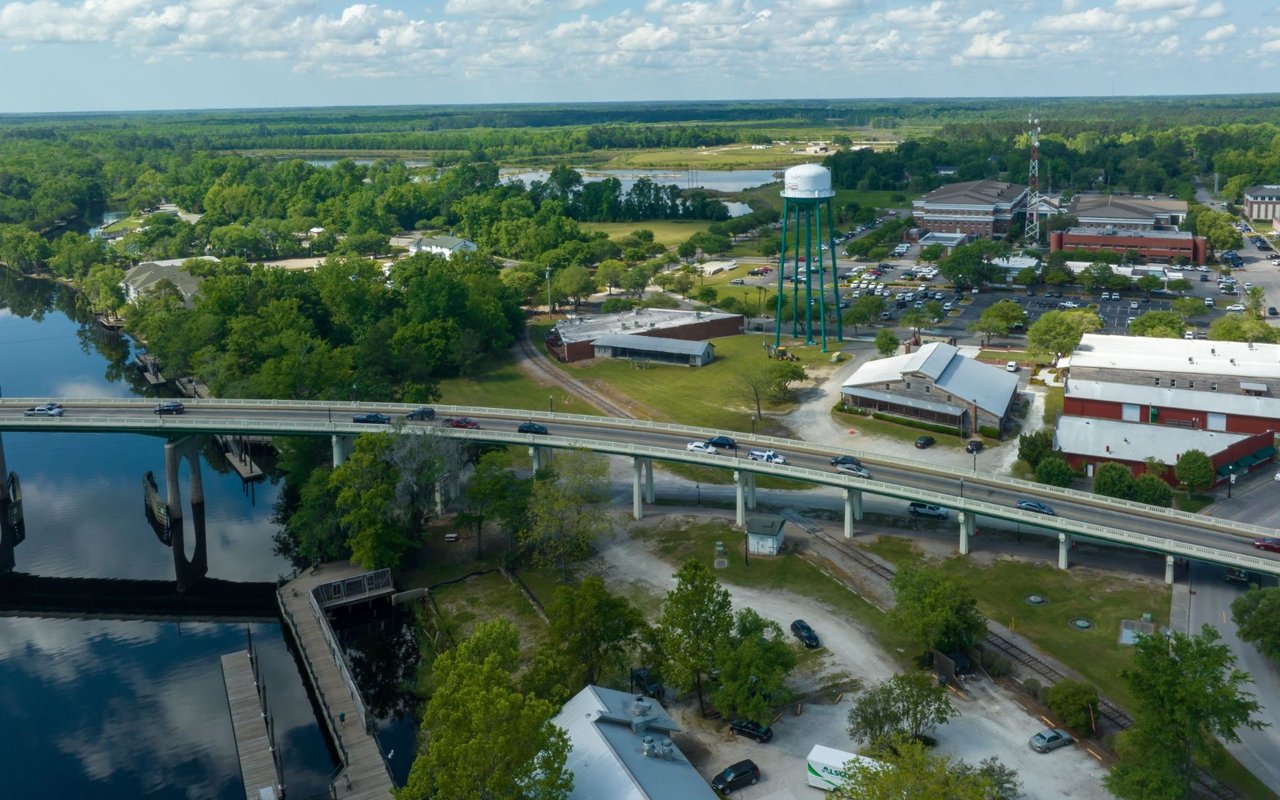
The Socastee Swing Bridge, built in 1935, is a Warren through-truss swing span that pivots horizontally to let tall vessels pass. It carries real historical weight: its completion marked the final section of the Atlantic Intracoastal Waterway through South Carolina, connecting a 2,700-mile inland route. It remains one of only about ten operational swing bridges in the state and still opens on schedule for maritime traffic — which is both a genuine piece of engineering heritage and, occasionally, the reason you're late.
Surrounding it, the Socastee Historic District was listed on the National Register of Historic Places in 2002. The district preserves a late-19th and early-20th-century post-Civil War settlement footprint, including the Thomas B. Cooper House (1908), the Sarvis House (1881), the old Cooper Store (c. 1905), and an intact pecan grove.
It is worth being clear about what this is and isn't. This is not a restored tourist district with shops and tours. It is a small, quiet, largely residential cluster that simply never got redeveloped while everything around it did. For buyers who care about a place having a past, it gives Socastee something almost nothing else on the Grand Strand has: continuity.
Boating, Golf, and Outdoor Recreation Near Socastee
Recreation in Socastee is oriented toward water and open land rather than beach access, and the offering is deeper than most buyers expect.
On the water, Enterprise Landing off SC-707 provides free public boat access to Socastee Creek, the ICW, and the Waccamaw River — a meaningful amenity for owners who trailer rather than dock. Osprey Marina, at ICW Mile Marker 373, is the full-service option, with transient slips, a fuel dock, and a launch ramp; it's a well-known stop for cruisers running the waterway. Outfitters near the swing bridge rent jet skis, paddleboards, and pontoons, and run pontoon tours. For paddlers, the blackwater tributaries of the Waccamaw basin offer slow, sheltered water suited to long kayak and canoe runs — a different experience entirely from ocean paddling.
On the golf side, Arrowhead Country Club sits right on the Socastee/Forestbrook line: 27 holes designed by Raymond Floyd, split into the Cypress, Waterway, and Lakes nines, with several holes running directly along the Intracoastal Waterway. It is the marquee course in the immediate area and supports a residential community around it. Island Green Golf Club is the accessible everyday option, a public layout inside the Island Green community that locals play on rotation. Within a ten to fifteen minute drive you also reach Prestwick Country Club, a P.B. Dye design in Surfside Beach, and the courses at Murrells Inlet.
On land, Socastee Recreation Park is a genuinely unusual county facility — 90 acres holding a 19-hole wooded disc golf course, a public 3D archery range, a dedicated remote-control car racing track, plus tennis, basketball, sand volleyball, and walking trails. There is nothing else quite like it in Horry County. The nearby South Strand Recreation Center covers indoor gymnasiums, fitness classes, walking paths, and youth sports leagues.
Dining, Shopping, and Everyday Amenities
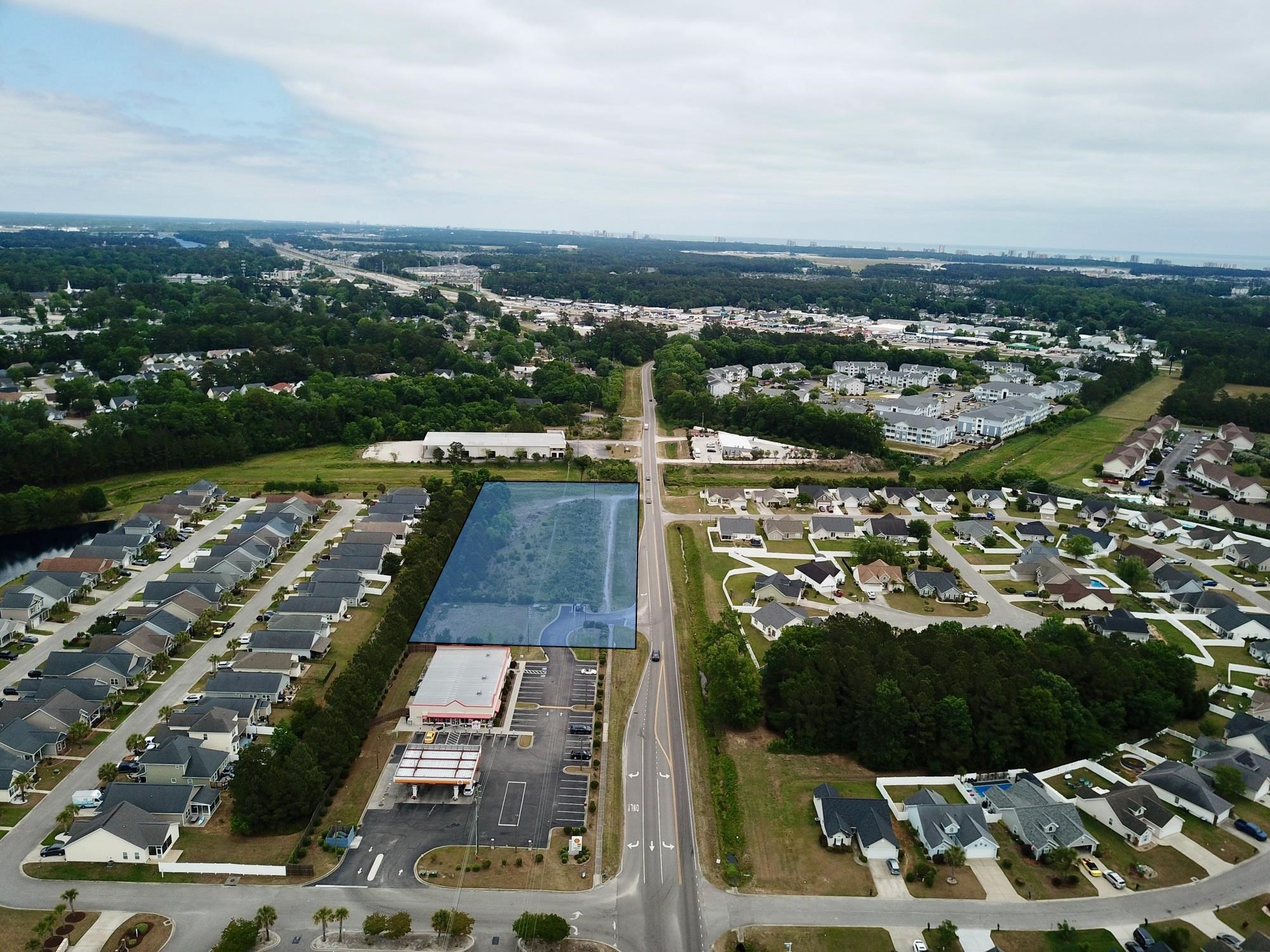
Socastee has no traditional downtown, and buyers should set expectations accordingly. What it has instead is fast, uncongested access to retail and services clustered at highway intersections — you drive five to ten minutes rather than walk five.
Sayebrook Town Center, at SC-544 and the US-17 Bypass, is the community's primary retail hub, anchored by Target with Marshalls, Petco, a Publix, and everyday services. Additional grocery options — Food Lion and Kroger — sit along SC-707 and SC-544. For larger shopping trips, Coastal Grand Mall and the Tanger Outlets on US-501 are ten to twelve minutes north.
Dining splits into three tiers. Locally, the strip plazas along SC-544 and SC-707 hold the everyday roster: family-owned pizzerias, Southern breakfast spots, Mexican taverns, and seafood shacks — unpretentious and priced for residents rather than visitors. Five to ten minutes away, The Market Common functions as Socastee's de facto upscale dining district, with Tupelo Honey, CO Sushi, Gordon Biersch, and P.F. Chang's alongside a boutique cinema. Fifteen minutes south, the Murrells Inlet MarshWalk delivers the region's signature experience — waterfront seafood and live music along a timber boardwalk in what's billed as the Seafood Capital of South Carolina.
Healthcare is well covered for a community of this size. Tidelands Health Francis B. Ford Family Medicine provides primary care within Socastee itself, and Grand Strand Health facilities including South Strand Medical Center sit just off the US-17 Bypass with emergency care, radiology, and urgent care. For retirees evaluating the area, that proximity — primary care in the neighborhood, emergency care under fifteen minutes out — is often a deciding factor.
Is Socastee the Right Fit for You?
Advantages | Trade-offs to Weigh |
|---|
Entry prices roughly 20–30% below oceanfront zip codes | Flood exposure varies sharply; some blocks carry high insurance costs |
No municipal property tax — Horry County only | SC-544 and SC-707 bottleneck at peak commuting hours |
Public boat ramps and deep-water ICW access | Car-dependent; subdivisions lack walkable retail |
Socastee High School and its IB Diploma Programme | Established areas have mixed home styles and inconsistent upkeep |
Ten to fifteen minutes from MYR airport | No beach walkability — driving is required for ocean access |
Socastee tends to work best for three kinds of buyers. Relocating families looking for a single-family home under $400,000 with a strong high school find more value here than anywhere comparable on the Grand Strand. Boaters and outdoor-oriented buyers get deep-water access, ramps, storage, and golf-course living without paying beachfront premiums. And retirees on defined budgets combine South Carolina's 4% primary residence rate, the Homestead Exemption, and modest HOA dues into a genuinely low cost of ownership.
It works less well for buyers who want to walk to the ocean, who want a walkable town center, who plan to run a high-volume short-term rental, or who are unwilling to do the flood-zone homework this market requires. Those buyers are usually better served in Surfside Beach, North Myrtle Beach, or The Market Common — and an honest agent will tell them so.
Buying or Selling a Home in Socastee? Talk to Jan and Dan Sitter
Socastee rewards local knowledge more than almost any market on the Grand Strand. Elevation certificates, dock permitting, attendance-line verification, and the legal residence tax filing are the details that separate a smooth purchase from an expensive surprise, and they don't show up in listing photos. Jan and Dan Sitter of Coastal Beach Homes LLC are licensed South Carolina REALTORS® who work this market directly, handling every stage of the transaction personally and staying in touch throughout the process — whether you're relocating from out of state, buying your first home in Horry County, or preparing to list a property here. If you'd like a straightforward conversation about specific neighborhoods, current inventory, or what your Socastee home would sell for today, reach out at (854) 269-1593 or [email protected], or stop by the office at 9628 N Kings Hwy, Myrtle Beach, SC 29572. You can also learn more at coastalbeachhomessc.com.