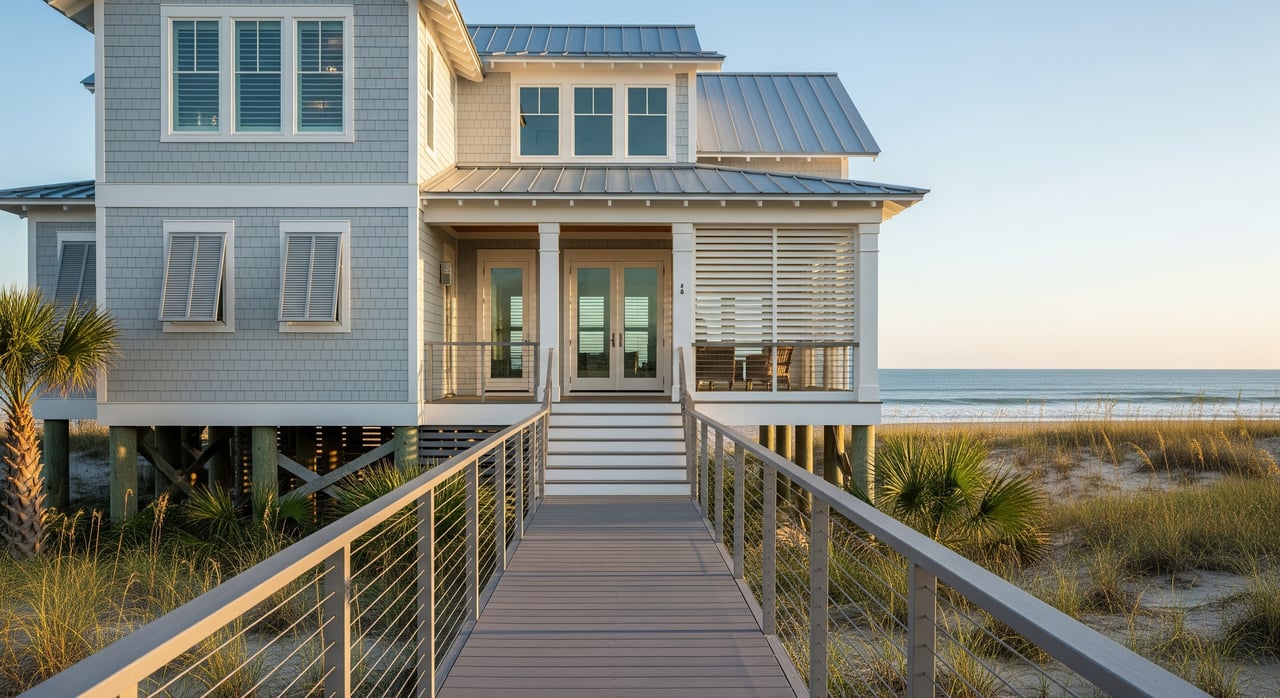
Surfside Beach Coastal Home Maintenance Guide & Checklist
Is your Surfside Beach home feeling the effects of salt air, sun, and summer storms? You are not imagining it. Coastal living is beautiful, and it also asks more of your home. In this guide, you will get a clear, local checklist to protect your place from corrosion, moisture, wind, and flooding, plus a simple schedule and trusted links for storm season and permits. Let’s dive in.
Surfside Beach sits on the Grand Strand, where hot, humid summers and salty air speed up wear on exterior materials. Hurricane season runs June through November, with the most activity often late summer and fall. You should plan for wind-driven rain and occasional coastal flooding during stronger systems. For seasonal timing and alerts, follow the National Hurricane Center.
Salt spray encourages corrosion on fasteners, railings, and HVAC coils. High humidity can lead to mold and wood decay if moisture is not controlled. Strong UV exposure shortens the life of paints, sealants, and some roofing products. The payoff for your effort is real. Regular maintenance reduces repair costs, supports insurance claims, and helps resale value when it is time to move.
Inspect siding and trim each spring for cracked caulk, loose panels, or split boards. Reseal joints and repair damaged trim before summer heat and storms. Plan to repaint or recoat every 3 to 7 years based on exposure and product quality. High-performance exterior paints, including marine-grade or 100% acrylic latex, typically last longer in a coastal setting.
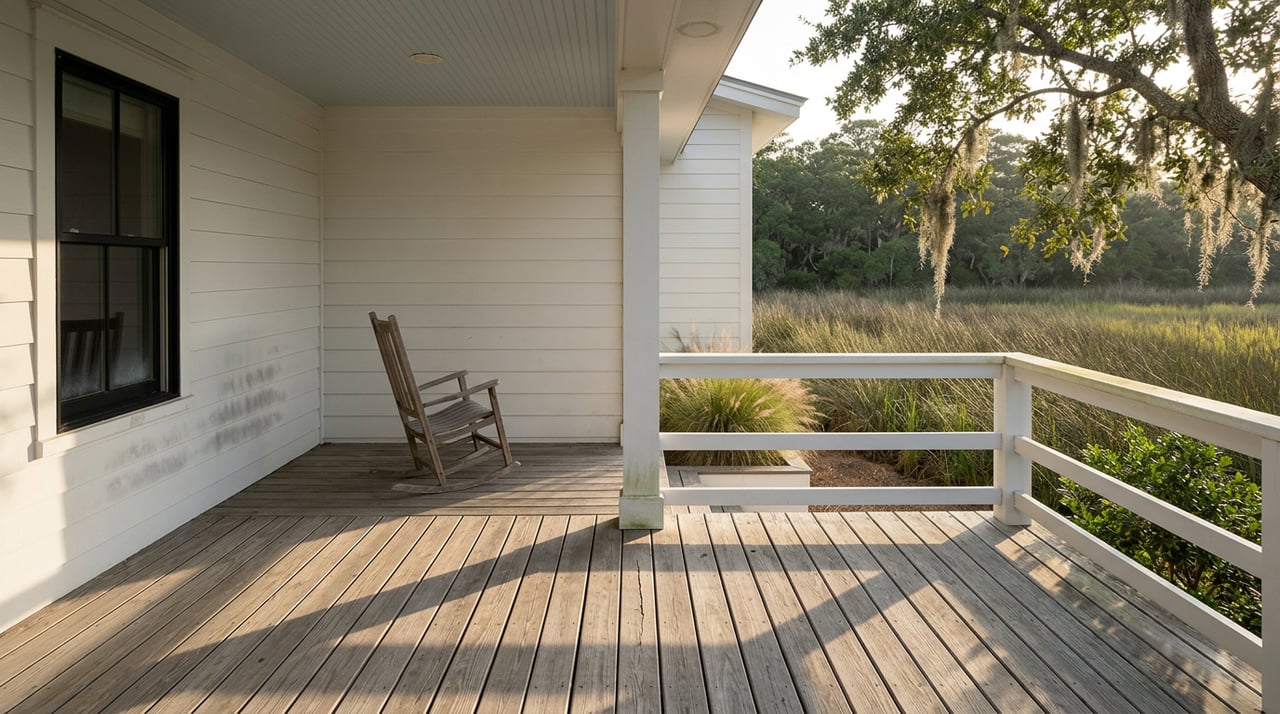
Decks need extra attention. Check boards, railings, and fasteners seasonally. Replace any fastener showing rust, staining, or section loss. Use corrosion-resistant hardware such as hot-dipped galvanized or stainless steel. In areas with heavy salt exposure, higher-grade stainless like 316 is often recommended by manufacturers.
Inspect your roof and flashing at least twice per year and after major storms. Look for loose shingles, lifted edges, granule loss, and failing sealant at penetrations. Keep gutters clean so water moves away from the home, and check that hangers and downspouts are not corroding.
If you are planning a roof replacement, ask about higher wind ratings and fastening that meets coastal wind-load requirements. The FEMA Coastal Construction Manual offers practical guidance for roofs and flashing details in coastal climates.
Annual checks go a long way. Inspect weatherstripping, caulk lines, sill flashings, and thresholds. Replace failing seals and corroding hardware with marine-grade components. If your home uses shutters or impact panels, practice deploying them before storm season and confirm all anchoring hardware is intact.
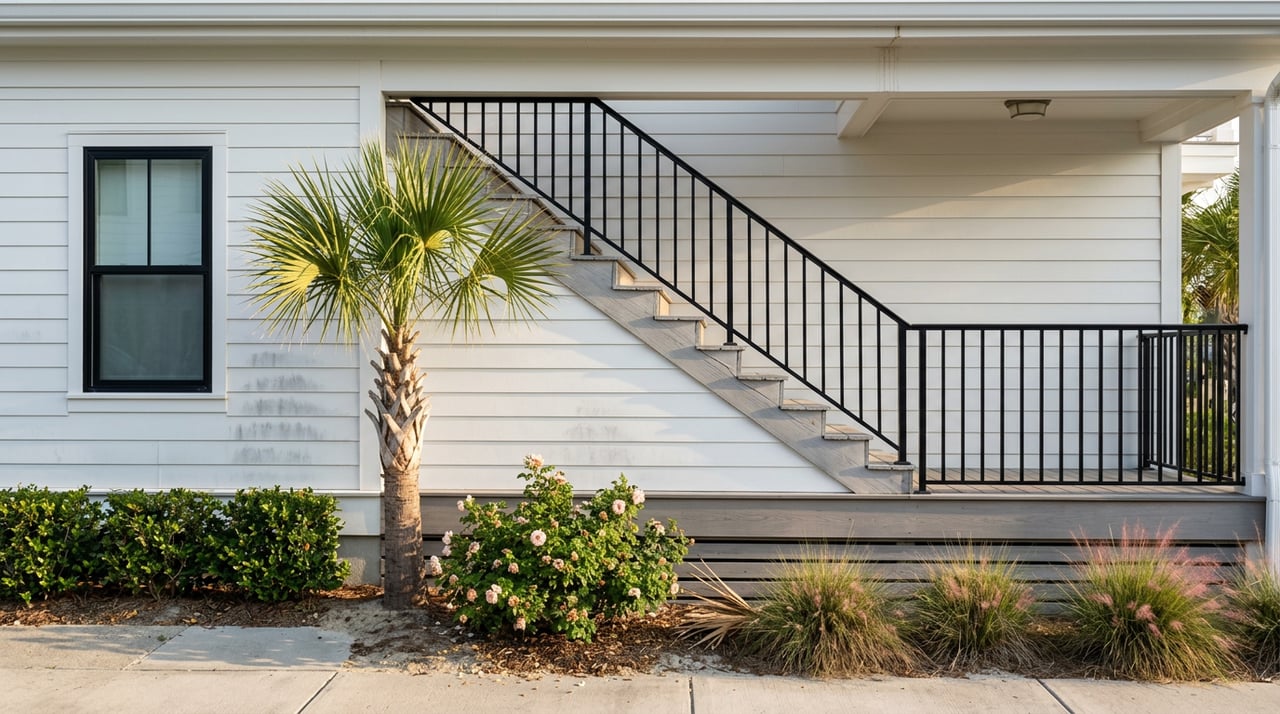
Salt exposure can corrode connectors and hangers over time. Inspect visible metal connectors on decks, stairs, and beams each year. If you see active corrosion or section loss, have a qualified contractor evaluate and repair. After significant storms, look for signs of settlement, leaning, or scour around pilings and document anything unusual with photos.
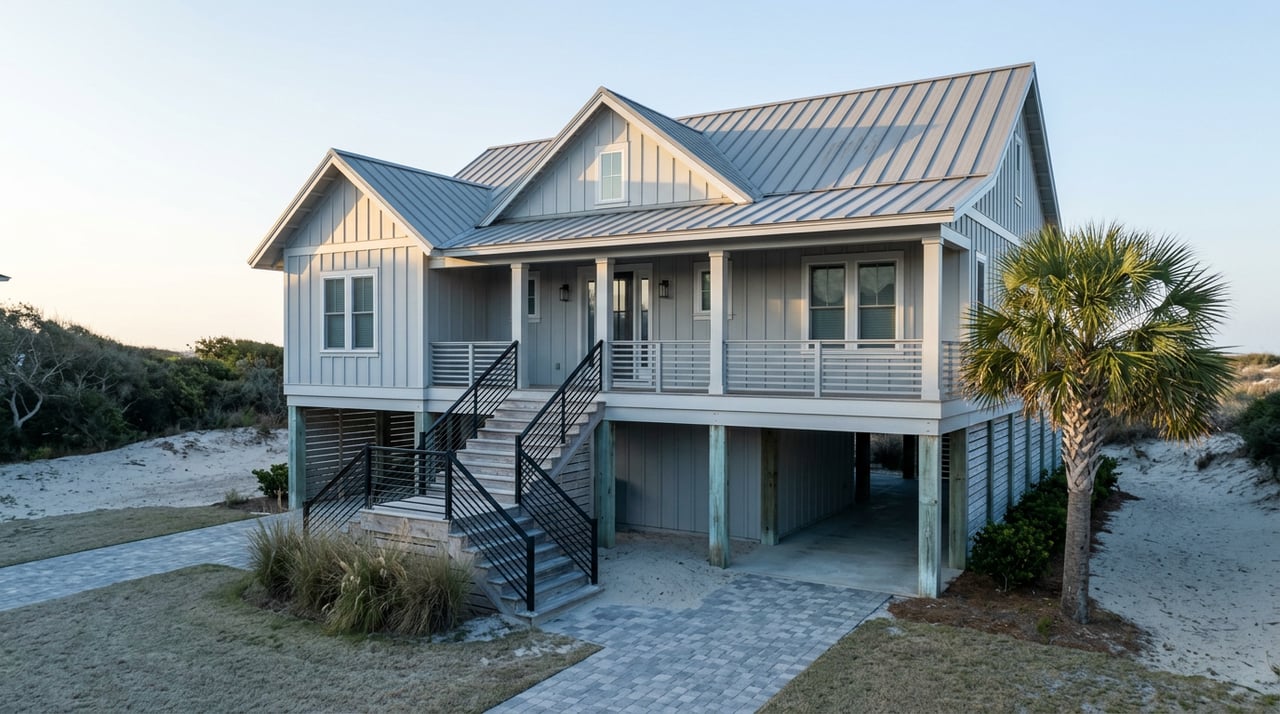
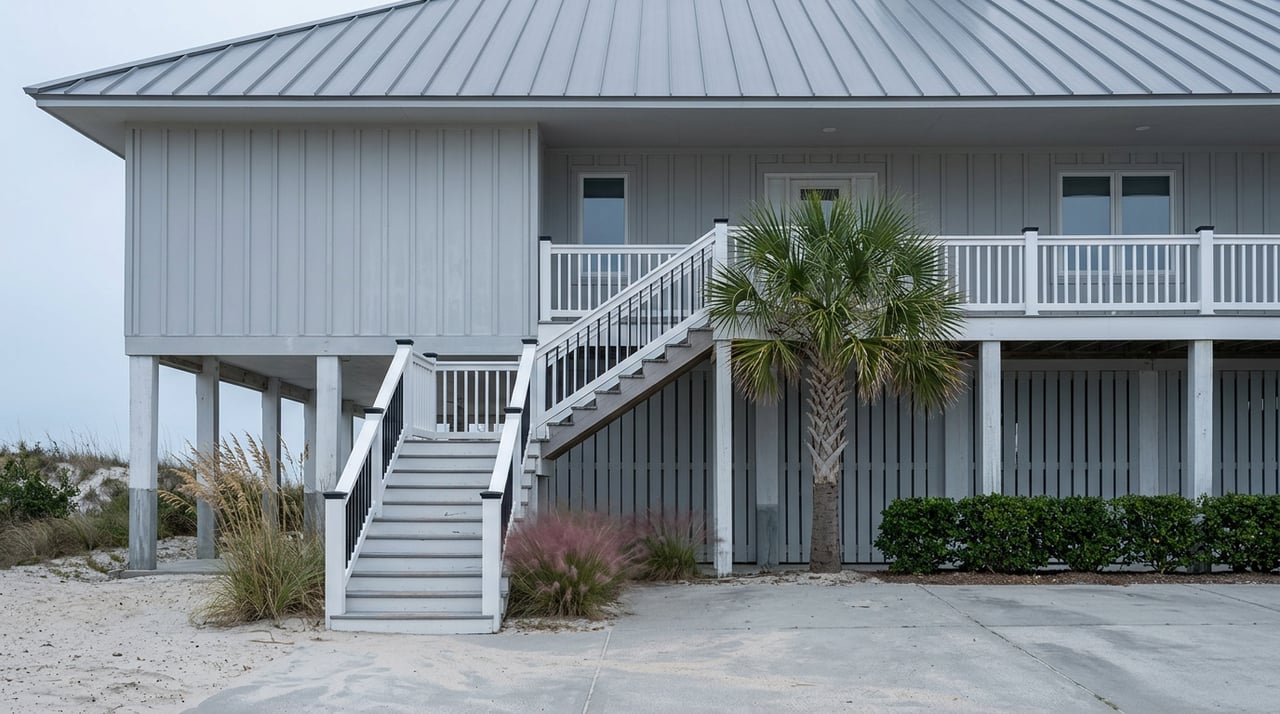
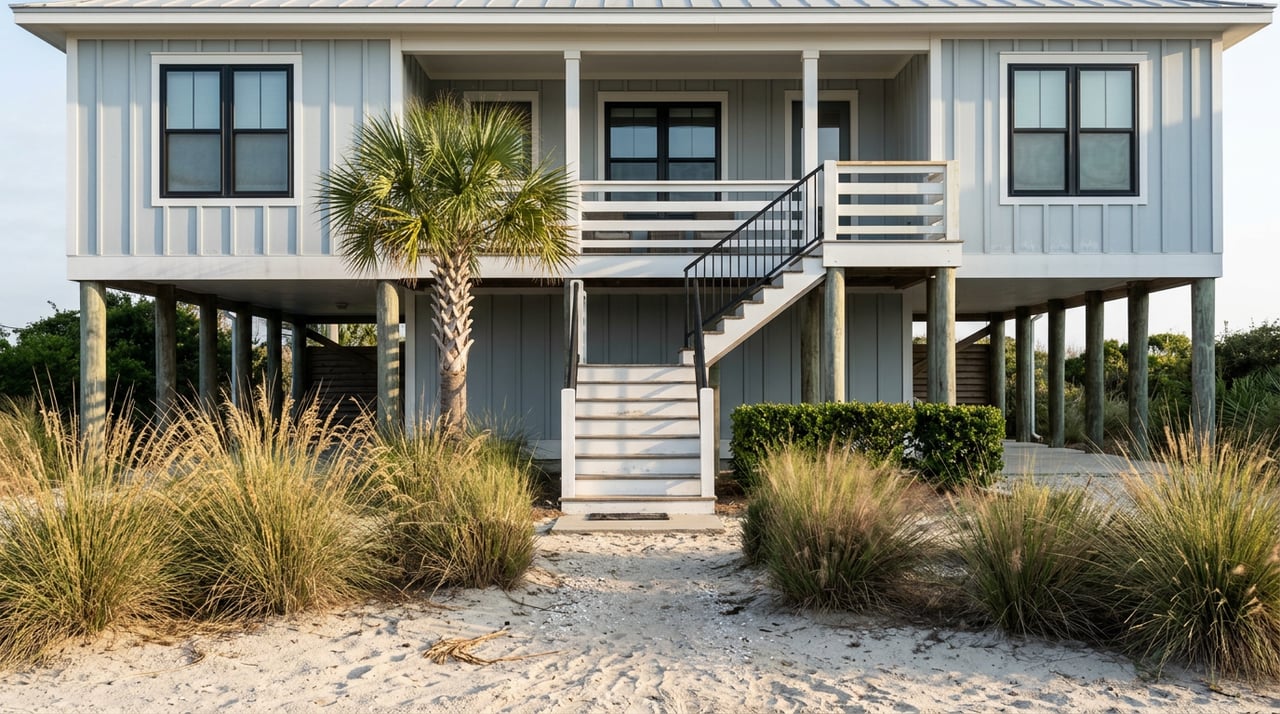
If your home is elevated, keep the area beneath the structure clear for drainage. Avoid storing combustible materials under elevated floors and make sure sand or debris does not trap moisture against structural members.
Plan professional HVAC service at least once per year in spring. Many coastal owners schedule service twice per year to keep coils clean and condensate drains clear. Replace filters more often during high-use seasons. Ask your HVAC pro about protective coil coatings or manufacturer-approved corrosion protection, then follow service recommendations.
Check water heaters and exposed plumbing fittings for leaks or corrosion. Protect metal fittings from salt spray and monitor for staining around valves and joints.
Keeping indoor humidity in the right range is one of the most effective steps you can take. Aim for about 30 to 50 percent where feasible. Use dehumidifiers during the most humid months and make sure bathroom and kitchen exhaust fans vent outdoors. The U.S. EPA’s mold resources explain how to prevent and clean up mold safely.
If water intrudes, dry affected areas within 24 to 48 hours when possible. For crawlspaces, confirm there is a quality vapor barrier and that vents or a conditioned crawl strategy are working as designed. After heavy rain, check for standing water. Maintain grading so the ground slopes away from the foundation. Avoid landscape beds that trap moisture against siding.
Choose salt-tolerant, native plants that can handle wind and spray. Clemson’s Home & Garden Information Center offers a helpful salt-tolerant landscaping guide. If you have dune vegetation, keep it healthy. Vegetated dunes help reduce erosion and storm impacts. Before doing any work near dunes or the beach, review local rules at the Town of Surfside Beach website and follow any dune protection ordinances.
Having a written plan reduces stress when a system approaches. Before the season ramps up, organize and test your shutters or panels, confirm you can secure outdoor furniture, and decide what equipment or valuables you will elevate or move if a storm is forecast. Photograph your home’s exterior and important systems so you have pre-storm documentation for insurance.
During hurricane season, follow local forecasts from the NWS Wilmington office and advisories from the National Hurricane Center. After a storm, put safety first. Avoid downed lines, check for structural damage, and photograph any issues before making temporary repairs. Contact your insurer and hire licensed contractors for permanent fixes.
Flood risk and wind exposure affect coverage and deductibles in coastal areas. Many Surfside Beach properties sit in mapped flood zones. You can check a property’s flood zone using FEMA’s Flood Map Service Center. If your home is elevated, keep your Elevation Certificate up to date. It can influence flood insurance rates.
Wind and hurricane coverage can include separate deductibles and limits, and coverage for wind-driven rain varies by policy. Review your policy with your carrier before storm season and confirm how claims will be handled after an event.
For exterior work, permits and coastal rules apply. Start with the Town of Surfside Beach for local ordinances and storm information, and the Horry County Building & Codes department for permits and licensing. For broader shoreline and resilience guidance, explore the South Carolina Sea Grant Consortium.
Use this local rhythm and adjust based on your exposure and materials.
Annual tasks
Seasonal tasks: spring and early summer
After storms or high-wind events
Ongoing
Coastal experience matters. Use licensed, insured contractors who know Surfside Beach and Horry County requirements. Check permits with Horry County Building & Codes before starting exterior work.
When comparing materials, look for corrosion resistance and products rated for UV and salt exposure. Stainless steel or hot-dipped galvanized hardware is worth the upgrade in many locations. In more exposed spots, some manufacturers recommend 316 stainless steel. For finishes, choose marine-grade or other high-performance exterior coatings. With HVAC equipment, ask about protective coatings and plan more frequent maintenance. While these choices can cost more upfront, they usually reduce replacement frequency and failure risk over time.
Save receipts, service logs, and before-and-after photos in one place. Document when you replaced fasteners, repainted, serviced HVAC, or updated shutters. These records simplify insurance claims and help buyers see the care you put into the property. If you are thinking about listing, a pre-listing inspection and a tidy maintenance file make your home easier to evaluate and often easier to sell.
Ready to tailor a plan to your home or talk through updates before you list? Reach out to Jan and Dan Sitter | Coastal Beach Homes for local guidance, practical next steps, and market insights along the Grand Strand.


When you hire Jan and Dan, you get a team of professional real estate agent diligently working together on your behalf. They are knowledgeable and experienced professionals you can trust to best represent your interests in our unique market.
JAN AND DAN SITTER | COASTAL BEACH HOMES
ADDRESS
9628 N KINGS HWY
MYRTLE BEACH SC 29572