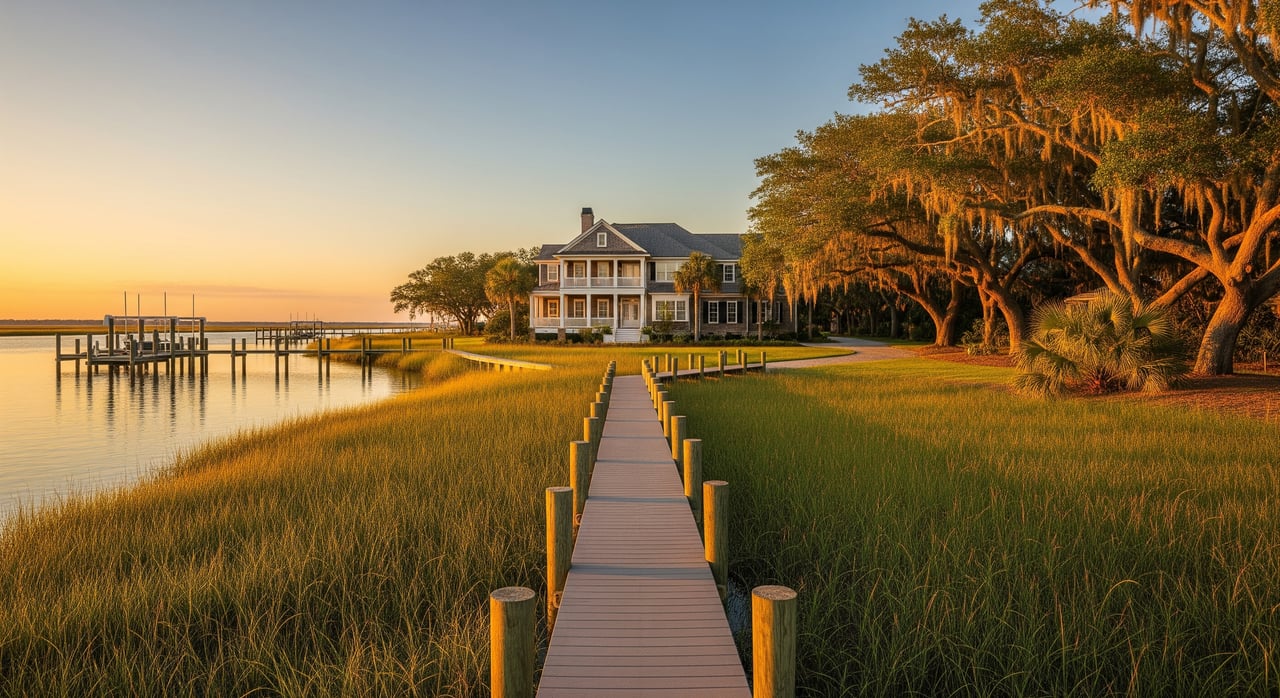
Choosing Between Little River Waterway and Inland Homes
Would you love to step out to the Intracoastal Waterway each morning, or do you prefer a larger yard and simpler upkeep inland? In Little River, both lifestyles have real advantages. You want clear facts on cost, risk, permits, and day-to-day living so you can decide with confidence. This guide breaks down waterway and inland living in Little River, then gives you a simple plan to move forward. Let’s dive in.
Little River sits on the northern Grand Strand in Horry County, just north of North Myrtle Beach and close to the state line. The area is shaped by the Intracoastal Waterway, the tidal Little River channel and inlet, and broad marshes. Beaches, dining, and services in the Myrtle Beach area are typically a short drive away.
Homes on the Intracoastal Waterway usually offer direct boating access, potential for docks or lifts, and long water views. Depth and dock potential vary by lot and permits. These homes often carry higher purchase and maintenance costs.
Properties along the tidal Little River and its inlet may offer deeper water in some spots and faster access toward the ocean. Proximity to open water can raise exposure to waves and surge, so it pays to confirm elevation and flood details for each address.
Some neighborhoods include man-made canals with private docks, while marsh-edge homes trade deep-water access for wildlife views and privacy. Marshfront can be shallow or non-navigable, which makes it great for scenery but not always for larger boats.
Oceanfront living is a separate category with its own risk and amenity profile. This article focuses on ICW, river, canal, and marsh settings compared with inland options in Little River.
If being on the water is your top priority, waterway living puts you minutes from fishing and cruising. You can also keep a boat inland and use public ramps. Check the South Carolina Department of Natural Resources for locations of nearby public boat ramps and fisheries info through the SCDNR boating and fishing resources.
Waterway homes can deliver wide views, wildlife, and a front-row seat to passing boats. Seasonal activity can bring more noise and traffic near marinas and popular dining spots. Marsh-edge homes may feel more private, with greater distance from boat traffic.
Inland homes often offer simpler road access, less exposure to tide-related road closures, and larger lots. Water-adjacent neighborhoods may be closer to marinas and waterfront restaurants. Your daily routes should factor into the decision, not just proximity to the beach.
Waterfront typically commands a premium over similar inland homes due to views and access. The exact difference varies by lot depth, dock potential, bulkhead condition, elevation, and flood risk. Your resale value will be sensitive to these same features.
If a property is in a FEMA Special Flood Hazard Area, a lender will generally require flood insurance. You can look up any address using the FEMA Flood Map Service Center. Premiums depend on the flood zone, finished-floor elevation, and building features. Coastal properties may also have higher windstorm exposure and separate wind deductibles; local insurance quotes are essential.
Horry County sets tax rates and assesses property values. Waterfront status can increase assessed value. For policies and contacts, visit the Horry County government site to reach the Assessor’s office or Planning and Zoning.
Lenders typically require flood insurance in mapped flood zones and may request elevation certificates, surveys, or engineering documentation for waterfront features. Start conversations early so you can align closing timelines with any required inspections.
New docks or modifications usually require permits. In South Carolina’s coastal zone, permitting typically involves the state’s coastal agency and sometimes the federal government. Learn more about coastal permitting through South Carolina DHEC’s Office of Ocean and Coastal Resource Management and the U.S. Army Corps of Engineers.
Horry County enforces floodplain development rules and requires permits for work in regulated flood zones. Builders often elevate homes above the base flood elevation, and buyers should verify past permits and elevation certificates when available. Begin by reviewing local contacts on the Horry County government site.
Some coastal lots may not connect to municipal sewer, and low elevation can affect septic approvals. Confirm utility availability and any septic permits during due diligence.
Homes on the water often need dock and piling inspections, lift servicing, and bulkhead or seawall maintenance. Salt air accelerates corrosion, which can shorten the life of exterior metals, HVAC equipment, and finishes. Plan for periodic dock or bulkhead rehabilitation and potential dredging for some canals, subject to permits.
Inland homes generally avoid dock and seawall costs, have fewer corrosion issues, and may qualify for lower flood premiums. Many buyers also find larger yards and simpler landscaping options inland.
Storm surge and tidal flooding are the major coastal hazards. Low-lying inland pockets can also flood from heavy rain. Use the FEMA Flood Map Service Center to confirm a property’s flood zone and the NOAA Sea Level Rise Viewer to visualize longer-term coastal exposure.
Gradual sea level rise can increase long-term exposure for low-elevation properties. Marshes buffer erosion and support fisheries, and conservation rules may limit certain shoreline changes. NOAA’s resources, including the NOAA Sea Level Rise Viewer, are helpful for context as you plan for resale horizons.
You should feel confident at every step. With a boutique, hands-on approach, we use MLS tools to set up map-first searches and saved alerts tailored to waterway, marsh, or inland criteria. We guide you through flood maps, permit questions, and property-specific due diligence so you can compare total cost of ownership and lifestyle fit. When it is time to list or negotiate, you get clear communication, professional marketing, and local insight from the first tour to the closing table.
Ready to weigh your choices in Little River? Reach out to Jan and Dan Sitter | Coastal Beach Homes to start your coastal home search.

When you hire Jan and Dan, you get a team of professional real estate agent diligently working together on your behalf. They are knowledgeable and experienced professionals you can trust to best represent your interests in our unique market.

JAN AND DAN SITTER | COASTAL BEACH HOMES
ADDRESS
9628 N KINGS HWY
MYRTLE BEACH SC 29572